
Hot-Dip Galvanized vs. Painted Scaffolding: Cost, Lifespan, and ROI Analysis
Compare hot-dip galvanized vs painted scaffolding for wholesale procurement, including ISO 1461 coating rules, lifespan ranges, TCO, and ROI trade-offs.
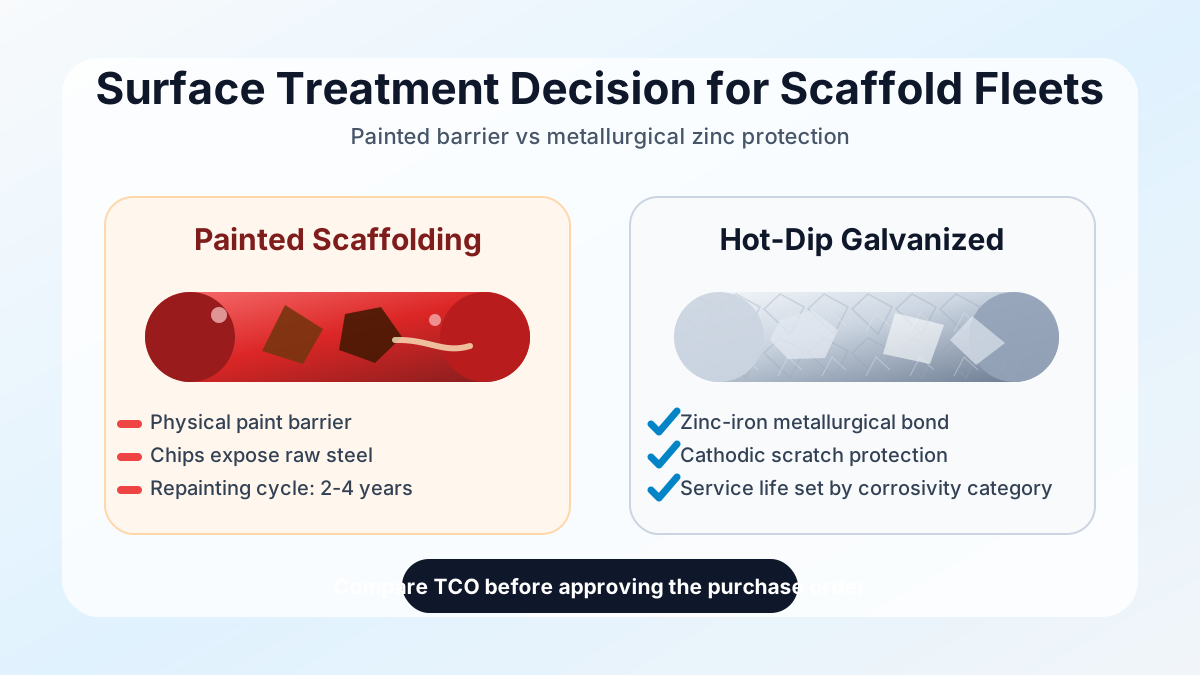
When reviewing quotes for a new scaffolding fleet, procurement teams inevitably face the classic dilemma: should we save 20% upfront with painted scaffolding, or invest in hot-dip galvanized (HDG) equipment?
The surface treatment of your scaffolding is not just an aesthetic choice; it is the single most critical factor determining the lifespan, maintenance overhead, and ultimate Return on Investment (ROI) of your inventory. For contractors, rental companies, and industrial facilities, a short-sighted decision here can lead to astronomical maintenance costs and dangerous structural liabilities down the road. In this comprehensive guide, we break down the engineering mechanisms, the international ISO standards, and the financial total cost of ownership (TCO) models to help you make a confident, data-driven procurement decision.
Technical Analysis
Understanding the Surface Treatments
Why paint fails in construction environments and how zinc alloys protect steel.
The Failure Points of Painted Scaffolding
Painted scaffolding is widely produced due to its low manufacturing cost and the ability to customize colors for corporate branding. The process typically involves cleaning the steel, applying a primer, and spraying a topcoat of industrial enamel or epoxy paint.
However, scaffolding is subjected to brutal mechanical abuse. It is repeatedly thrown onto trucks, dropped on concrete, struck with scaffolding hammers, and dragged across rough surfaces. Every single impact or scratch breaches the paint barrier. Once the raw steel is exposed to oxygen and moisture, oxidation (rust) begins immediately. Worse, moisture can creep underneath the adjacent intact paint—a process known as under-film corrosion—causing the paint to blister and peel off in large flakes. Within just 12 to 24 months of active field use, a painted scaffolding system will typically exhibit significant surface rust, requiring an expensive cycle of wire-brushing, rust-treatment, and repainting.
The Science of Hot-Dip Galvanizing (HDG)
Microstructure of Hot-Dip Galvanized Steel
The metallurgical bond creates intermetallic layers that are harder than the base steel, providing superior abrasion resistance.
Hot-dip galvanizing is entirely different. The raw scaffolding components are completely submerged in a bath of molten zinc at approximately 450°C (842°F). During this immersion, a metallurgical reaction occurs between the iron in the steel and the liquid zinc.
This reaction forms a series of intermetallic zinc-iron alloy layers (the Gamma, Delta, and Zeta layers), topped with a layer of pure zinc (the Eta layer). The inner alloy layers are incredibly dense and actually measure higher on the diamond pyramid hardness scale than the underlying steel. This makes HDG coatings highly resistant to the abrasive forces of construction sites.
Furthermore, zinc is highly electronegative compared to steel. If the coating is scratched deep enough to expose the steel, the surrounding zinc will act as a sacrificial anode. It will preferentially corrode to protect the exposed steel from rusting—a phenomenon known as cathodic protection. Paint cannot do this; if paint chips, the steel rusts.
Corrosion Standards
ISO 1461 & ISO 14713-1 Corrosivity Categories
How to calculate exactly how many years your galvanized scaffolding will last.
When purchasing HDG scaffolding, professional suppliers will certify their products to BS EN ISO 1461. This standard specifies the minimum coating thickness required based on the thickness of the steel. For typical scaffolding tubes (which are often 3.2mm to 4.0mm thick), ISO 1461 requires a minimum local coating thickness of 55 µm and a mean thickness of 70 µm.
To predict the actual lifespan of this scaffolding, engineers look to ISO 14713-1 and ISO 9223, which classify environments into Corrosivity Categories (C1 to CX). By dividing your scaffolding's zinc thickness by the annual corrosion rate of your environment, you can calculate its lifespan:
- C2 (Low Corrosivity - Rural areas, dry environments): Zinc corrosion rate is 0.1 – 0.7 µm/year. A 70 µm coating will last over 100 years.
- C3 (Medium Corrosivity - Urban and light industrial environments): Zinc corrosion rate is 0.7 – 2.1 µm/year. A 70 µm coating will last between 33 and 100 years.
- C4 (High Corrosivity - Industrial areas and coastal environments without direct salt spray): Zinc corrosion rate is 2.1 – 4.2 µm/year. A 70 µm coating will last between 16 and 33 years.
- C5 (Very High Corrosivity - Direct coastal surf, aggressive chemical plants): Zinc corrosion rate is 4.2 – 8.4 µm/year. A 70 µm coating will last between 8 and 16 years.
Even in the punishing C4 environments typical of coastal construction sites, a properly hot-dip galvanized scaffold will provide over two decades of rust-free service without requiring any maintenance.
Financial Comparison
TCO and ROI: The 10-Year Model
Comparing the direct and indirect costs over a decade of operation.
| Evaluation Metric | Hot-Dip Galvanized Scaffolding | Painted Scaffolding |
|---|---|---|
| Coating Mechanism | Metallurgical bond with the steel substrate; creates zinc-iron alloy layers harder than the base steel. | Mechanical surface barrier; relies purely on adhesion to the outer layer of the steel tube. |
| Initial Procurement Cost | Typically 15% to 25% higher upfront depending on local zinc commodity prices. | Lower upfront cost; often the default choice for budget-constrained initial capital expenditures. |
| Maintenance Cycle | Virtually zero maintenance for 20 to 50 years depending on environmental corrosivity. | Requires chipping, sandblasting, and repainting every 2 to 4 years to prevent structural decay. |
| Estimated Lifespan (C3) | 30 to 50+ years before the zinc coating is fully depleted to the substrate. | 5 to 10 years, highly dependent on the strictness of the maintenance cycles. |
| Abrasion Resistance | Extremely high. Zinc-iron alloys are scratch-resistant, and scratches cathodically self-heal. | Low. Easily chipped during loading, unloading, and dropping, immediately exposing steel. |
| Asset Resale Value | High secondary market demand. Retains 40-60% of its original value after a decade. | Low. Used painted scaffolding is often sold for scrap value once structural rust is evident. |
| Safety Inspection | Predictable wear. Visual inspections accurately reflect the underlying structural integrity. | High risk. Paint can mask internal rust or sub-surface corrosion, hiding weakness. |
The Breakeven Point: While HDG scaffolding carries a 15% to 25% price premium on the initial purchase order, the total cost of ownership (TCO) lines typically cross at the Year 3 or Year 4 mark. By Year 4, the company owning painted scaffolding will have had to pay for labor, sandblasting, and paint to refurbish their fleet. By Year 10, the painted scaffolding will have undergone multiple refurbishment cycles and may need complete replacement, while the HDG scaffolding continues to generate revenue with zero maintenance overhead.
Verification
Procurement Checklist for HDG Scaffolding
Don't just take the supplier's word for it. Use this checklist to verify quality.
Quality Assurance Checklist for Importers
- Demand ISO 1461 Certification: The factory must provide test reports proving the zinc coating thickness meets or exceeds the local mean thickness specified in BS EN ISO 1461.
- Check for Internal Galvanizing: Ensure the tubes are hot-dipped inside and out. Painted tubes often only coat the exterior, leaving the interior raw steel vulnerable to unseen, aggressive internal rotting.
- Watch for "Electro-galvanized" Deception: Unscrupulous suppliers might quote "galvanized" but supply electro-galvanized (zinc-plated) goods. Always specify "Hot-Dip Galvanized" and verify the micron thickness.
- Inspect the Finish: Look for excessive zinc runs, sharp zinc spikes (dross), or bare spots. While HDG is an industrial finish and won't look as smooth as paint, excessive spikes pose a laceration hazard to scaffolders.
- Specify Packing Requirements: Require passivation (anti-white rust treatment) and proper dunnage/spacers in the shipping container to prevent wet storage stain during ocean freight.
- Define Thread and Fitting Clearances: Because HDG adds 50-80 microns of material, ensure the factory uses oversized nuts or re-taps threaded components (like scaffold jacks) after galvanizing so they thread smoothly.
Documentation
Sources / References
Independent data supporting the ROI and lifespan models.
- International Organization for Standardization: ISO 1461:2022 - Hot dip galvanized coatings on fabricated iron and steel articles. Specifications and test methods. (iso.org/standard/83696.html)
- International Organization for Standardization: ISO 14713-1:2017 - Zinc coatings — Guidelines and recommendations for the protection against corrosion of iron and steel in structures. (iso.org/standard/65590.html)
- International Organization for Standardization: ISO 9223:2012 - Corrosion of metals and alloys. Corrosivity of atmospheres: classification, determination, and estimation. (iso.org/standard/53499.html)
Ready to upgrade your scaffolding fleet?
At Scaffolding Wholesale, we manufacture strict ISO 1461 compliant Hot-Dip Galvanized scaffolding systems engineered for multi-decade lifespans. Stop paying for maintenance and start investing in your assets.