
Scaffolding Base Jacks & U-Heads: Solid vs. Hollow Spindles and Load Limits
A comprehensive procurement guide comparing solid and hollow scaffolding base jacks, load capacities, thread types, and safety standards.
Core Design Differences
Solid vs. Hollow Base Jacks: An Architectural Overview
Every scaffold system—whether Ringlock, Cuplock, Kwikstage, or traditional Tube and Coupler—relies entirely on the base jack to transfer the structural load safely to the ground. When importing these crucial components in bulk, one critical decision impacts both engineering safety and container freight logistics: choosing between solid and hollow spindles.
Scaffolding base jacks are the foundation of any temporary structure. They provide the necessary levelling on uneven ground, ensuring that the scaffold is perfectly plumb and capable of safely carrying workers, materials, and environmental loads (such as wind and snow). While both solid and hollow designs feature a threaded stem, a heavy-duty cast steel adjustment nut, and a continuously welded base plate (typically 150x150mm), their structural performance under extreme compression varies significantly.
For scaffolding buyers, wholesale distributors, and large-scale contractors, the choice isn't just about structural integrity—it's heavily tied to commercial viability. Solid jacks provide uncompromising strength for civil engineering, but they eat up container weight limits rapidly. Hollow jacks, conversely, offer phenomenal strength-to-weight ratios, saving substantial freight costs and reducing worker fatigue on site. This comprehensive guide outlines the key differences, load capacity thresholds, manufacturing nuances, and the rigorous procurement checks required before you finalize your next international factory order.
Technical Visualization
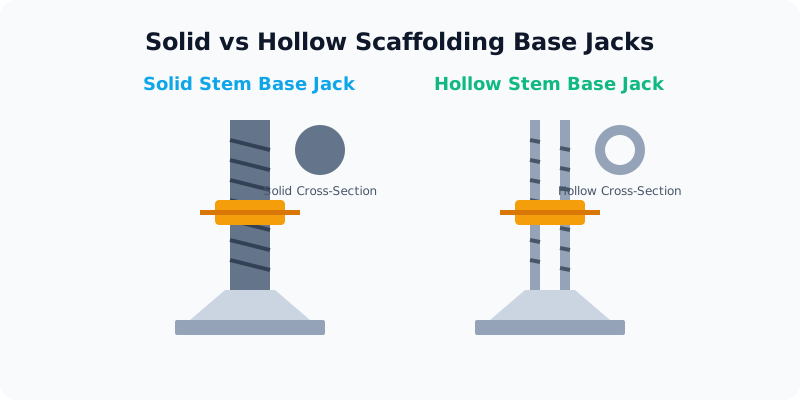
Structural Cross-Section Analysis
Understanding how stress is distributed through the spindle is crucial for selecting the right base jack for your specific project loads.
Spindle Stress Distribution & Material Profile
Solid spindles focus compressive forces directly through the core, ideal for massive point loads. Hollow spindles distribute forces along the outer wall, providing excellent stability and a superior strength-to-weight ratio for standard commercial loads.
Specification Comparison
Head-to-Head Engineering & Commercial Limits
The decision between solid and hollow stems usually boils down to balancing required structural load capacity against freight costs, manual handling weight, and specific project requirements. Below is a comprehensive breakdown.
| Engineering / Commercial Factor | Solid Base Jack | Hollow Base Jack |
|---|---|---|
| Material Construction | Solid carbon steel rod (Q235 / Q345) | Seamless or ERW steel pipe (Q235 / Q355) |
| Thread Manufacturing | Machined/lathe-cut threads (can reduce the effective core diameter and create stress risers) | Cold-rolled threads (preserves material grain structure and overall wall thickness for durability) |
| Weight (e.g., 600mm length) | Heavier (~4.5kg - 6.0kg+ depending on diameter) | Lighter (~3.0kg - 4.5kg depending on wall thickness) |
| Load Bearing Capacity | Extreme (Often >70kN depending on extension, highly resistant to point-load buckling) | Standard to High (Often 40-60kN depending on extension, sufficient for most commercial scaffolding) |
| Primary Applications | Heavy-duty shoring, bridge construction, high-rise support, industrial load-bearing structures | Facade scaffolding, painting, light renovation, event staging, residential construction |
| Freight Cost (Container Loading) | Higher landed cost per unit (max out 20ft container weight limits of ~24-28 tons extremely fast) | Lower landed cost per unit (can pack more volume per container before hitting weight caps, optimizing sea freight) |
| On-Site Handling & Ergonomics | Fatiguing for scaffolders over long shifts, higher risk of manual handling injuries | Ergonomic, faster to move and adjust, significantly improving daily on-site productivity |
| Surface Treatment & Galvanization | Often electro-galvanized (adequate for short term but vulnerable to deep scratches) | Often hot-dip galvanized (provides superior internal and external rust protection for long lifespan) |
Procurement Checklist
Quality Control & Factory Audit Protocol
When auditing an OEM scaffolding factory for a bulk import order, use this stringent checklist to ensure the base jacks and U-heads meet global safety standards (such as EN 12811-1 or OSHA 1926.451) and commercial expectations.
Verify the Thread Type and Manufacturing Process
Ensure the jacks use Acme or coarse square threads rather than fine threads. Coarse threads shed concrete and debris easier and prevent the cast nut from jamming. Also, confirm if the threads are cold-rolled (superior strength) or lathe-cut (cheaper but removes material).
Check the Tube Outer Diameter (O.D.) & Wall Thickness
The jack stem O.D. (typically 34mm or 38mm) must perfectly match the inner diameter of your scaffolding standard (e.g., 48.3mm with 3.2mm wall thickness) to minimize lateral sway. For hollow jacks, audit the wall thickness (e.g., 4.0mm vs 5.0mm) as it directly impacts load ratings.
Confirm Base Plate Dimensions and Welding Quality
EN 12811 usually requires a base plate of at least 150x150mm with a minimum thickness of 5mm or 6mm. Inspect the welding bead where the stem meets the plate; it should be a continuous, full-penetration robotic weld rather than manual spot welding.
Review Extension Limits and Safety Markings
Never extend a base jack beyond the manufacturer’s safety mark. A general engineering rule is that at least 25% of the stem must remain inside the scaffold standard. Check that the safety limits are permanently stamped into the stem, not just painted.
Examine Surface Treatment and QA Documentation
Opt for Electro-galvanized or Hot-Dip Galvanized threads to prevent rust from locking the adjustment nut. Always ask the supplier for recent third-party load test reports (e.g., SGS, TÜV) matching the exact specification you are purchasing.
Expert Q&A
Buyer FAQ & Decision Guide
Answers to the most common questions from international scaffolding buyers, rental yards, and large-scale contractors regarding base jack selection.
References & Standards
Regulatory & Engineering Sources
Verify engineering data, testing requirements, and compliance guidelines directly with these international governing bodies and industry publications.
- OSHA Standard 1926.451 - General Requirements for Scaffolds
Outlines foundation requirements, base plate usage, and capacity ratings for the United States market.
- ISO 9001:2015 - Quality Management Systems
Essential certification for auditing OEM factory manufacturing consistency and traceability for base jacks.
- EN 12811-1:2003 - Temporary works equipment - Part 1: Scaffolds
The definitive European standard detailing performance requirements and structural design methods for scaffolding foundations.
- UK HSE - Scaffolding Safety and Foundation Information
Practical guidance from the Health and Safety Executive on safe base jack deployment and ground stability.
Ready to source certified scaffolding components?
Scaffolding Wholesale provides premium solid and hollow base jacks, manufactured strictly to EN 12811 and OSHA standards. Whether you need standard 600mm sizes or custom lengths, our OEM facilities deliver unmatched quality. Contact our export team for factory-direct pricing, volume discounts, and comprehensive load testing reports.