
Scaffolding Mill Test Certificates (MTC): A Buyer’s Guide to Verifying Steel Quality
Learn how to read and verify Mill Test Certificates (MTC) for scaffolding. Understand EN 10204 Type 3.1 vs 3.2, trace heat numbers, and avoid procurement fraud.
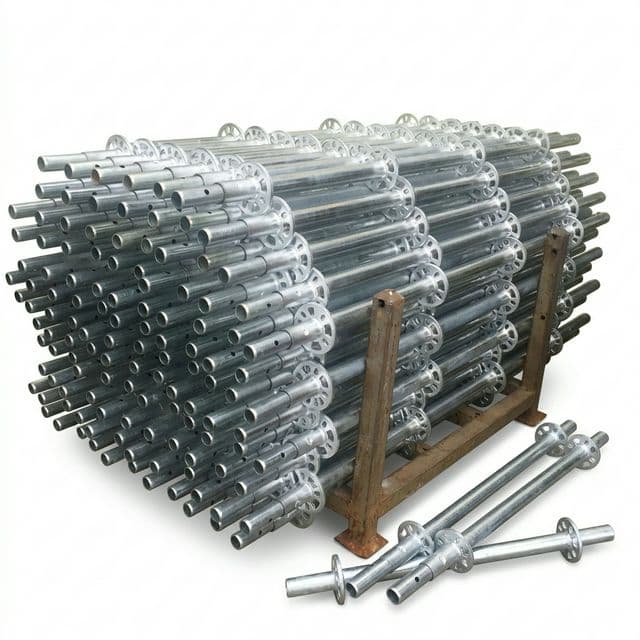
In the scaffolding industry, structural failure is not an option. Yet, many buyers import thousands of tons of steel scaffolding without verifying the true origin and strength of the raw materials. The solution lies in the Mill Test Certificate (MTC).
Also known as a Material Test Report (MTR), an MTC is the "birth certificate" of your scaffolding steel. It proves that the Q355 or S235 steel you paid for meets the chemical and mechanical properties required to support heavy loads. This guide breaks down how to verify an MTC, distinguish between EN 10204 Type 3.1 and 3.2, and prevent procurement fraud.
MTC Traceability Workflow
How Steel Quality is Tracked
A valid MTC is useless unless it physically links back to the scaffolding component on your job site.
Standards Mapped
EN 10204: Types of Inspection Documents
Not all certificates offer the same level of assurance. European standard EN 10204 defines the hierarchy of material validation.
| MTC Type | Issuer | Validation Level | Typical Scaffolding Use Case | Risk Profile |
|---|---|---|---|---|
| EN 10204 Type 2.1 | Manufacturer | Declaration of compliance only. | Non-critical components. Does not include test results. | High risk for load-bearing scaffolding. |
| EN 10204 Type 2.2 | Manufacturer | Non-specific test results. | General steel products. Not linked to specific heat batches. | Medium risk. Lacks direct traceability. |
| EN 10204 Type 3.1 | Independent Factory Inspector | Specific test results for the exact batch (Heat No.). | Standard scaffolding tubes, props, and ringlock systems. | Low risk. The global standard for B2B procurement. |
| EN 10204 Type 3.2 | Third-Party Inspector (e.g., SGS, TÜV) | Test witnessed and countersigned by third party. | Critical infrastructure, offshore scaffolding, government projects. | Zero risk. Maximum assurance but higher cost. |
| ASTM / ASME Certified MTR | Mill Quality Dept (North America standard) | Complies with ASTM testing procedures (functionally equivalent to 3.1). | Scaffolding exported to US markets requiring strict ANSI/OSHA compliance. | Low risk. Highly regulated and standardized in the US. |
| AS/NZS 1576 Material Certificate | NATA Accredited Lab / Manufacturer | Strict adherence to Australian/New Zealand testing protocols. | Scaffolding imported into or used in Australia & New Zealand. | Low risk. Mandatory for legal compliance in the ANZ region. |
Technical Deep Dive
Understanding MTC Data: Chemical & Mechanical Properties
An MTC is filled with numbers and percentages. Here is exactly what those figures mean for your scaffolding's performance and safety.
When you receive an MTC, you will typically see two main data tables: Chemical Composition and Mechanical Properties. For scaffolding buyers, understanding these metrics is non-negotiable. Scaffolding is subjected to dynamic loads, weather extremes, and continuous assembly/disassembly. The steel must not only be strong enough to hold the weight but also ductile enough to bend slightly without snapping unpredictably.
When cross-referencing your MTC, ensure the reported values actually comply with the specific standard you ordered (e.g., EN 39 for standard tubes, EN 10219 for structural hollow sections). A certificate that shows numbers outside the allowable tolerances is grounds for immediate rejection of the shipment, as it directly compromises structural engineering calculations.
Fraud Prevention
Common MTC Forgeries and How to Spot Them
The global steel market is not immune to deceptive practices. Buyers must remain vigilant to protect their investments and site safety.
Because third-party inspections (Type 3.2) add cost and lead time, many buyers rely on Type 3.1 certificates provided directly by the manufacturer. Unfortunately, this creates an opportunity for unscrupulous middlemen, traders, or lower-tier factories to fabricate documents. Here are the most common deceptive practices regarding Mill Test Certificates:
1. The "Photoshop" Modification
The most amateur yet prevalent form of forgery. A supplier takes a legitimate MTC from a previous high-quality batch and digitally alters the Date, Heat Number, chemical properties, or the purchaser's name to match a new, uncertified shipment.
How to spot it: Look for mismatched fonts, slightly different text alignments, lack of watermark, or pixelation around numbers. Always request high-resolution original PDFs, not heavily compressed JPEG images. You can also inspect the PDF metadata to see if it was recently modified in image editing software.
2. The Umbrella Heat Number (Batch Mixing)
A supplier buys a small amount of premium, certified steel and a large amount of cheap, uncertified steel. They use the premium steel's MTC to cover the entire mixed shipment. The MTC itself is authentic, but it doesn't apply to the majority of the product you receive in your containers.
How to spot it: Compare the total tonnage listed on the MTC against your order volume. If the MTC shows a batch size of 20 tons, but you are buying 150 tons supposedly from that same heat, you are being deceived. Additionally, physically check the heat numbers stamped on various randomly selected scaffolding tubes upon delivery to ensure they all match the document.
3. The Phantom Steel Mill
In some extreme cases, the MTC is completely fabricated from a steel mill that either doesn't exist or doesn't produce that specific grade of steel. The stamps, inspector signatures, and testing data are entirely fake and randomly generated.
How to spot it: Research the steel mill listed at the top header of the MTC. Do they have a functional website? Are they known for producing hot-rolled coils for structural applications? If you are buying a massive quantity, it is highly recommended to place a direct phone call to the mill's verification department to confirm the specific certificate number and batch details.
The ultimate defense against MTC fraud is establishing long-term relationships with reputable scaffolding manufacturers who possess transparent supply chains. A trustworthy factory will openly share their raw material sources, welcome third-party audits during the production process, and maintain a rigorous internal QA/QC system to track steel coils from the factory gate to the final shipping container.
Global Market Alignment
Regional Scaffolding Standards and MTC Requirements
Different regions demand different compliance frameworks. Ensure your MTC satisfies local authorities.
While the EN 10204 Type 3.1 MTC is widely recognized globally as a baseline of quality, the actual testing parameters reported on the certificate must align with the specific scaffolding standards of the destination country. A perfectly valid MTC for one region might be rejected by a rigorous site safety inspector in another due to missing specific test results or differing tolerance levels.
- North America (OSHA / ANSI / CSA):While OSHA does not strictly prescribe rigid MTC formats, it heavily enforces the requirement that scaffolding must support at least four times the maximum intended load. MTCs for the US and Canadian markets must clearly demonstrate the steel grade (e.g., Grade 50) and often need to align with ASTM testing methods (such as ASTM A53 or A500 for pipes). Buyers in these regions often demand MTRs (Material Test Reports) that trace back to recognized North American or verified international mills.
- Europe & UK (EN 39 / EN 12810 / BS 1139):The European and UK markets are highly regulated with strict compliance frameworks. An EN 10204 Type 3.1 certificate is the absolute standard, but the reported mechanical and chemical values must strictly conform to EN 39 (for standard loose tubes) or EN 12810/12811 (for system scaffolding like Ringlock or Cuplock). The MTC must clearly state conformity to these specific EN norms. Furthermore, obtaining CE marking or UKCA marking often relies on the foundational validity and traceability of these material certificates.
- Australia & New Zealand (AS/NZS 1576):ANZ standards are notoriously stringent and prioritize worker safety above all. MTCs are heavily scrutinized, and there is a very strong industry preference for testing conducted by NATA-accredited (National Association of Testing Authorities) laboratories. If scaffolding is imported into Australia or New Zealand, the original factory MTCs are usually required to be supplemented by localized testing to unequivocally prove the steel batch meets the specific yield stress, ductility, and dimensional requirements outlined in AS/NZS 1576.
- Middle East & Southeast Asia:These rapidly growing and diverse construction markets often adopt a hybrid approach to scaffolding standards, accepting either British Standards (BS), European Standards (EN), or Japanese Industrial Standards (JIS G3444). The key challenge for buyers in these regions is to ensure the MTC explicitly states which standard the steel was tested against. Mixing different standards on a single large-scale project site can lead to severe compliance issues, structural mismatches, and failures during independent safety audits.
Procurement Checklist
How to Verify an MTC Step-by-Step
Don't just file the MTC away. Perform these checks before accepting your scaffolding shipment.
Conclusion & Action
Secure Your Supply Chain
Your safety record relies on the integrity of your steel.
Never Compromise on Scaffolding Quality
At Scaffolding Wholesale, we provide 100% genuine EN 10204 Type 3.1 Mill Test Certificates with every batch of our Ringlock, Cuplock, and Adjustable Props. We also accommodate Type 3.2 third-party inspections via SGS or TÜV for critical projects.