Match 3 x 7, 7 x 4, or 10 x 4 dimensions to a catalog family. Confirm frame geometry before ordering.
Key number
2 braces
For the estimator on this page, a standard frame bay closes with two braces, which makes quantity planning fast once the family is correct.
Boundary
4:1 ratio
Free-standing towers above that height-to-base ratio need restraint. Brace selection alone does not solve that rule.
Immediate outcome
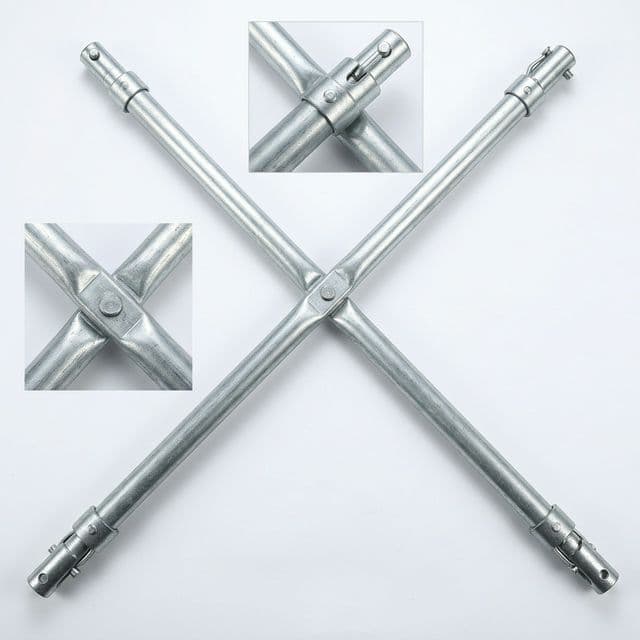
If you came here searching for 10 x 4 scaffolding cross braces, the most likely U.S. frame-scaffold interpretation is a 10 ft section family with 48 in lock spacing. Public Bil-Jax and Sunbelt references support that shorthand, but they do not make the family universal across brands. The checker uses those dimensions to flag when more measurement review is needed. If the query arrives as “7 x 4 scaffold tube cross brace”, this page maps it to the 7 ft / 48 in family with the same lock-check boundary. If the query arrives as “3 x 7 scaffold cross brace dimensions”, this page maps it to the 7 ft / 36 in family and forces the same proof checks before order release.


10
public sources reviewed
Rule text, catalog references, and scope limits are stated on-page.
8
catalog families mapped
The checker exposes the published family logic instead of hiding it.
17
buyer questions answered
FAQ coverage closes the common follow-up questions after the first fit check.
Report summary
The fast answer is useful only if it stays measurable. The page keeps the conclusion short, then attaches public-source dates, scope limits, and boundary conditions behind it.
Alias intent summary
This alias is mapped to a 7 ft section + 48 in lock spacing family on this page. Public manufacturer examples support the mapping, but they do not remove the need to confirm lock geometry and end style before final release.
| Alias phrase | Normalized dimension | Bil-Jax example | Metaltech example | Evidence timestamp | Boundary |
|---|---|---|---|---|---|
| 7 x 4 scaffold tube cross brace | 7 ft section + 48 in lock spacing | 0010-04-07 (hole-end) / 0009-04-07 (notch-end) | M-MC4884 (4 x 7 ft, 10.7 lb, galvanized) | Bil-Jax catalog modified June 26, 2023; Metaltech page modified Oct 22, 2025 | Use as an RFQ mapping only. Mixed-brand fit still requires lock geometry and frame-photo confirmation before PO release. |
Alias intent summary
On this page, that query is normalized to a 7 ft section + 36 in lock spacing family. It is a practical RFQ starting point, not a universal compatibility guarantee.
| Search phrase | Normalized dimension | Example family | Best use case | Boundary |
|---|---|---|---|---|
| 10 x 4 scaffolding cross braces | 10 ft section + 48 in lock spacing | 0010-04-10 / 0009-04-10 (B104 where legacy code is used) | Standard U.S. frame-and-brace runs where section spacing is already known. | Still not a universal cross-brand fit promise; end style and lock geometry remain required checks. |
| 3 x 7 scaffold cross brace dimensions | 7 ft section + 36 in lock spacing | 0010-03-07 / 0009-03-07 | Buyers hearing “3 by 7” language and needing a measurable RFQ starting point. | The phrase is often imprecise in the field. Treat it as an alias mapping, then confirm with one frame photo and lock-spacing measurement. |
Evidence upgrade
This refresh separates verified facts, manufacturer-scoped facts, and public-source gaps so the buyer does not confuse shorthand with guaranteed fit.
| Claim | Status | What the sources show | Limit / next action |
|---|---|---|---|
| What “10 x 4” most often means in U.S. frame-and-brace buying | Confirmed in public examples | Sunbelt’s frame-and-brace guide lists B104 as a 10'x4' cross brace. Bil-Jax’s 2023 standard-frame catalog lists a 48 in lock-spacing brace for 10 ft spacing as 0010-04-10 and tells buyers to replace 0010 with 0009 for notch-end braces. Sources: Sunbelt Frame and Brace Product Guide (PDF print date Feb 2012) and Bil-Jax Scaffold Catalog (PDF modified June 26, 2023), reviewed October 8, 2026 | Useful as U.S. frame-scaffold shorthand, but not a universal global naming rule or a guarantee that two brands will fit each other. |
| The alias “7 x 4 scaffold tube cross brace” maps to a public family | Confirmed in public examples | Bil-Jax lists 0010-04-07 / 0009-04-07 for 7 ft spacing with 48 in lock spacing, and Metaltech lists the corresponding 4 x 7 model M-MC4884 with published weight 10.7 lb and galvanized finish. Sources: Bil-Jax Scaffold Catalog (PDF modified June 26, 2023) and Metaltech product page (modified Oct 22, 2025), reviewed October 8, 2026 | These are manufacturer-family references, not proof that every mixed-brand frame accepts every 7 x 4 brace. |
| A “10” family does not mean the loose brace is exactly 10 ft long | Confirmed with manufacturer scope | Bil-Jax notes that actual brace length is slightly longer, approximately 6 in more than frame spacing. Sources: Bil-Jax Scaffold Catalog, page 16, reviewed October 8, 2026 | Treat the shorthand as frame spacing plus lock spacing, not as a literal end-to-end rod-length promise. |
| End style and lock family are decisive fit variables | Confirmed with manufacturer scope | Bil-Jax publishes separate hole-end and notch-end braces, says the end type must coordinate with the lock type, and lists eight different lock types for its sectional frames. Sources: Bil-Jax Scaffold Catalog, pages 9 and 16, reviewed October 8, 2026 | Nominal size is not enough for mixed-brand yards. A frame photo or lock measurement is still required before PO release. |
| OSHA allows mixed-manufacturer components only when fit is proven without force | Confirmed in regulation text | OSHA 29 CFR 1926.451(b)(10) states that scaffold components from different manufacturers must not be intermixed unless they fit together without force and structural integrity is maintained. Sources: OSHA 29 CFR 1926.451(b)(10), reviewed October 8, 2026 | “Looks close” is not enough. Mixed-brand jobs still need competent-person review plus geometry proof before release. |
| Cross bracing is not just presence, but geometric control | Confirmed in regulation text | OSHA 29 CFR 1926.452(c)(2) requires frame scaffolds to be braced so vertical members stay plumb, level, and square, and requires brace connections to be secured. Sources: OSHA 29 CFR 1926.452(c)(2), reviewed October 8, 2026 | A brace count alone does not satisfy this requirement if connection security or alignment is not verified in the field. |
| If cross bracing is used as a rail substitute, load and height still apply | Confirmed in regulation text | OSHA 29 CFR 1926.451(g)(4) keeps toprail and midrail strength expectations (e.g., 200 lb toprail load and 150 lb midrail load on supported scaffolds) and defines cross-brace height bands for rail equivalence. Sources: OSHA 29 CFR 1926.451(g)(4)(vii), (viii), and (xv), reviewed October 8, 2026 | Crossing at the right height is not enough if rail-system load and spacing requirements are not met. |
| Damaged braces cannot stay in service pending convenience | Confirmed in regulation text | OSHA 29 CFR 1926.451(f)(4) requires damaged scaffold components be immediately repaired, replaced, braced, or removed from service. Sources: OSHA 29 CFR 1926.451(f)(4), reviewed October 8, 2026 | A low unit price does not offset the risk of reusing bent or cracked braces. Procurement should separate replacement stock from salvage decisions. |
| Very tall fabricated-frame runs trigger design escalation | Confirmed in regulation text | OSHA 29 CFR 1926.452(c)(6) requires fabricated frame scaffolds over 125 ft in height above base plates to be designed by a registered professional engineer. Sources: OSHA 29 CFR 1926.452(c)(6), reviewed October 8, 2026 | Above this threshold, a brace-family match alone is insufficient for approval and pricing decisions. |
| Falls remain a large construction fatality slice in recent U.S. data | Confirmed in official statistics | BLS Economics Daily (published May 9, 2025) reports 423 fatal falls/slips/trips in construction for 2023, and states falls/slips/trips were 38.5% of construction workplace deaths that year. Sources: U.S. Bureau of Labor Statistics, Fatal falls in the construction industry in 2023, reviewed October 8, 2026 | This is industry-level fatality context, not a cross-brace-specific failure-rate dataset. |
| Universal cross-brand interchangeability is not publicly proven here | Public-source gap | The sources reviewed for this refresh show manufacturer families and rental shorthand, but they do not publish one universal compatibility matrix across brands. Sources: Source review completed for this page on October 8, 2026 | If your site mixes legacy brands, move from shorthand to measurement-first RFQ review before confirming the order. |
| Two braces per bay is a quoting baseline, not an OSHA sizing rule | Estimator assumption | The checker models the standard X-brace pair used in ordinary frame bays so buyers can produce a fast first quantity estimate. Sources: Page estimation model; no universal public rule fixes one brace count for every bay | Walk-through frames, stair bays, guardrail substitutions, and custom layouts can change the count. Validate against the actual frame set. |
Method and evidence
The page deliberately does not pretend every brace is unique. It starts from the common frame-and-brace families the market already uses, then exposes the variables that still need proof. Alt codes below are shown only where a public source confirmed them.
| Buyer shorthand | What to confirm | Why it matters |
|---|---|---|
| 10 x 4 scaffolding cross braces | 10 ft section length plus 48 in lock spacing | That is the quickest path to the standard 10 ft / 48 in brace family. |
| We need braces for 12 bays | 24 braces as the first quantity estimate | For a standard X-braced bay, two braces is a fast first estimate before layout exceptions are checked. |
| The old brace looked universal | Hole-end or notch-end connection, plus frame brand pattern | Wrong end geometry can make the shipment unusable even when the shorthand size sounds right. |
| Crew will climb through the bracing | Separate ladder, stair, or access-frame plan | OSHA access requirements are not satisfied by casual brace climbing. |
Catalog examples below use Bil-Jax standard-frame part numbering. Legacy B74 / B104 shorthand appears only where a public Sunbelt rental guide confirmed it.
| Shorthand | Section length | Lock spacing | Hole-end example | Notch-end example | Alt code |
|---|---|---|---|---|---|
| 7 x 27.75 | 7 ft | 2 ft 3.75 in | 0010-02-07 | 0009-02-07 | N/A |
| 7 x 3 | 7 ft | 3 ft | 0010-03-07 | 0009-03-07 | N/A |
| 7 x 4 | 7 ft | 4 ft | 0010-04-07 | 0009-04-07 | B74 |
| 10 x 27.75 | 10 ft | 2 ft 3.75 in | 0010-02-10 | 0009-02-10 | N/A |
| 10 x 3 | 10 ft | 3 ft | 0010-03-10 | 0009-03-10 | N/A |
| 10 x 4 | 10 ft | 4 ft | 0010-04-10 | 0009-04-10 | B104 |
| 10 x 5 | 10 ft | 5 ft | 0010-05-10 | 0009-05-10 | N/A |
| 10 x 6 ft 4 in | 10 ft | 6 ft 4 in | 0010-06-10 | 0009-06-10 | N/A |
Boundaries and risk
Most cross-brace orders do not fail because people cannot count the quantity. They fail because nominal size, end style, and job boundary conditions were blended into one sloppy assumption.
| OSHA decision point | Exact number | What it changes in practice | Source |
|---|---|---|---|
| Tipping-restraint trigger | 4:1 ratio | Once scaffold height exceeds four times its minimum base width, OSHA requires restraint from tipping. Example: a 5 ft base crosses the trigger above 20 ft, while a 42 in base crosses above 14 ft. | OSHA 29 CFR 1926.451(c)(1); example heights computed from the rule |
| Tie repetition after 4:1 | 20 ft / 26 ft / 30 ft | After the first tie near the 4:1 height, OSHA repeats ties every 20 vertical ft for scaffolds 3 ft wide or less, every 26 vertical ft for wider scaffolds, and no more than 30 ft horizontally. | OSHA 29 CFR 1926.451(c)(1)(ii) |
| Cross braces are not access | >2 ft access threshold | If a platform is more than 2 ft above or below an access point, use ladders, stair towers, access frames, ramps, or other approved means. Crossbraces shall not be used as access. | OSHA 29 CFR 1926.451(e)(1) |
| When crossbracing may replace rails | 20-30 in / 38-48 in | The crossing point may count as a midrail at 20-30 in above the platform or as a toprail at 38-48 in, with upright end points no more than 48 in apart. | OSHA 29 CFR 1926.451(g)(4)(xv) |
| Access-frame exception | 22 in max rung spacing | Integral prefabricated access frames must be designed as ladder rungs. During erection or dismantling, end frames with level horizontal members not more than 22 in apart vertically may be used as climbing devices. | OSHA 29 CFR 1926.451(e)(6)(i) and 1926.451(e)(9)(iii) |
| Decision state | Evidence | Recommended action |
|---|---|---|
| Safe to quote fast | Section length, lock spacing, end style, and frame brand are all known. | Quote the matched family, send one frame photo, and confirm finish or packing requirements. |
| Quote with review note | Nominal family matches, but one variable is still unknown, usually end style or mixed inventory. | Use the family as a comparison line and request a photo or measurement before PO confirmation. |
| Do not blind-order | Custom spacing, reused mixed-brand towers, or only a verbal shorthand with no measurement proof. | Move the job into drawing, photo, or BOM review before releasing production. |
| Risk | Impact | Mitigation |
|---|---|---|
| Nominal size equals exact fit | High | Match section length, lock spacing, and end style before turning a shorthand into a PO line. |
| Brace used as access path | High | Plan ladder, stair, or approved access-frame use separately from the brace purchase conversation. |
| Tower ratio ignored | High | Check whether the free-standing scaffold exceeds the 4:1 height-to-base limit before release. |
| Mixed-brand field inventory | Medium | Request one photo showing the lock point and one measurement of the center-to-center spacing. |
| Buyer only knows the old yard code | Medium | Translate the legacy code back into section length, spacing, and end style instead of guessing. |
Regulatory trigger map
These triggers convert broad safety language into concrete RFQ gate checks. The purpose is to stop size-only purchasing before it collides with field obligations.
| Decision context | Trigger question | Clause | Procurement action | Source |
|---|---|---|---|---|
| Mixed-brand brace retrofit | Do parts fit together without force? | 1926.451(b)(10) | Do not approve blind substitution. Require photo evidence and a competent-person check before PO release. | OSHA 29 CFR 1926.451(b)(10) |
| Reuse old brace inventory | Any bent, cracked, or damaged members | 1926.451(f)(4) | Split RFQ into replacement and scrap lines; do not treat damaged pieces as normal stock. | OSHA 29 CFR 1926.451(f)(4) |
| Shift-start readiness | Has a competent person inspected before each work shift? | 1926.451(f)(3) | Tie delivery and installation sequencing to inspection signoff so suspect braces are removed before loading. | OSHA 29 CFR 1926.451(f)(3) |
| Fall-protection boundary | Work platform above 10 ft | 1926.451(g)(1) | Treat guardrail/fall-protection scope as parallel to brace ordering, not a later field fix. | OSHA 29 CFR 1926.451(g)(1) |
| High scaffold escalation | Fabricated frame scaffold above 125 ft | 1926.452(c)(6) | Escalate to engineered design review. Brace-family matching is necessary but not sufficient. | OSHA 29 CFR 1926.452(c)(6) |
| Load assumption in quote model | Component and scaffold load capacity | 1926.451(a)(1) | Keep brace substitution tied to rated system capacity; avoid quantity-only purchasing logic. | OSHA 29 CFR 1926.451(a)(1) |
Cross-source comparison
This comparison is designed for mixed-inventory buyers who must translate between legacy rental shorthand and manufacturer SKUs without assuming universal interchangeability.
| Dimension / variable | Bil-Jax | Sunbelt shorthand | Metaltech | Takeaway |
|---|---|---|---|---|
| 7 ft section + 48 in spacing | 0010-04-07 / 0009-04-07 | B74 in legacy rental shorthand (7'x4') | M-MC4884 | Same nominal family, different SKU systems. Size language alone does not guarantee interchangeability. |
| 10 ft section + 48 in spacing | 0010-04-10 / 0009-04-10 | B104 in legacy rental shorthand (10'x4') | No one-to-one B104 code shown in public Metaltech listing | A buyer code in one rental ecosystem may not exist in another manufacturer catalog. |
| 7 ft section + 36 in spacing | 0010-03-07 / 0009-03-07 | No direct public B-code row in the reviewed PDF | M-MC3684 | The “3 x 7 dimensions” alias maps to a valid family, but code labels differ by source. |
| Lock/interface ecosystem | Published with lock-type and hole/notch-end selection | Code shorthand, limited geometry detail in the public PDF | C/F/Gravity/T/U/V/K frame-lock choices in product line documentation | Interface class is a first-order decision variable, not an afterthought. |
| Public document vintage | Catalog modified June 26, 2023 | Guide print date February 2012 | Official product pages and catalog reviewed October 8, 2026 | Use older shorthand documents as language references, not as current universal fit standards. |
Decision tradeoffs
The table below avoids abstract advice and gives a practical path choice for buyers balancing lead time versus mismatch risk.
| Path | Speed | Evidence effort | Mismatch risk | Best use | Not for |
|---|---|---|---|---|---|
| Size-only PO (no photo, no lock check) | Fastest | Low | High | Same-yard replenishment where frame lock, end style, and supplier family are already proven. | Mixed-brand retrofit, reused towers, or any order based only on verbal shorthand. |
| Checker result + one frame photo + lock spacing measure | Fast | Medium | Medium to low | Most wholesale RFQs where speed matters but procurement still needs auditable fit proof. | Projects with unresolved custom spacing or uncertain frame-lock ecosystem. |
| Competent-person + manufacturer confirmation | Slower | High | Lowest | High-value mixed-brand fleets, high-rise projects, or disputes about lock/end compatibility. | Routine same-family replenishment where all variables are already documented. |
Evidence gaps
Where evidence is incomplete, this page marks it explicitly and gives a smallest-possible action path instead of forcing a weak conclusion.
| Gap topic | What is publicly known | Status | Minimum executable action |
|---|---|---|---|
| Universal cross-brand compatibility matrix | OSHA requires proven fit without force for mixed manufacturers; public catalogs remain brand-scoped. | No reliable public dataset (暂无可靠公开数据) | Collect frame-lock photos and spacing measurements for each mixed-brand tower before PO release. |
| Public incident-rate dataset for cross-brace mismatch failures | BLS publishes industry-level fatal-fall totals, but does not publish a national dataset isolating cross-brace mismatch as a standalone cause code. | No reliable public dataset (暂无可靠公开数据) | Track internal non-conformance logs by failure mode (wrong spacing, wrong end style, lock mismatch) to build a usable risk baseline. |
| ANSI/ASSP A10.8 clause-level cross-check on this page | ASSP lists A10 standards as purchasable documents; free full clause text is not published on the standards page. | Pending confirmation (待确认) | If contract language cites A10.8, obtain licensed text and map clause-by-clause before final procurement signoff. |
| EN 12811 clause-level cross-check on this page | BSI lists BS EN 12811-1 as a purchasable standard, but public listing pages do not expose complete technical clauses. | Pending confirmation (待确认) | For EU-regulated projects, use purchased EN text or accredited engineer review instead of inference from U.S.-only OSHA rules. |
| Open benchmark for brace pricing by lock type and certification | Public catalog and rental references provide naming context, but not a normalized, auditable global price dataset. | No reliable public dataset (暂无可靠公开数据) | Build an internal quote ledger by Incoterm, destination port, coating spec, and lock type before using cost comparisons in policy. |
Scenario examples
FAQ
FAQ answers stay decision-focused. They are here to close the next question in the buying flow, not to pad the page with glossary text.
Sources and disclosure
The page mixes public rule text with manufacturer catalog families. Where the evidence is catalog-specific, older, or incomplete, that limit is stated directly instead of being hidden.
Research snapshot
Updated October 8, 2026. Core conclusions on this page now separate binding OSHA numbers, manufacturer-scoped fit evidence, and public-source gaps that still need photos or measurements.
| Source | Supports | Scope / limit | Date |
|---|---|---|---|
| OSHA 29 CFR 1926.451 | 4:1 tipping-restraint logic, mixed-manufacturer intermix restrictions, access and fall-protection thresholds, and supported-scaffold guardrail load requirements. | Binding U.S. rule text for site safety. It does not map manufacturer-specific SKU compatibility. | Current OSHA regulation page reviewed October 8, 2026 |
| OSHA 29 CFR 1926.452 | Fabricated-frame requirements including plumb/level/square bracing requirements in 1926.452(c)(2) and the >125 ft engineered-design trigger. | Binding rule text for fabricated frame scaffolds. Still not a catalog interchangeability matrix. | Current OSHA regulation page reviewed October 8, 2026 |
| OSHA eTool: Fabricated Frame Scaffolds | Illustrated explanations of frame-scaffold bracing, access, fall protection, and tie-in logic that help buyers interpret the regulation text. | Training and interpretation aid. Use the regulation pages above for exact compliance language. | Reviewed October 8, 2026 |
| Bil-Jax Scaffold Catalog (PDF) | 2023 standard-frame brace families, 27 3/4 in to 48 in lock-spacing rows, hole-end versus notch-end ordering, eight lock types, and the note that actual brace length is approximately 6 in longer than frame spacing. | Manufacturer-specific to Bil-Jax standard frames. Good for family logic, but not a universal cross-brand compatibility matrix. | PDF created May 22, 2023; modified June 26, 2023; reviewed October 8, 2026 |
| Sunbelt Rentals Frame and Brace Product Guide (PDF) | Legacy rental shorthand examples including B74 = 7'x4' cross brace and B104 = 10'x4' cross brace. | Useful as public evidence that these shorthand codes exist, but the guide is older and should be treated as legacy market language rather than a universal codebook. | Guide print date February 2012; reviewed October 8, 2026 |
| Metaltech Galvanized Standard Cross Brace 4 x 7 ft | Manufacturer listing for model M-MC4884 with published 4 x 7 ft dimension, 10.7 lb weight, galvanized finish, and stated ANSI/CSA/OSHA standards claim. | Manufacturer-specific SKU and geometry context; does not certify cross-brand compatibility. | Published October 23, 2020; modified October 22, 2025; reviewed October 8, 2026 |
| Metaltech Exterior Scaffolding Catalog (official PDF) | Published brace model matrix (including M-MC3684 and M-MC4884), frame-lock family options (C/F/Gravity/T/U/V/K), and manufacturer compatibility statements that still require direct confirmation. | Manufacturer-family source useful for dimension and lock-ecosystem mapping; not a universal brand-to-brand fit guarantee. | Official PDF reviewed October 8, 2026 |
| BLS Economics Daily: Fatal falls in construction (2023) | Recent U.S. fatality context: 423 fatal falls/slips/trips in construction in 2023, and 38.5% of construction workplace deaths in that year were from falls/slips/trips. | Industry-level context only; does not isolate scaffold cross-brace mismatch incidents. | Published May 9, 2025; reviewed October 8, 2026 |
| ASSP A10 Standards Topic Page | Evidence that ANSI/ASSP A10 series standards are distributed as purchasable standards and not fully published as free clause text. | Good for standards-availability boundary only; not a substitute for licensed standard text. | Page reviewed October 8, 2026 |
| BSI listing for BS EN 12811-1 | Evidence that EN scaffold performance requirements are published as paid standards with limited public preview text. | Availability boundary for EU standard access; does not provide full technical clause verification in public view. | Page reviewed October 8, 2026 |
Main CTA
Send the section length, lock spacing, end style if known, bay count, and one frame photo. That is enough to turn this guide into an actionable supplier conversation.
Smallest useful next step
If the measurement proof is not ready, email your BOM or drawings directly to [email protected] instead of sending a vague brace-only email. If the frame family is already known, copy the result into an inquiry to [email protected].
Related internal paths