The tool below gives a fast recommendation across supported, suspended, and mobile options. The same URL then shows the evidence, risk limits, and tradeoffs needed to trust that recommendation before you issue an RFQ.
Tool output
3 ranked types
The selector always returns a ranked view, confidence label, and action path instead of a single unexplained pick.
Hard boundary
4:1 ratio
Supported scaffold recommendations escalate once free- standing height crosses OSHA's 4:1 trigger.
Immediate outcome
If your query was 3 types of scaffolding used in construction, this page answers it directly in one decision tool, then proves where each type fits and where it fails.
8
public sources reviewed
Every boundary number shown in this page links back to OSHA regulation text.
5
tool output modes
A single selector maps supported, suspended, and mobile options with explicit confidence and boundary outputs.
14
FAQ answers
Questions are grouped by decision intent so readers can move from “what” to “what next”.
Report summary
The selector is meant to speed up decisions, not bypass controls. These five conclusions summarize where the quick answer stays reliable and where escalation begins.
Stage1b gap audit
This enhancement round audits evidence quality first, then adds only verifiable increments. Each row links a gap to execution risk and the specific fix applied in this revision.
| Gap found | Why it mattered | Stage1b enhancement |
|---|---|---|
| Planning bands were visible but lacked explicit rule-bound applicability notes. | Users could mistake screening ranges for universal legal limits across all scaffold families. | Added a dedicated boundary table and new rule rows that map mobile movement gates, over-125-ft design triggers, and suspension rope load factors to OSHA clauses. |
| Risk narrative had qualitative likelihood/impact labels with little public incident data. | Decision makers had no recent baseline to judge whether boundary controls were proportionate. | Added a 2022-2024 risk data snapshot using BLS CFOI 2024 and CPWR construction fall bulletin numbers. |
| Alternative options lacked clear compliance-standard split and evidence status. | Teams could copy scaffold checks onto MEWP workflows or over-trust unsourced productivity claims. | Comparison table now carries compliance-boundary evidence and explicit source-gap notes. |
| No explicit handling of conclusions where public evidence is incomplete. | Readers could interpret silence as certainty on cost benchmarks or mixed-brand compatibility. | Added a public-evidence gap table with explicit pending/no-reliable-public-data tags and minimum next actions. |
Alias answer
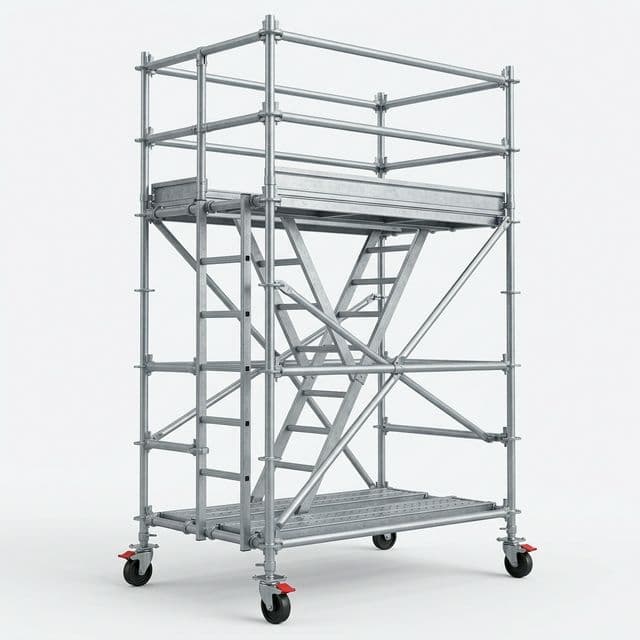
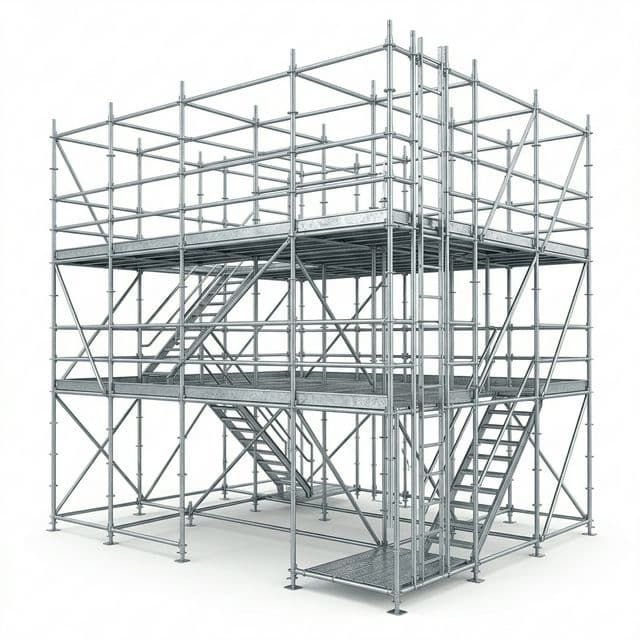
The practical triad is supported, suspended, and mobile. Different sub-families can sit inside each lane, but this framework captures the first decision that buyers need to make. The shown height bands are screening ranges for procurement triage, not universal legal limits across all scaffold designs.
| Type | Planning height band | Load lane | Mobility lane | Best use | Dominant constraint |
|---|---|---|---|---|---|
| Supported scaffold (frame/system) | 20-120+ ft (screening band; review >125 ft by type) | Medium to heavy | Low to medium | Masonry, facade, or mixed-trade work where load and platform continuity matter. | Requires a defensible base line and tie strategy once the 4:1 trigger is exceeded. |
| Suspended scaffold | 40-300 ft (screening band; anchorage and rescue govern) | Light to medium | Vertical repositioning | Vertical envelope access on tall facades or under-bridge zones with limited base footprint. | Anchorage verification, wind limits, and rescue planning drive decision quality. |
| Mobile scaffold tower | 6-40 ft (screening band; rider movement has 2:1/3 deg gates) | Light to medium | High horizontal mobility | Indoor maintenance, MEP strip work, and repetitive short-cycle repositioning. | Height and load boundaries are tight; uneven ground is an immediate risk multiplier. |
Method and evidence
The tool is a weighted decision model. It prioritizes geometry, load lane, and boundary gates first, then applies mobility and execution-speed signals.
| Decision dimension | Weight in selector | Decision role | Why it matters |
|---|---|---|---|
| Work zone | 22% | Primary geometry signal | Facade, interior ceiling, and bridge-under zones push type choice in different directions. |
| Load profile | 22% | Primary structural demand signal | Heavy material demand narrows safe options quickly and penalizes mobile/suspended choices. |
| Relocation cadence | 16% | Execution-speed signal | Relocation cadence decides whether mobile speed advantage is commercially meaningful. |
| Ground condition | 16% | Foundation feasibility signal | Base-line quality decides whether supported/mobile solutions remain practical. |
| Overhead anchorage status | 14% | Suspended viability gate | Without verified anchorage, suspended recommendations move into boundary state. |
| Working height and weather | 10% | Boundary amplifier | Height range shifts risk exposure and determines when quick selection must escalate. |
| Source | What it supports | Scope and limit | Date marker |
|---|---|---|---|
| OSHA 29 CFR 1926.450 (definitions) | Page taxonomy for the 3 types of scaffolding used in construction | Defines supported, suspended, and mobile scaffold terminology and related baseline vocabulary for this page. | Reviewed April 5, 2026 |
| OSHA 29 CFR 1926.451 | Core numeric boundaries in the comparison and risk sections | General requirements including load capacity, platform width baseline, 4:1 tipping trigger, and fall-protection threshold. | Reviewed April 5, 2026 |
| OSHA 29 CFR 1926.452 | Mobile scaffold caution logic and boundary prompts | Additional scaffold-type requirements, including mobile scaffold details and movement constraints. | Reviewed April 5, 2026 |
| OSHA eTool: Scaffolding | Method explanation and decision-flow visuals | Interpretive training guidance that clarifies supported and suspended scaffold use patterns. | Reviewed April 5, 2026 |
| OSHA eTool FAQ (mobile scaffolds vs aerial lifts) | Compliance-boundary comparison and mixed-component caution | Clarifies standard split between aerial lifts and mobile scaffolds and reiterates competent-person checks for mixed-manufacturer components. | Reviewed April 5, 2026 |
| OSHA interpretation letter (March 10, 2004) | Mobile movement boundary wording and applicability nuance | Interpretation letter that explains 4:1 restraint logic and stricter 2:1 expectations when workers ride during movement. | Reviewed April 5, 2026 |
| U.S. BLS CFOI 2024 (PDF) | Risk data snapshot and updated severity baseline | Primary U.S. fatal-injury data for 2024 including all-workplace and construction fall/slip/trip indicators. | Published February 19, 2026; reviewed April 5, 2026 |
| CPWR Data Bulletin: Fall Injuries in Construction (March 2024) | Scaffold/staging trend data and construction-specific risk context | Construction-focused fall bulletin using BLS CFOI data; includes scaffold/staging source trends and fall-to-lower-level share. | Published March 2024; reviewed April 5, 2026 |
Risk data snapshot
These rows bring recent U.S. and construction-specific injury data into the decision flow so risk labels are not purely qualitative.
| Metric | Value | Why it matters for decisions | Source and date |
|---|---|---|---|
| U.S. total fatal occupational injuries | 5,070 in 2024 (down 4.0% from 5,283 in 2023) | Keeps scaffold decisions grounded in current injury-severity context rather than legacy slogans. | BLS CFOI 2024 (published February 19, 2026) |
| Fatal falls, slips, and trips (all occupations) | 844 in 2024 (down 4.6% from 885 in 2023) | Shows fall-related fatal exposure remains material even after year-over-year decline. | BLS CFOI 2024 Table 2 |
| Construction/extraction fatal falls, slips, and trips | 370 in 2024 (down 7.5% from 400 in 2023) | Confirms construction remains a high-consequence lane for fall controls. | BLS CFOI 2024 occupation highlights |
| Construction fatal falls, slips, and trips | 412 in 2022; 397 were falls to lower level (96.4%) | Supports focusing controls on fall-to-lower-level pathways in scaffold planning. | CPWR Data Bulletin March 2024 |
| Fatal injuries where source = scaffolds/staging | 51 in 2022 vs 49 in 2021 (+4.1%) | Shows scaffold/staging remains an active fatal-source channel, not a solved risk class. | CPWR Data Bulletin March 2024 (BLS-based chart 6) |
Comparison layer
Buyers rarely compare only scaffold types. They also compare access alternatives. This table keeps the tradeoffs explicit so a type recommendation is not mistaken for a one-size-fits-all answer.
| Alternative option | Best use | Tradeoff vs three-type scaffold model | Main limit | Evidence status |
|---|---|---|---|---|
| MEWP / boom lift | Fast horizontal coverage where short-term access beats platform continuity. | Can be faster than scaffolding for spot tasks, but rental/ops constraints change economics on long-duration jobs. | Requires operator certification, can struggle with dense facade obstructions, and may underperform in heavy-material workflows. | OSHA 1926.451 states scaffold rules do not apply to aerial lifts; aerial lifts are governed by 1926.453. |
| Mast climber work platform | Facade work needing mast-driven vertical travel with a larger work deck than rope-style suspended setups. | Strong productivity in the right project profile, but not the default option for mixed short-cycle packages. | Specialized system planning and project setup complexity can exceed quick-turn procurement lanes. | Pending verification: no reliable public benchmark was found to normalize mast-climber cost/productivity advantage across projects. |
| Tube-and-coupler scaffold | High-adaptability geometry and custom tie-ins when modular regularity is not available. | Can outperform in irregular geometry, but procurement and erection control burden rises. | Higher assembly complexity and quality variability if crew discipline is weak. | OSHA 1926.452(b)(10) sets over-125-ft engineer-design trigger for tube-and-coupler scaffolds. |
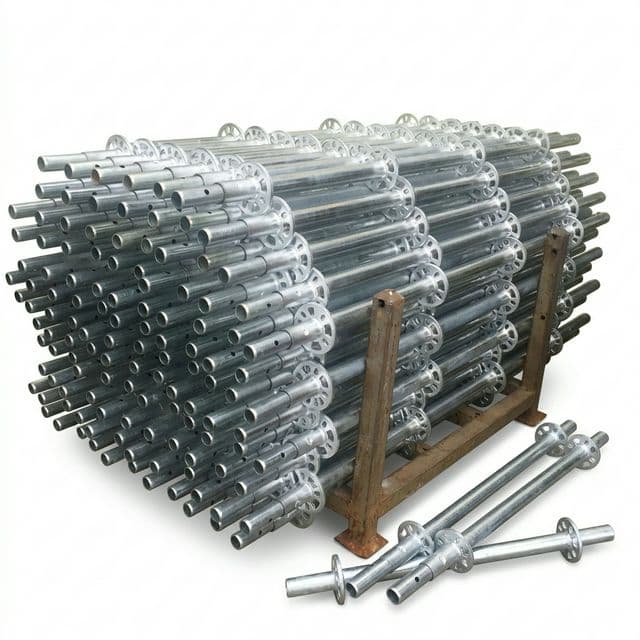
| System scaffold variants (ringlock/cuplock) | Repeatable modular layouts and frequent component reuse at scale. | Usually sits inside the supported-scaffold lane rather than replacing the three-type framework itself. | Requires disciplined component planning and compatibility control. | OSHA 1926.451(b)(10) requires competent-person structural checks when intermixing components across manufacturers. |
Boundary scope and evidence gaps
The rows below separate what is clearly supported by public sources from what remains uncertain. Items marked as pending are not forced into false certainty.
| Condition | Boundary or rule | Applicability scope | Source and date |
|---|---|---|---|
| Mobile scaffold moved with workers onboard | Surface within 3 deg of level, movement height-to-base ratio <=2:1 unless tested design, and push force applied no higher than 5 ft. | Applies only when workers remain on the scaffold during movement; stricter than stationary use. | OSHA 1926.452(w)(3), 1926.452(w)(6)(i), 1926.452(w)(6)(ii), reviewed April 5, 2026 |
| Supported scaffold in high-elevation configuration | Over 125 ft requires registered professional engineer design and construction/loading per design. | Specific to tube-and-coupler and fabricated-frame scaffolds; not a universal cap for every scaffold variant. | OSHA 1926.452(b)(10) and 1926.452(c)(6), reviewed April 5, 2026 |
| Comparing scaffold vs MEWP options | Aerial lifts are regulated under 1926.453; scaffold criteria in 1926.451/1926.452 do not directly transfer. | Relevant when evaluating boom/scissor alternatives against scaffold options. | OSHA 1926.451 preface and OSHA eTool FAQ Q279, reviewed April 5, 2026 |
| Combining components from different manufacturers | Intermixing components is allowed only when components fit without force and competent-person structural checks are satisfied. | Applies to mixed-brand retrofit jobs and reused inventories. | OSHA 1926.451(b)(10), reviewed April 5, 2026 |
| Evidence gap | Status | Why this is still uncertain | Minimum executable path |
|---|---|---|---|
| Universal cross-project unit-cost benchmark by scaffold type | Pending verification / no reliable public data | This refresh did not find a regulator-grade public dataset that normalizes cost by type across height, geography, and labor model. | Collect local rental + labor + move-frequency assumptions before using cost as a tie-breaker. |
| Public universal cross-brand compatibility matrix for scaffold components | Partial evidence + critical gap | OSHA defines competent-person responsibilities for intermixing, but no universal public compatibility matrix was found in reviewed sources. | Treat mixed-brand jobs as measurement-first and require competent-person sign-off before ordering. |
| Public rescue-time benchmark by facade type for suspended setups | Pending verification / no reliable public data | Reviewed sources define safety obligations but do not publish one benchmark rescue-time dataset for procurement screening. | Request project-specific rescue method statement and drill assumptions in the first RFQ cycle. |
Risk and limits
These are the recurrent failure modes in procurement-led scaffold decisions. Keep mitigation attached to each risk so execution teams know exactly what to do next.
| Risk | Likelihood | Impact | Mitigation action |
|---|---|---|---|
| Choosing by speed only while ignoring load demand | Medium | High | Bind each tool result to a load lane and require confirmation in the first RFQ email. |
| Selecting suspended access before anchorage verification | Medium | High | Treat unknown or unavailable anchorage as a hard boundary for suspended recommendations. |
| Ignoring supported-scaffold 4:1 tipping boundary | High | High | Check height vs base width and add tie/restraint planning when the 4:1 trigger is exceeded. |
| Overextending mobile towers into high-elevation duty | High | Medium | Keep mobile recommendations below the page boundary and re-screen when height or load climbs. |
| Treating close-score selector output as final engineering decision | Medium | Medium | Require one drawing or photo with dimensions when the selector returns close-score outputs. |
| Rule number or threshold | What it means | Why buyer should care | Source and date |
|---|---|---|---|
| 4:1 height-to-base ratio | Supported scaffolds above this free-standing trigger must be restrained from tipping. | A supported-scaffold quote is incomplete without tie/restraint planning once this boundary is crossed. | OSHA 29 CFR 1926.451(c)(1), reviewed April 5, 2026 (official OSHA regulation page) |
| Platforms must support at least 4x maximum intended load | Load assumptions must include personnel, tools, and material demand with a 4x safety margin baseline. | Load lane selection in the tool should match the real material plan before RFQ release. | OSHA 29 CFR 1926.451(a)(1), reviewed April 5, 2026 |
| General platform width baseline: 18 in (with exceptions in rule text) | Narrower working platforms are only allowed in specific constrained situations noted by OSHA. | Type selection alone does not solve platform width adequacy for the real task geometry. | OSHA 29 CFR 1926.451(b)(2), reviewed April 5, 2026 |
| Fall protection threshold: more than 10 ft above a lower level | Guardrail/PFAS planning is required once scaffold work exceeds this height threshold. | Procurement should include fall-protection assumptions before comparing only unit cost. | OSHA 29 CFR 1926.451(g)(1), reviewed April 5, 2026 |
| Tie repetition after first tie: 20 ft / 26 ft vertical, max 30 ft horizontal | Tie intervals vary with scaffold width and horizontal spacing limits. | High-elevation supported selections should include tie repetition logic in planning notes. | OSHA 29 CFR 1926.451(c)(1)(ii), reviewed April 5, 2026 |
| Suspension rope strength: at least 6x maximum intended load (with scaffold-type detail) | Suspended options require rope and hardware capacity checks beyond generic deck-load assumptions. | Facade access procurement should include hoist and rope assumptions early, not after vendor selection. | OSHA 29 CFR 1926.451(a)(3) and 1926.451(a)(4), reviewed April 5, 2026 |
| Mobile movement with riders: <=3 deg surface, <=2:1 movement ratio, push force <=5 ft | Mobile scaffold travel while occupied is conditional, not a default operating mode. | Fast-move assumptions can fail on uneven routes and should be screened before mobile-first procurement. | OSHA 29 CFR 1926.452(w)(3), 1926.452(w)(6)(i), 1926.452(w)(6)(ii), reviewed April 5, 2026 |
| Tube-and-coupler and fabricated-frame scaffolds over 125 ft require RPE design | High-elevation supported configurations cross from quick screening to engineered design obligation. | At this threshold, quote speed is less important than verified design accountability. | OSHA 29 CFR 1926.452(b)(10) and 1926.452(c)(6), reviewed April 5, 2026 |
Scenario examples
Scenario cards keep the method practical. Each card shows premise, process, and outcome so teams can map their own job to a closest case before sending an inquiry.
FAQ
Questions are grouped by type logic, boundary control, and workflow execution so the page can support both first-time and repeat buyers.
Next action
Use this final step when the tool gives a result but you still need supplier-side confirmation on dimensions, anchorage, or load assumptions. Keep the recommendation and the boundary notes in the same email.
Priority inquiry email
Send your selected type, working height, load lane, base condition, and one visual reference so review starts from the same boundary assumptions used by this page.