The fast answer is that a six-foot or seven-foot lane can be valid when the bay measurement and scaffold family are known. This page keeps that answer reliable by adding span verification, deck-width screening, overhang and compatibility gates, and risk boundaries on the same URL.
Immediate alias answer
6 ft / 7 ft lane
Use the nearest measured bay as first lane, then verify support span and compatibility before release.
Boundary reminder
4:1
If free-standing ratio exceeds 4:1, add restraint planning before final board release.
Immediate outcome
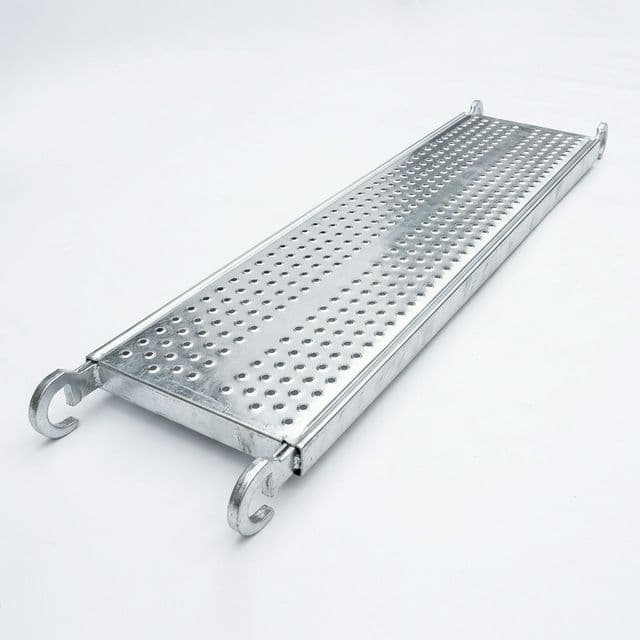
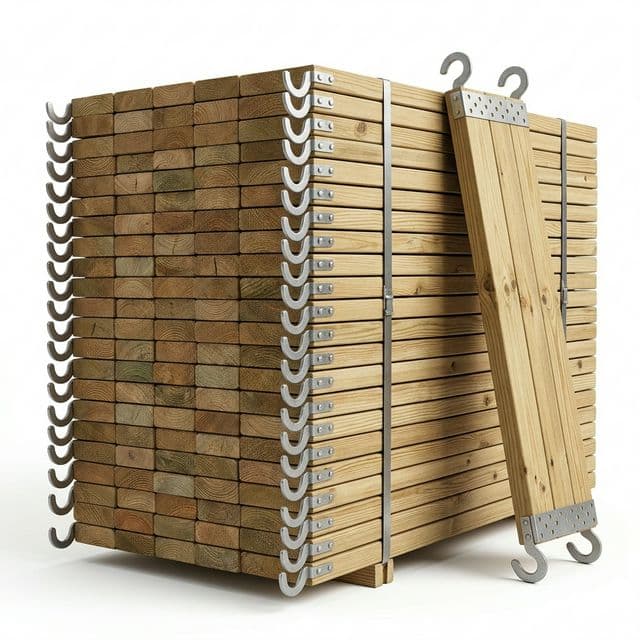
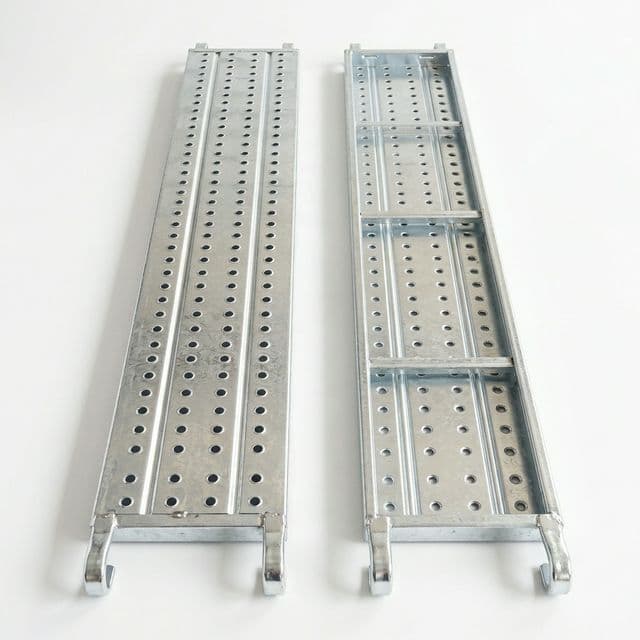
If you came here for 6 pick board for scaffolding or 7 scaffold walk boards (also phrased as 7 foot scaffold walk board), start with the checker. It gives a board-family lane first, then tells you when to continue fast and when to escalate.
12
sources reviewed
Rule text, product families, and explicit gaps are all visible on-page.
6
family bands mapped
Tool output compares frame and system lanes instead of forcing one lane.
21
FAQ answers
Follow-up buyer questions are grouped by decision intent.
Report summary
These conclusions are designed to be decision-grade: short enough for speed, but each tied to evidence and explicit limits.
| Buyer phrase | Likely meaning | Why it matters |
|---|---|---|
| 6 pick board for scaffolding | Usually a shorthand request for a six-foot walk-board or deck lane in frame or small-bay system setups. | It is actionable for RFQ triage, but still needs support spacing and family confirmation before order release. |
| scaffolding walk boards | Broad demand covering board length families, width adequacy, and use-case boundaries. | Canonical page keeps one URL for both tool intent and decision-depth intent without keyword cannibalization. |
| 7 scaffold walk boards | Usually a seven-foot board-family request for frame bays where six-foot span is too short; often phrased as "7 foot scaffold walk board." | Alias stays on this canonical page and still requires support spacing, overhang, and compatibility checks before release. |
| 6 ft scaffold plank | A practical frame-lane size for short bays, often chosen for maneuverability and compact tower geometry. | Six-foot family exists publicly, but manufacturer-specific limits and connection geometry still apply. |
| ringlock steel deck length | System-scaffold request where deck length should follow ledger family dimensions. | This helps prevent mixing frame plank assumptions into system-scaffold procurement. |
| walk board for material staging | Request goes beyond personnel access and enters heavier load/distribution review. | Page intentionally switches to boundary state and recommends design review. |
Alias answer
Keep these aliases on this canonical URL, convert them into measurable checks, and avoid pretending one phrase can replace fit and safety verification.
| Condition | Signal | Action | Stop when |
|---|---|---|---|
| Bay length lands around 6 ft and support points are clear | Use a 6 ft walk-board family as the RFQ starting lane. | Keep six-foot wording in inquiry and add one photo of support geometry before final SKU confirmation. | Support spacing is unknown or mixed-brand fit is uncertain. |
| Bay length drifts closer to 7 ft | Treat it as a 7 ft family check, not a forced 6 ft decision. | Re-measure bay and compare both 6 ft and 7 ft public families in RFQ notes. | Field measurement cannot be confirmed. |
| Search intent is "7 scaffold walk boards" (or "7 foot scaffold walk board") | Keep the seven-foot alias wording, then prove fit against support geometry. | Use the 7 ft family as first RFQ lane and include measured support spacing plus overhang values while preserving alias wording in the RFQ. | Family fit or component compatibility cannot be evidenced. |
| System scaffold with ledger-driven deck families | Map to listed system deck lengths such as 2.07 m, 2.57 m, or 3.07 m where applicable. | Use ledger length as primary selector and keep "6 pick" only as intent label. | Ledger family is not confirmed. |
| Overhang is below 6 in or above OSHA default max | Span keyword can no longer be trusted as a safe standalone pick. | Correct overhang geometry first, or provide designed/secured exception evidence in the RFQ. | Actual end-support detail is still unknown. |
| Components are mixed and compatibility is not documented | Treat this as a stop state under OSHA 1926.451(b)(10). | Request fit confirmation from supplier/competent person and attach node photos before PO release. | Compatibility remains assumption-only. |
| Use case shifts to material staging | Keyword-derived walk-board pick is no longer enough for safe procurement. | Escalate into layout and load review with drawing-backed details. | Load path and distribution remain undefined. |
Stage1b enhancement audit
Each row states the gap, why it mattered, and the applied fix so the report layer is not just decorative. Research refresh date: April 7, 2026.
| Gap found | Why it mattered | Applied enhancement |
|---|---|---|
| Scope boundary between supported and suspension scaffolds was not explicit enough. | Users could misapply supported-scaffold defaults to suspension scenarios where different support rules apply. | Added explicit evidence and threshold rows tied to OSHA 1926.450 definitions and marked suspension-style requests as escalation cases. |
| Default rules were visible, but exception conditions were not decision-ready. | Teams could enforce 18 in width or 14 in front-edge defaults without checking narrow-area and operation-specific exceptions. | Added boundary logic for OSHA 1926.451(b)(2)(ii) and 1926.451(b)(3)(i)-(ii), including minimum action paths when an exception is claimed. |
| Jurisdiction risk was under-specified for multi-state procurement teams. | Buyers could treat federal text as final in OSHA State Plan jurisdictions with potentially stricter enforcement detail. | Added State Plan evidence (22 full-coverage plans + 7 public-sector-only plans) and "at least as effective" interpretation guidance in the risk layer. |
| Compliance urgency lacked a direct enforcement signal. | Readers could misread scaffold compliance as a low-probability edge case instead of a recurring citation exposure. | Added OSHA Top 10 citation context (FY2024 list) to connect technical limits with real enforcement outcomes. |
| Data-gap disclosure existed, but was not structured for execution decisions. | Teams could over-trust inferred conclusions in areas with no reliable open incident series. | Added a dedicated "pending confirmation / no reliable public dataset" block with explicit handling guidance and update cadence. |
| Decision dimension | Weight in tool | Decision role | Why it matters |
|---|---|---|---|
| Scaffold family | 18% | Compatibility gate | Frame plank and system deck families use different geometry assumptions. |
| Bay/support span | 18% | Primary length selector | Length mismatch creates fit and deflection risk even when keyword intent sounds right. |
| Deck width (board count x width) | 12% | Platform adequacy screen | Deck-width adequacy is a separate decision from board length. |
| Board end overhang | 12% | Support geometry gate | OSHA sets minimum and default maximum end extension ranges that can invalidate a length-first pick. |
| Front-edge gap to work face | 10% | Fall-exposure gate | OSHA front-edge distance limits can fail even when length and width look acceptable. |
| Fall-protection readiness (>10 ft) | 10% | Execution gate | Above 10 ft, board-family selection is incomplete until protection controls are confirmed. |
| Mixed-component compatibility | 12% | Intermix safety gate | Dimensional match alone is insufficient when brands/systems are mixed without compatibility proof. |
| Use case | 4% | Boundary trigger | Material staging changes risk class and pushes review beyond quick catalog pick. |
| Stability ratio (height/base) | 4% | Safety gate | Crossing 4:1 means restraint planning is mandatory before final release. |
Threshold-to-action table
| Gate | Threshold | Why this gate exists | Minimum corrective action |
|---|---|---|---|
| Scaffold type scope | OSHA 1926.450 defines supported scaffolds and suspension scaffolds as different categories; this checker is scoped to supported-style board decisions. | A valid supported-scaffold board pick can be invalid when applied to suspension setups. | If scope is suspended/swing-stage work, stop quick pick and escalate to suspension-specific review. |
| Platform width baseline and narrow-area exception | OSHA 1926.451(b)(2): generally >= 18 in. Exception in 1926.451(b)(2)(ii): in areas so narrow platforms cannot be at least 18 in, width must be as wide as feasible with fall protection. | Default 18 in screening is useful, but exception claims need explicit feasibility and protection proof. | If <18 in, document narrow-area feasibility and attach guardrail/PFAS evidence before release. |
| Platform-unit gap | OSHA 1926.451(b)(1)(i): normally <= 1 in; 1926.451(b)(1)(ii): up to 9.5 in only where necessary around uprights and no feasible closure exists. | Open deck gaps can defeat otherwise correct board-length selections. | Do not release quick quote until gap-closure method or constrained exception is documented. |
| Front-edge distance to work face | OSHA 1926.451(b)(3): <= 14 in by default. 1926.451(b)(3)(i)-(ii) includes operation-specific allowances, including 18 in for plastering/lathing and 3 in for outrigger scaffolds. | Length fit does not control edge fall exposure. | If >14 in, do not auto-approve: capture operation type, exception clause, and installed protection evidence. |
| Board end support / overhang | OSHA 1926.451(b)(4)-(b)(5): >= 6 in support extension and default <=12 in (<=18 in for longer planks) unless designed/secured. | Overhang can invalidate a board family despite matching span. | Re-measure both ends and include engineered exception evidence where default limits are exceeded. |
| Fall-protection trigger | OSHA 1926.451(g)(1): each employee on a scaffold >10 ft above lower level must be protected from falling. | Procurement speed cannot bypass execution-level protection readiness. | Mark output as boundary until guardrail/PFAS readiness is explicitly confirmed. |
| Wood plank surface visibility | OSHA 1926.451(b)(9): wood platforms must not be covered with opaque finishes (except edge coverings for identification or warning). | Opaque coatings can hide damage and undermine inspection quality. | For wood selections, require surface/grade visibility in photo checks before PO release. |
Evidence layer
The page distinguishes confirmed regulation and public family evidence from unresolved compatibility gaps.
| Claim | Status | Evidence | Limit |
|---|---|---|---|
| Supported scaffold components and platforms must support at least 4x maximum intended load. | Confirmed in OSHA regulation text | OSHA 29 CFR 1926.451(a)(1) states scaffold and component load-support requirements for supported scaffolds. | Rule text is mandatory baseline but does not name specific product families or brand compatibility.OSHA 29 CFR 1926.451(a)(1), reviewed April 7, 2026 |
| Supported and suspension scaffolds are distinct categories and must not be treated as the same decision model. | Confirmed in OSHA definitions | OSHA 29 CFR 1926.450 defines supported scaffold and suspension scaffold separately. | This page and checker are built for supported-style board decisions and do not replace suspension-scaffold planning.OSHA 29 CFR 1926.450(b), reviewed April 7, 2026 |
| Supported-scaffold working platforms generally use an 18 in minimum-width baseline, with a narrow-area exception requiring "as wide as feasible" plus fall protection. | Confirmed in OSHA regulation text | OSHA 29 CFR 1926.451(b)(2) sets width baseline and 1926.451(b)(2)(ii) defines constrained-area handling. | Constrained-area exceptions are not auto-approved here; feasibility and fall-protection evidence are required.OSHA 29 CFR 1926.451(b)(2), reviewed April 7, 2026 |
| Platform-unit gaps have explicit limits: normally 1 in max, and up to 9.5 in only where necessary around uprights when no feasible closure exists. | Confirmed in OSHA regulation text | OSHA 29 CFR 1926.451(b)(1)(i)-(ii) defines gap limits for platform units and narrow exceptions. | Exception handling is task-specific; this page treats unresolved gap conditions as review-required.OSHA 29 CFR 1926.451(b)(1)(i)-(ii), reviewed April 7, 2026 |
| Front-edge distance is 14 in by default, but OSHA includes operation-specific allowances such as 18 in for plastering/lathing and 3 in for outrigger scaffolds. | Confirmed in OSHA regulation text | OSHA 29 CFR 1926.451(b)(3) plus 1926.451(b)(3)(i)-(ii) define default and exception conditions. | Exception claims still require operation context and installed protection evidence.OSHA 29 CFR 1926.451(b)(3)(i)-(ii), reviewed April 7, 2026 |
| Platform units must be fully decked with no unsupported projections beyond supports unless restraint/design conditions are met. | Confirmed in OSHA regulation text | OSHA 29 CFR 1926.451(b)(4) sets a minimum 6 in support extension and 1926.451(b)(5) sets default maximum extension limits. | This page applies OSHA defaults and flags exceptions as review-required rather than auto-approved.OSHA 29 CFR 1926.451(b)(4)-(b)(5), reviewed April 7, 2026 |
| Each employee on a scaffold more than 10 ft above a lower level must be protected from falling. | Confirmed in OSHA regulation text | OSHA 29 CFR 1926.451(g)(1) defines the above-10-ft fall-protection requirement. | This clause sets a protection trigger, but project-specific implementation still requires documented guardrail/PFAS details.OSHA 29 CFR 1926.451(g)(1), reviewed April 7, 2026 |
| Mixed scaffold components are not allowed unless they fit together and keep structural integrity. | Confirmed in OSHA regulation text | OSHA 29 CFR 1926.451(b)(10) defines intermixing conditions for scaffold components. | Rule establishes boundary logic but does not provide brand-by-brand compatibility tables.OSHA 29 CFR 1926.451(b)(10), reviewed April 7, 2026 |
| Free-standing supported scaffolds above 4:1 height-to-base ratio need restraint from tipping. | Confirmed in OSHA regulation text | OSHA 29 CFR 1926.451(c)(1) requires ties/guys/braces or equivalent restraint above the 4:1 trigger. | This page flags the trigger but does not replace project-specific tie layout planning.OSHA 29 CFR 1926.451(c)(1), reviewed April 7, 2026 |
| Scaffolds/components must be inspected by a competent person before each work shift and after events that may affect integrity. | Confirmed in OSHA regulation text | OSHA 29 CFR 1926.451(f)(3) defines recurring inspection responsibility and timing. | Inspection frequency does not replace fit validation; both are required for safe release.OSHA 29 CFR 1926.451(f)(3), reviewed April 7, 2026 |
| Platform deflection under load should not exceed 1/60 of the span on scaffold platforms. | Confirmed in OSHA regulation text | OSHA 29 CFR 1926.451(f)(16) sets a measurable deflection boundary. | Page flags this as a design boundary; deflection verification needs project-specific engineering checks.OSHA 29 CFR 1926.451(f)(16), reviewed April 7, 2026 |
| Wood scaffold platforms must not be covered with opaque finishes except for edge markings used for identification/warnings. | Confirmed in OSHA regulation text | OSHA 29 CFR 1926.451(b)(9) limits opaque coatings on wood platforms so surface condition remains inspectable. | Requirement applies specifically to wood platforms and does not replace grade/spec checks from the manufacturer.OSHA 29 CFR 1926.451(b)(9), reviewed April 7, 2026 |
| OSHA State Plan programs can be more stringent than federal OSHA while remaining at least as effective. | Confirmed in OSHA State Plan FAQ | OSHA states that 22 State Plans cover both private and public sectors, and 7 plans cover public-sector workers only; all must be at least as effective as federal OSHA. | This page cannot infer every local variance; buyers still need site/jurisdiction-specific confirmation.OSHA State Plans FAQ, reviewed April 7, 2026 |
| Scaffolding remains a frequent citation category in U.S. enforcement summaries. | Confirmed in OSHA enforcement summary page | OSHA Top 10 Cited Standards page (FY2024 list) includes Scaffolding (1926.451) among the most frequently cited standards. | Citation ranking signals compliance pressure, not incident causation by board-size mismatch.OSHA Top 10 Cited Standards, updated August 20, 2025; reviewed April 7, 2026 |
| Public manufacturer listings show practical 6 ft, 7 ft, and 10 ft plank families in active circulation. | Confirmed in manufacturer product pages | Louisville Ladder lists 6 ft (P21206), 7 ft (PD9207), and 10 ft (PD9210) scaffold plank families. | Manufacturer listings are family evidence, not universal interchange standards across every scaffold system.Louisville Ladder product pages (P21206, PD9207, PD9210), reviewed April 7, 2026 |
| System deck families can be ledger-length driven (public Ringlock reference includes lengths such as 1.40 m, 1.57 m, 2.07 m, 2.57 m, and 3.07 m). | Confirmed in public system brochure | Doka Ringlock brochure lists steel deck lengths across ledger families with widths such as 0.19 m and 0.32 m. | One system reference does not prove cross-system interchangeability across all Ringlock suppliers.Doka Ringlock brochure, reviewed April 7, 2026 |
| BLS CFOI reports 5,070 fatal occupational injuries in 2024 and states a worker died every 104 minutes. | Confirmed in BLS release data | BLS CFOI 2024 news release (published February 19, 2026) provides the total fatal count and interval statement. | Total fatality context supports urgency but does not isolate scaffold board selection as a sole causal factor.BLS CFOI 2024 release (published February 19, 2026), reviewed April 7, 2026 |
| Fatal falls/slips/trips remained high in 2024, with 844 total and 370 in construction/extraction occupations; 10.8% of fatal falls were from more than 30 feet. | Confirmed in BLS release data | BLS CFOI 2024 release reports these values in its event and occupation breakdown. | Occupation-based values are not identical to industry-sector tables and still do not isolate walk-board mis-sizing as a direct root cause.BLS CFOI 2024 release (published February 19, 2026), reviewed April 7, 2026 |
| BLS Table A-9 reports 389 fatal falls/slips/trips in the construction industry sector in 2024. | Confirmed in BLS table | BLS Table A-9 provides sector-level fatal fall counts and lists 389 for construction in 2024. | Industry-sector tables and occupation tables use different slices; use them as complementary context, not one-to-one comparisons.BLS Table A-9 (2024), reviewed April 7, 2026 |
| UK HSE guidance uses explicit duty classes and inspection cadence references that differ from OSHA framing. | Confirmed in HSE guidance | HSE states loading classes (light 0.75 kN/m^2, general 2.0 kN/m^2, heavy 3.0 kN/m^2), a typical minimum platform width of 600 mm, and inspection after installation and at least every 7 days. | HSE guidance is not a substitute for local legal requirements in non-UK jurisdictions.HSE Scaffolding guidance, reviewed April 7, 2026 |
| No reliable public dataset currently isolates walk-board length mismatch incidents as a standalone national root-cause metric. | Public data gap (explicit) | Regulatory and fatality datasets reviewed here classify broader scaffold/fall events and do not publish a dedicated board-length mismatch series. | Treat board-pick risk controls as preventive controls and maintain photo/measurement evidence in RFQ packets.BLS + OSHA + HSE source set, reviewed April 7, 2026 |
Pending confirmation
This page does not force conclusions when evidence is weak. Each gap below has an explicit handling rule so buyers can still act safely.
| Topic | Status | Current handling | Next review action |
|---|---|---|---|
| Board-length mismatch incident rate | No reliable public dataset | Use preventive controls (measured span, overhang capture, compatibility proof) instead of claiming a quantified mismatch rate. | Re-check BLS/OSHA/HSE source sets during the next content refresh cycle. |
| Cross-brand compatibility matrix by SKU family | Pending confirmation / supplier-specific | Treat mixed-brand setups as review state until documented fit/integrity evidence is supplied. | Request project-specific supplier documentation before purchase-order release. |
| Jurisdiction-specific scaffold deltas for every State Plan | Partial public coverage | Use federal OSHA as baseline and require local-jurisdiction verification in RFQ workflow. | Validate state/territory enforcement details when project location is confirmed. |
Regulatory boundary comparison
This comparison is included to prevent over-generalized decision-making when procurement teams work across regions. Always apply the governing local requirement for the project jurisdiction.
| Dimension | U.S. OSHA reference | UK HSE reference | Decision implication |
|---|---|---|---|
| Load design baseline | OSHA 1926.451(a)(1): scaffold and components must support at least 4x the maximum intended load. | HSE guidance: typical general-purpose working scaffold duty around 2.0 kN/m^2; heavy-duty use can move to around 3.0 kN/m^2. | Both frameworks require explicit load planning; board length alone is never sufficient. |
| Board end support / overhang | OSHA 1926.451(b)(4)-(b)(5): minimum 6 in end support, with default maximum 12 in (or 18 in for longer planks) unless designed/secured. | HSE guidance: scaffold boards should overhang at least 50 mm and generally no more than four times board thickness unless designed otherwise. | Overhang boundaries directly affect board family feasibility and movement risk. |
| Fall-protection threshold | OSHA 1926.451(g)(1): each employee on a scaffold more than 10 ft above a lower level must be protected from falling. | UK Work at Height Regulations apply wherever there is a risk of a fall liable to cause personal injury (not only above a fixed 2 m threshold). | Board-family decisions are incomplete until fall-protection readiness is explicitly confirmed. |
| Ongoing inspection rhythm | OSHA 1926.451(f)(3): competent person checks before each work shift and after events that can affect integrity. | HSE guidance: inspect after installation, at least every 7 days, and after events likely to affect stability. | A valid pick at day 1 still needs recurring inspection controls through execution. |
| Component intermixing | OSHA 1926.451(b)(10): components from different manufacturers may be mixed only if fit and structural integrity are maintained. | HSE expects scaffold design and competent supervision under recognized guidance; undocumented mixed-component assumptions remain high risk. | Mixed-brand fits must be proven with evidence, not inferred from nominal dimensions. |
| Jurisdiction model | Federal OSHA provides baseline rules; OSHA State Plans must be at least as effective and can be more stringent. | HSE framework applies UK regulations and guidance; risk-based controls apply across work-at-height tasks. | Do not treat one jurisdictional text as automatically complete for another project location. |
Comparison and action layer
This section is not a ranking contest. It is a practical comparison for deciding when to quote fast, when to review, and when to escalate.
| Family option | Public size | Best for | Caution |
|---|---|---|---|
6 ft aluminum plank laneSource | 6 ft x 12 in (example listing) | Short-bay access work where compact handling is useful and support spacing is confirmed. | Do not assume one six-foot listing is interchangeable across every frame or system setup. |
7 ft steel board laneSource | 7 ft (manufacturer listing) | Common frame-bay span requests where six-foot span is too short. | Width and hook details still require fit verification against the actual scaffold. |
10 ft steel board laneSource | 10 ft (manufacturer listing) | Longer bay intervals within standard family ranges. | Longer deck length amplifies stability and support-spacing sensitivity. |
Ringlock steel deck laneSource | 2.07 m / 2.57 m / 3.07 m families | System scaffolds where deck selection follows ledger geometry. | Do not map frame plank assumptions directly onto system ledger families. |
Unknown mixed-brand retrofitSource | N/A | Only as temporary RFQ language before physical verification. | OSHA intermixing rule applies: compatibility must be proven, not assumed from nominal dimensions. |
Compliance-first boundary laneSource | 6 in minimum overhang + 12/18 in default max overhang | Projects that need fast decisions but cannot risk release without support geometry checks. | Exceeding default overhang limits requires designed/secured conditions rather than catalog-only decisions. |
| Decision state | What makes it true | Next action |
|---|---|---|
| Quote fast | Scaffold family known, bay length matches a public family, deck width screen is clean, front-edge gap is controlled, and stability/fall-protection gates are satisfied. | Use family label in RFQ and still ask for one fit photo before purchase release. |
| Quote with review note | Nearest family is plausible, but one or more controls (front-edge condition, component fit, or operation-specific exception) still needs documented proof. | Keep the result provisional and request measurements plus protection/compatibility evidence before final SKU lock. |
| Stop and escalate | Material staging request, deck-width boundary, long span, unresolved >10-ft protection, or 4:1 stability trigger appears. | Move into drawing and safety review rather than forcing a catalog-only answer. |
Boundary and risk layer
These are the highest-impact failure modes observed in walk-board procurement conversations and the minimum mitigation path for each.
| Risk | Impact | Mitigation |
|---|---|---|
| Treating "6 pick board for scaffolding", "7 scaffold walk boards", or "7 foot scaffold walk board" as universal SKU names | High | Use six-foot or seven-foot language only as intent shorthand; verify scaffold family and support spacing. |
| Ignoring platform-width adequacy while focusing only on board length | High | Screen combined deck width against rule baseline and documented exceptions. |
| Ignoring board-end overhang limits during board family selection | High | Measure end support extension and enforce OSHA default boundaries before release. |
| Allowing front-edge distance above default OSHA limits without documented guardrail/PFAS controls | High | Treat >14 in front-edge distance as boundary state until protection and task-specific exception evidence is attached. |
| Proceeding above 10 ft without confirmed fall-protection readiness | High | Require installed guardrail/PFAS status before final board release whenever work height exceeds 10 ft. |
| Mixing components without documented compatibility proof | High | Treat unknown intermixing as stop state until fit/integrity confirmation is documented. |
| Crossing 4:1 free-standing ratio without restraint planning | High | Add tie/restraint method before final release whenever ratio exceeds 4:1. |
| Using personnel-platform board assumptions for material staging | High | Escalate to layout/load review with explicit distribution and support data. |
| Skipping recurring competent-person checks after initial fit decision | Medium | Keep pre-shift and post-event inspection cadence active even after board selection appears complete. |
| Using wood planks with opaque coatings that hide condition | Medium | Keep wood surfaces visually inspectable and avoid opaque finishes except allowed edge marking scenarios. |
| Applying federal OSHA defaults without checking State Plan jurisdiction requirements | High | Treat federal text as baseline and confirm governing state/territory rules before final release. |
| Using this supported-scaffold tool logic for suspension-scaffold decisions | High | Escalate suspension/swing-stage requests to suspension-specific planning rather than length-family quick pick. |
| Buying path | Speed | Confidence | Trade-off |
|---|---|---|---|
| Keyword-only matching | Fastest | Lowest | Provides quick language but can misclassify family and fit conditions. |
| Tool result + photo-backed RFQ | Fast enough | High | Recommended path: keeps speed while adding minimum verification evidence. |
| Engineering/drawing review | Slowest | Highest | Required for staging loads, long spans, unclear family fit, or ratio boundaries. |
Scenario review
Source table
| Source | What it supports | Scope limit | Date note |
|---|---|---|---|
| OSHA 29 CFR 1926.451 | Load factors, platform gap limits, front-edge limits, deck-width baseline, overhang limits, intermixing rule, >10 ft fall-protection trigger, competent-person checks, deflection boundary, and 4:1 trigger. | Primary U.S. regulation baseline; does not define specific commercial board SKU families. | Reviewed April 7, 2026 |
| OSHA 29 CFR 1926.450 | Definitions for supported scaffold and suspension scaffold scope boundaries. | Used here to define applicability boundary for the checker and report. | Reviewed April 7, 2026 |
| OSHA State Plans FAQ | State Plan coverage counts and "at least as effective" baseline requirement. | Jurisdiction framing source; does not provide project-specific local interpretation by itself. | Reviewed April 7, 2026 |
| OSHA Top 10 Cited Standards | Enforcement context showing scaffolding (1926.451) remains among frequent citation categories. | Citation data indicates compliance pressure, not a direct causal series for board-length mismatch incidents. | FY2024 list updated August 20, 2025; reviewed April 7, 2026 |
| BLS CFOI 2024 news release | Latest U.S. fatality context for falls/slips/trips, construction/extraction occupation values, and fatal-fall height distribution. | Occupation-focused fatality release; does not isolate walk-board length mismatch as a standalone event type. | Published February 19, 2026; reviewed April 7, 2026 |
| BLS CFOI Table A-9 (2024) | Detailed sector breakdown for fatal falls/slips/trips, including construction-sector values. | Useful for sector-level risk context; not a board-selection compatibility source. | Reviewed April 7, 2026 |
| HSE scaffolding guidance (UK) | Duty/load classes, 600 mm platform-width baseline, and inspection cadence for UK comparison. | UK guidance reference only; always confirm jurisdiction-specific legal requirements. | Reviewed April 7, 2026 |
| HSE Work at Height FAQ (UK) | Clarifies applicability of UK work-at-height requirements based on fall risk rather than fixed low-height assumptions. | UK legal-context aid for boundary comparison, not U.S. compliance guidance. | Reviewed April 7, 2026 |
| Doka Ringlock scaffold brochure | Example system deck widths and deck length families tied to ledger geometry. | One system reference used for family-shape evidence, not universal interchangeability proof. | Reviewed April 7, 2026 |
| Louisville Ladder P21206 | Example six-foot plank family in public product listing. | Useful for six-foot family evidence; product listing values are manufacturer-specific. | Reviewed April 7, 2026 |
| Louisville Ladder PD9207 | Example seven-foot plank family listing for alias-intent mapping. | Manufacturer-specific family evidence; not a cross-brand interchange guarantee. | Reviewed April 7, 2026 |
| Louisville Ladder PD9210 | Example ten-foot plank family for longer-span comparison lane. | Manufacturer-specific family evidence; not a substitute for project fit checks. | Reviewed April 7, 2026 |
FAQ
Next step
This page is intentionally single-URL and dual-purpose: it solves the immediate board pick question, then adds the trust layer so the next action is credible instead of rushed.
Priority inquiry email
Best first email: scaffold family, measured span, board count/width, use case, height/base ratio, and one fit photo or drawing.