The fast answer is that a 20 30 side bracket scaffold request usually means choosing among the public 20 in, 24 in, and 30 in frame-side families, while a listed system two-board bracket sits around 22.25 in. The page keeps that answer actionable by showing the evidence, the scaffold-family split, and the OSHA boundaries that can stop a routine quote.
Immediate answer
20-24 in
That is the main public fabricated-frame side-bracket band you should test first for a two-board request.
System reference
22.25 in
The clearest public 2-board system-bracket size found in source review for this page.
Immediate outcome
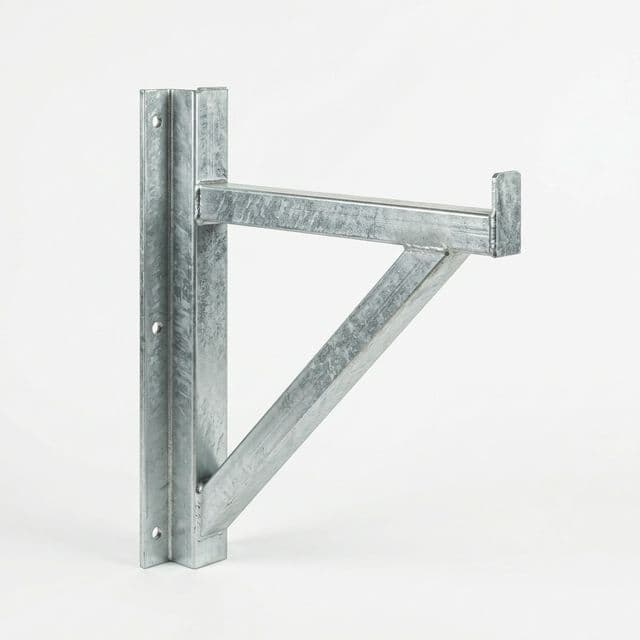
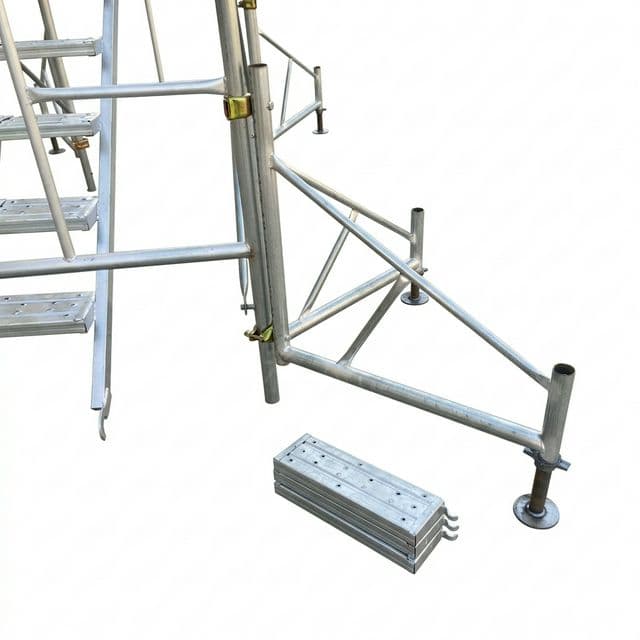
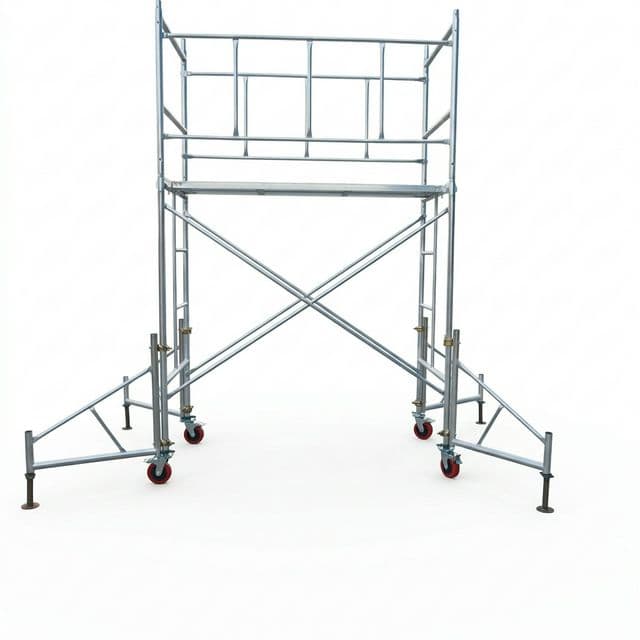
If you came here for 20 30 side bracket scaffold or 2 board bracket scaffold, use the checker to decide whether the request belongs to a 20 in, 24 in, or 30 in frame-side family, a system-board bracket family, or a boundary state that should stop the quote and move into design review.
6
public sources reviewed
Primary rule text, guidance, and product-family evidence are all visible on-page.
7
public bracket families mapped
The checker shows the discrete frame and system families instead of hiding them.
13
buyer questions answered
The FAQ closes the follow-up questions a thin side-bracket page usually skips.
Report summary
The page keeps the conclusions short, then attaches the product-family evidence, date markers, and rule boundaries that explain why the answer is useful but not careless.
| Buyer phrase | Likely meaning | Why it matters |
|---|---|---|
| 2 board bracket scaffold | A widened working platform for two boards, which usually lands near 20-24 in on fabricated-frame side brackets or around 22.25 in on a public system-board-bracket listing. | The phrase is commercially useful, but it is not a universal SKU or a cross-brand interchangeability promise. |
| 20 30 side bracket scaffold | Usually a shorthand question about whether the frame-side job should start at 20 in, stay safer with 24 in tolerance, or move into the next wider 30 in family. | It is not one standard part number. A normal two-board frame request usually starts in the 20-24 in band, while 30 in is the next wider public family once the platform grows past that range. |
| Need room for two 9.5 in planks | About 19 in of target extension before you round into the nearest public bracket family. | That is why many fabricated-frame buyers land in a 20 in family first, then review whether 24 in gives necessary tolerance. |
| Need a true 2-board system bracket | A public Cuplock listing shows a dedicated 0.56 m / 22.25 in 2-board bracket family. | That is the cleanest public evidence that the two-board phrase exists as a system-scaffold product family, not just as buyer slang. |
| Need extra width for material staging | This moves outside a normal personnel-platform side-bracket conversation. | The page intentionally stops at a boundary state because public bracket listings do not approve material-landing use on their own. |
Alias answer
The phrase usually means the buyer is already inside the fabricated-frame side-bracket conversation but has not yet translated the workface into the right public width family. This section turns that shorthand into a sourcing decision before you email the RFQ.
| Public size | What it usually signals | Use when | Stop when |
|---|---|---|---|
| 20 in | Tight frame-side answer for roughly two 9.5 in planks or another near-19 in target width. | The scaffold is fabricated frame, the request is personnel-focused, and the platform does not need extra tolerance beyond the normal two-board band. | The crew is really asking for a roomier two-board platform, a mixed plank width, or a wider task that starts pushing toward 24 in or beyond. |
| 24 in | Still a two-board frame-side decision, but with more tolerance than a tight 20 in match. | The buyer still means a normal two-board frame-side platform but wants more clearance around the boards or has deck-width uncertainty. | The request starts sounding like a third board, a large clearance problem, or material-staging work. |
| 30 in | The next wider published Bil-Jax frame-side family after the usual two-board band. | Actual deck width or workface geometry moves past the practical 20-24 in frame band and the job is still a personnel-access question. | The request crosses into material landing, abnormal cantilever width, or any geometry the page cannot verify with a simple family match. |
Evidence layer
The page only claims what can be defended with public rule text, public product-family pages, or an explicit statement that the public record is incomplete.
| Claim | Status | Evidence | Limit |
|---|---|---|---|
| Fabricated-frame side brackets cluster in discrete sizes rather than a smooth universal scale. | Confirmed in public product pages | Bil-Jax publishes inline side brackets at 20 in, 24 in, and 30 in. Metaltech separately publishes 20 in and 40 in side brackets. | Those pages prove publicly marketed family sizes, not cross-brand fit. Actual mounting geometry still has to be confirmed.Bil-Jax inline side brackets and Metaltech side-bracket product pages, reviewed March 30, 2026 |
| A true 2-board bracket exists in public system-scaffold listings at roughly 0.56 m / 22.25 in. | Confirmed in public product page | Stepup Scaffolding lists Cuplock board brackets at 1-board (0.30 m), 2-board (0.56 m), and 3-board (0.79 m). | That reference is for a system-scaffold family. It does not mean a fabricated-frame 2-board request should automatically use the same hardware.Stepup Scaffolding Cuplock board bracket page, reviewed March 30, 2026 |
| Supported scaffold platforms generally need at least 18 in of width and must carry four times the maximum intended load. | Confirmed in OSHA rule text | OSHA 29 CFR 1926.451 sets the general platform-width rule and the four-times intended-load requirement for supported scaffolds. | Meeting the width threshold does not automatically make a widened platform acceptable. Guardrails, access, and stability still matter.OSHA 29 CFR 1926.451(a)(1) and 1926.451(b)(2), reviewed March 30, 2026 |
| Once the scaffold exceeds a free-standing 4:1 height-to-base ratio, restraint becomes mandatory. | Confirmed in OSHA rule text | OSHA requires supported scaffolds above the 4:1 trigger to be restrained from tipping using guys, ties, braces, or equivalent means. | This page flags the rule boundary, but site-specific tie layout still belongs in the project safety plan.OSHA 29 CFR 1926.451(c)(1), reviewed March 30, 2026 |
| Bracketed platforms introduce extra guardrail and geometry review, not just extra deck width. | Confirmed in OSHA frame-scaffold guidance | OSHA's frame-scaffold eTool notes that side brackets should be parallel to frames, end brackets at 90 degrees, and widened platforms still require safe access and rail review. | The eTool is interpretive guidance. Use the regulation text for exact compliance language.OSHA eTool: Supported Scaffolds - Frame or Fabricated, reviewed March 30, 2026 |
| Open public evidence does not provide a universal mixed-brand compatibility matrix for side brackets. | Public-source gap | The reviewed manufacturer and supplier pages publish discrete bracket families, but none of them supply one universal interchange chart across brands and systems. | That is why the page treats photos and actual mounting geometry as required when a buyer is unsure of the scaffold family.Source review completed for this page on March 30, 2026 |
Comparison layer
This is not a winner-take-all ranking. It is a decision table that helps you understand which public family is relevant, what it proves, and what it still does not prove.
| Public family | Width | Best for | Caution |
|---|---|---|---|
Bil-Jax inline side bracketSource | 20 / 24 / 30 in | Frame-scaffold jobs that need a discrete side-bracket family for personnel work access. | Public sizing is helpful, but the page does not assume another frame brand uses the same mounting geometry. |
Metaltech 20 in side bracketSource | 20 in | Tight two-board frame-scaffold setups that stay close to a 19-20 in target platform extension. | This confirms the narrow end of the frame-side family, not a universal two-board rule across every deck width. |
Metaltech 40 in side bracketSource | 40 in | Wider frame-side expansions that need a clearly larger public family than the 2-board band. | A wide side bracket should immediately trigger stronger stability and rail review. |
Stepup Cuplock 2-board bracketSource | 0.56 m / 22.25 in | System-scaffold buyers who explicitly mean a two-board board bracket. | This is a system-scaffold reference. Do not copy it blindly into fabricated-frame procurement. |
| Decision state | What makes it true | Next action |
|---|---|---|
| Quote fast | Scaffold family is known, use is personnel-focused, extension lands inside a public family, and the 4:1 screen stays clean. | Use the public family as the commercial starting point and still request one mounting photo before release. |
| Quote with review note | The target width is close to a public family, but deck width or scaffold family still needs confirmation. | Keep the result as RFQ language, not as a final SKU decision. |
| Stop and escalate | The request crosses into material staging, exceeds the public width range, or trips the 4:1 stability screen. | Move into drawing, layout, and safety review before anyone treats the bracket as a routine accessory. |
Boundary and risk layer
Side brackets look simple when you read only the keyword. Most procurement failures happen because the team skips one of the boundary checks below.
| Risk | Impact | Mitigation |
|---|---|---|
| Treating "2 board bracket scaffold" as a universal part name | High | Separate fabricated-frame side brackets from system-scaffold board brackets before asking for a quote. |
| Using side brackets for material staging without design review | High | Escalate to layout and load review. Do not rely on a standard personnel-platform bracket listing. |
| Ignoring 4:1 stability after widening the platform | High | Check height versus minimum base width and add ties / restraint when the ratio is exceeded. |
| Assuming board count alone proves the exact width | Medium | Use actual deck width and the nearest public family, not only the nominal board count. |
| Forgetting rails, toe boards, or access when the platform gets wider | Medium | Review widened-platform edge protection and access as part of the same RFQ conversation. |
| Buying path | Speed | Confidence | Trade-off |
|---|---|---|---|
| Generic marketplace keyword match | Fastest | Lowest | You may get a listing that matches the words "2 board bracket scaffold" but not the scaffold family or mounting geometry. |
| Public family + photo-backed RFQ | Fast enough | High | This is the page's recommended path because it keeps the commercial answer quick while still checking the real mounting conditions. |
| Drawing / engineering review | Slowest | Highest | Required once the platform gets unusually wide, takes material load, or crosses the stability boundary. |
Scenario review
Source table
| Source | What it supports | Scope limit | Date note |
|---|---|---|---|
| OSHA 29 CFR 1926.451 | General supported-scaffold load, width, guardrail, and 4:1 stability requirements used throughout the page. | Primary U.S. rule text. It does not identify which commercial bracket family fits which manufacturer scaffold. | Current OSHA regulation page reviewed March 27, 2026 |
| OSHA eTool: Supported Scaffolds - Frame or Fabricated | Interpretive notes on braces, side brackets, bracket geometry, access, and stability for frame scaffolds. | Useful guidance for understanding bracket geometry and access expectations. Use the regulation page above for exact compliance language. | Reviewed March 30, 2026 |
| Bil-Jax inline side brackets | Public 20 in, 24 in, and 30 in inline side-bracket family sizes for fabricated-frame scaffolding. | Manufacturer-specific family evidence. Good for commercial size bands, not for cross-brand interchangeability. | Reviewed March 30, 2026 |
| Metaltech 20 in galvanized side bracket | Public 20 in side-bracket size, weight, finish, and ANSI / CSA / OSHA reference for a narrow fabricated-frame family. | Product-level evidence for the lower end of the frame-side band. | Reviewed March 30, 2026 |
| Metaltech 40 in side bracket | Public 40 in side-bracket family, which shows how quickly the product line moves once the platform gets wider. | Helpful for boundary comparison when a request goes beyond a simple two-board extension. | Reviewed March 30, 2026 |
| Stepup Scaffolding Cuplock board brackets | Public 1-board, 2-board, and 3-board system-scaffold bracket sizes, including the 0.56 m / 22.25 in two-board family. | Useful public evidence for system-scaffold board-bracket naming. Not a proof that the same phrase maps directly onto fabricated-frame hardware. | Reviewed March 30, 2026 |
FAQ
Next step
The purpose of this page is to collapse the keyword into a safe first commercial answer, then make the next action obvious. If the bracket family is clear, send the RFQ. If the boundary conditions are not clear, send the drawing before anyone guesses.
Priority inquiry email
Best first email: scaffold family, target board count, actual deck width, working height, minimum base width, and one mounting photo or drawing.