This single canonical page handles direct buying intent and deep decision review together. It explicitly answers a frame scaffold for sale while keeping one route at /products/frame-scaffolding.
Start with the tool in under 2 minutes, then review evidence tables only if needed.
Priority inquiry email
Run the tool first, keep alias wording in one canonical thread, and send a quote-ready request with fewer missing fields.
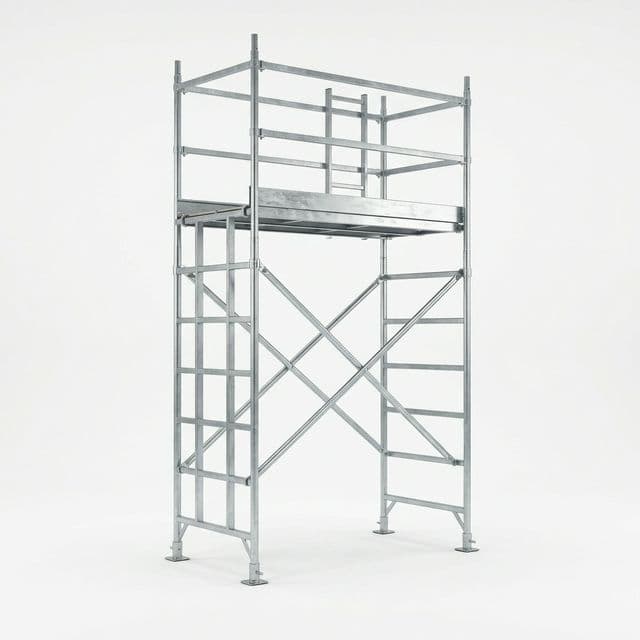
Tool-first promise
Input project geometry and get a deterministic ready/review/ boundary output before reading long-form analysis.
Report-layer promise
Source dates, method boundaries, and risk tradeoffs are visible in-page so tool output can be audited.
Canonical architecture
Alias intent is merged here. No dedicated route is created for “a frame scaffold for sale”.
Tool layer
This tool closes the operational loop on first screen: input, validation, status output, and action CTA. If conditions are unknown or risky, it returns a minimum continuation path instead of a false-positive result.
Summary layer
The summary keeps decision speed high while showing exactly why this keyword cluster stays on one canonical route.
| Keyword | Intent | US volume | KD | CPC (USD) | Source |
|---|---|---|---|---|---|
| frame scaffolding | Commercial | 480 | 4 | 1.43 | data/keywords/frame-scaffolding_broad-match_us_2026-03-24.csv |
| a frame scaffold for sale | Transactional | 20 | 4 | 1.08 | data/keywords/frame-scaffolding_broad-match_us_2026-03-24.csv |
| frame scaffold for sale | Unlabeled in raw export | 10 | N/A | 1.31 | data/keywords/frame-scaffolding_broad-match_us_2026-03-24.csv |
Mid-page action
Use the canonical inquiry route now, then return to method, risk, and boundary tables if procurement needs deeper validation.
Alias intent answer
This phrase is intentionally resolved on the canonical frame page. We keep one URL, then vary headings/FAQ/anchors instead of launching near-duplicate sale pages.
| Alias phrase | Canonical keyword | Canonical route | Required update set |
|---|---|---|---|
| a frame scaffold for sale | frame scaffolding | /products/frame-scaffolding | title/meta variant + FAQ question + H2 mention + internal anchors + no new route |
| frame scaffold for sale | frame scaffolding | /products/frame-scaffolding | title/meta variant + FAQ question + H2 mention + internal anchors + no new route |
| frame scaffolding for sale | frame scaffolding | /products/frame-scaffolding | title/meta variant + FAQ question + H2 mention + internal anchors + no new route |
| scaffold frames for sale | frame scaffolding | /products/frame-scaffolding | title/meta variant + FAQ question + H2 mention + internal anchors + no new route |
| fabricated frame scaffold | frame scaffolding | /products/frame-scaffolding | title/meta variant + FAQ question + H2 mention + internal anchors + no new route |
Method and evidence
Stage1b enhancement adds source dating, scope limitations, and explicit boundary labels so buyers can audit each decision path.
| Method step | Decision role | Output | Boundary trigger |
|---|---|---|---|
| 1. Normalize intent to canonical route | Maps “a frame scaffold for sale” and adjacent sale aliases to one URL. | Single canonical path: /products/frame-scaffolding | If a team requests a dedicated alias page, stop and keep alias_merge policy. |
| 2. Calculate width and stability lane | Matches duty + bay geometry to a frame family and checks free-standing ratio and tie-plan exposure. | Ready / Review / Boundary status with BOM estimate | Unknown ground condition, missing tie plan, or ratio pressure above planning baseline. |
| 3. Attach evidence and assumption labels | Shows which numbers come from regulation text, BLS event data, catalog samples, or internal keyword data. | Known vs unknown matrix next to result | If any critical dimension is unknown, tool must return an escalation path. |
| 4. Convert output into RFQ action | Turns result into an executable next step, not just a score. | Prefilled inquiry CTA and required evidence checklist | Boundary state blocks direct PO path and forces review action. |
These thresholds are mapped into tool states so a fast quote does not bypass high-impact constraints.
| Trigger | Threshold | Procurement implication | Limit / counterexample | Source |
|---|---|---|---|---|
| Structural capacity floor | Scaffold and component must support own weight + at least 4x maximum intended load. | Quote requests need duty and load assumptions before lane approval. | Catalog dimensions alone cannot prove load compliance for project-specific loading. | OSHA 29 CFR 1926.451 1926.451(a)(1) accessed 2026-04-08 |
| Platform width minimum | Platform and walkway must be at least 18 in (46 cm), except listed exceptions. | Deck-width assumptions in RFQ must be explicit for lane selection. | Certain scaffold operations have listed exceptions; field verification is still required. | OSHA 29 CFR 1926.451 1926.451(b)(2) accessed 2026-04-08 |
| Height-to-base restraint trigger | At 4:1 height, install guys/ties/braces; then repeat every <=20 ft for <=3 ft wide scaffolds or <=26 ft for >3 ft wide; horizontal intervals <=30 ft. | Tie-plan status is not optional once ratio pressure appears in planning. | Manufacturer instructions can govern exact placement; generic ratio checks are not engineering drawings. | OSHA 29 CFR 1926.451 1926.451(c)(1)(ii) accessed 2026-04-08 |
| Fall-protection gating | Workers on a scaffold more than 10 ft (3.1 m) above lower level need fall protection. | Height in quote intake directly changes required protection planning. | Protection method depends on scaffold type and work conditions. | OSHA 29 CFR 1926.451 1926.451(g)(1) accessed 2026-04-08 |
| Inspection frequency | Competent person must inspect before each work shift and after events affecting structural integrity. | Ready state still requires planned inspection workflow before use. | Tool output cannot replace competent-person site inspection. | OSHA 29 CFR 1926.451 1926.451(f)(3) accessed 2026-04-08 |
| Mixed-manufacturer controls | Do not intermix components unless they fit without force and structural integrity is maintained by user/competent person. | Mixed-brand substitution defaults to review lane with lock-pattern evidence. | No public cross-brand registry proves universal compatibility. | OSHA 29 CFR 1926.451 1926.451(b)(10) accessed 2026-04-08 |
| Source | What it supports | Scope and limit | Date marker |
|---|---|---|---|
| OSHA 29 CFR 1926.451 General requirements | 4x load floor, 18 in platform minimum, 4:1 restraint trigger, inspection cadence, and mixed-manufacturer limits. | Federal U.S. baseline only; state plan rules can add stricter obligations. | accessed 2026-04-08 |
| OSHA 29 CFR 1926.452 Additional scaffold type requirements | Fabricated-frame-specific bracing and frame locking requirements. | Applies with 1926.451; still requires project-specific setup controls. | accessed 2026-04-08 |
| OSHA State Plans overview | State-plan context: 22 plans cover private+public workers and 7 cover public-sector-only. | State plans must be at least as effective as federal OSHA and may differ in details. | accessed 2026-04-08 |
| BLS CFOI Summary 2024 | Construction fatality trend and construction fall/slip/trip counts for 2024 vs 2023. | Event-level fatal data; does not isolate fabricated frame subtypes. | published 2026-02-19 |
| BLS CFOI Table 2 (2023-24) | Fatal falls from scaffolding and staging: 79 (2023) to 64 (2024), plus broader fall-event context. | Fatal events only; not a nonfatal incident database and not brand-specific. | published 2026-02-19 |
| Bil-Jax scaffold catalog | Public frame-family sample dimensions used as planning references in family comparison. | Brand-specific catalog; cannot prove universal cross-brand interchangeability. | catalog PDF dated 2023, accessed 2026-04-08 |
| Frame-scaffolding keyword export (US, 2026-03-24) | Demand signal showing canonical and alias volumes/cpc for content prioritization. | Marketing demand data, not engineering or compliance evidence. | export date 2026-03-24 |
| Alias merge checklist (frame-scaffold cluster) | Alias-to-canonical mapping and required update set for no-duplicate routing. | Internal implementation reference for information architecture decisions. | checklist date 2026-03-24 |
| Stage1b gap found | Why it mattered | Enhancement applied |
|---|---|---|
| Earlier copy referenced OSHA but did not expose citation-level numeric triggers. | Buyers could miss hard thresholds (4x load, 18 in width, 4:1 tie trigger, >10 ft fall protection). | Added regulatory trigger matrix with section numbers, thresholds, and procurement implications. |
| Risk section lacked current external incident data and time markers. | Severity could be underweighted without dated fatal-event signals. | Added BLS 2023-2024 fatality comparison table including scaffolding/staging sub-row. |
| Evidence boundaries were not explicit on unavailable public datasets. | Teams might over-interpret national event data as frame-lane compatibility proof. | Added known-vs-unknown entries marked as pending confirmation when reliable public data is unavailable. |
Comparison and risk
| Frame family | Typical width (mm) | Typical height (mm) | Common bay lengths (mm) | Best fit | Planning boundary | Source | Date marker |
|---|---|---|---|---|---|---|---|
| Walk-through A-frame | 1524 | 1981 | 1524, 2134, 3048 | Fast access lanes where crews need pass-through movement and medium duty decks. | Requires brace-spacing and lock-pattern confirmation before cross-brand replacement. | Bil-Jax scaffold catalog (sample frame lanes) | catalog PDF dated 2023, accessed 2026-04-08 |
| Open ladder frame | 1524 | 1981 | 1524, 2134, 3048 | Material and ladder access where board elevation needs frequent adjustments. | Higher handling weight than compact frames; avoid blind substitutions in mixed fleets. | Bil-Jax scaffold catalog (sample frame lanes) | catalog PDF dated 2023, accessed 2026-04-08 |
| Narrow access frame | 914 | 1930 | 1219, 1524, 1829 | Constrained corridors and facade zones where staging space is limited. | Narrow width quickly triggers tie and guardrail constraints at moderate elevations. | Bil-Jax scaffold catalog (sample frame lanes) | catalog PDF dated 2023, accessed 2026-04-08 |
| Masonry frame lane | 1524 | 1930 | 1829, 2134, 2438 | Heavier material flow and broader deck-width requirements. | Surface preparation and tie planning become gating factors before PO release. | Bil-Jax scaffold catalog (sample frame lanes) | catalog PDF dated 2023, accessed 2026-04-08 |
These counts are added for risk weighting only. They do not prove subtype-specific compatibility for any one frame lane.
| Metric | 2024 | 2023 | Delta | Interpretation | Scope note | Source |
|---|---|---|---|---|---|---|
| Fatal falls, slips, trips (all workers) | 844 | 885 | -4.6% (41 fewer) | Event class is trending down but remains a material fatality category. | All industries; not limited to frame scaffolding buyers. | BLS CFOI Table 2 (2023-24) published 2026-02-19 |
| Fatal falls to lower level (all workers) | 666 | 725 | -8.1% (59 fewer) | Vertical-fall risk remains the dominant exposure bucket in fatal fall events. | Event class covers multiple structures and equipment types. | BLS CFOI Table 2 (2023-24) published 2026-02-19 |
| Fatal falls to lower level from scaffolding and staging | 64 | 79 | -19.0% (15 fewer) | Scaffold-linked fatal falls decreased year over year, but incidents are still recurring. | Table is event-level and not broken out by frame subtype. | BLS CFOI Table 2 (2023-24) published 2026-02-19 |
| Construction worker fatal falls, slips, trips | 370 | 400 | -7.5% (30 fewer) | Construction-specific fatal fall exposure remains significant even after decline. | Construction category is broader than fabricated frame scaffold work. | BLS CFOI Summary 2024 published 2026-02-19 |
| Decision | Upside | Tradeoff | Counterexample / failure mode | Minimum action |
|---|---|---|---|---|
| Alias-only quick PO vs geometry-first RFQ | Alias-only request is faster to send. | Speed gains can be erased by mismatch, rework, or delayed release. | Counterexample: request says only "a frame scaffold for sale" without bay length, tie plan, or ground data. | Collect minimum geometry set first: height, bay length, bay count, ground condition, tie status. |
| Mixed-brand substitution vs same-brand continuity | Mixed brand can improve short-term availability. | Compatibility proof burden increases and review cycle gets longer. | Failure mode: components require force-fit or altered connectors, which violates OSHA intermixing conditions. | Require lock-pattern photos, connection details, and competent-person compatibility confirmation. |
| Freestanding plan vs tied/anchored plan | Freestanding layout can reduce upfront tie labor. | Height-to-base pressure rapidly increases boundary risk once ratio thresholds are crossed. | Failure mode: height exceeds 4:1 trigger and tie points are still undefined. | Move to review/boundary lane and attach tie-point sketch before release. |
| General lane sizing vs masonry-duty sizing | General lane reduces component count and budget pressure. | Heavier staging demands may invalidate narrow assumptions. | Failure mode: masonry workflow uses wider deck demand than quote baseline. | Lock duty lane early and verify deck-width assumptions against task profile. |
| Risk | Probability | Impact | Mitigation |
|---|---|---|---|
| Ordering by alias phrase without geometry confirmation | High | High | Require bay length, frame width, and lock-pattern photo before releasing PO. |
| Ignoring free-standing ratio pressure in early planning | Medium | High | Run tie-plan check in the tool and escalate when 4:1 trigger context appears. |
| Mixed-brand frame substitution | Medium | High | Treat mixed-brand requests as review lane until compatibility evidence is documented. |
| Unknown ground condition at quote stage | Medium | Medium | Force boundary or review output and request surface and footing details. |
| Assuming catalog dimensions equal legal compliance approval | Low | High | Keep catalog values as planning inputs only; final compliance must be project-specific. |
Known vs unknown
Entries marked as pending confirmation (待确认) are intentionally kept open where reliable public datasets are unavailable (暂无可靠公开数据).
| Item | Known | Unknown | Decision impact |
|---|---|---|---|
| Alias mapping and canonical route | “a frame scaffold for sale” belongs to frame-scaffolding alias cluster. | N/A | Route stays single and indexation remains canonical. |
| Public frame-family dimensions (sample catalogs) | Sample frame-family dimensions are publicly listed in manufacturer catalogs. | Universal lock compatibility across brands is not publicly guaranteed. | Tool can estimate family lane but must stop short of universal interchangeability claims. |
| Regulatory baseline | OSHA 1926.451 provides federal baseline requirements. | Project-specific state-plan enforcement detail and engineered exceptions. | Boundary results must escalate rather than auto-approve procurement. |
| Site execution quality | Input fields capture intended geometry and tie plan status. | Actual field setup quality before erection. | Ready output still requires on-site competent-person verification. |
| Scaffold fatality signal by subtype | BLS reports fatal falls from scaffolding and staging (79 in 2023, 64 in 2024). | Pending confirmation (待确认): no reliable public breakdown by frame subtype or lock system (暂无可靠公开数据). | Use fatality totals for risk weighting only; do not infer subtype-safe procurement probabilities. |
| Cross-brand compatibility registry | OSHA restricts intermixing unless components fit without force and structural integrity is maintained. | Pending confirmation (待确认): no reliable public cross-brand compatibility registry (暂无可靠公开数据). | Mixed-brand substitutions stay in review/boundary lane until evidence package is complete. |
Scenario examples
| Scenario | Assumptions | Tool outcome | Next action |
|---|---|---|---|
| Distributor replenishment for 6.5 m lane, level ground | Platform 6.5 m, bay 1.8 m, general duty, tie plan available, 8 bays. | Review lane with BOM estimate and tie confirmation requirement due to elevation pressure. | Attach bay photos and tie plan notes in RFQ before final quantity lock. |
| Contractor asks only for “a frame scaffold for sale” | No bay geometry yet, unknown ground, no tie confirmation. | Boundary lane: no blind PO recommendation. | Collect minimum geometry set first (height, bay length, ground condition, tie plan). |
| Narrow-corridor facade maintenance package | Platform 4.2 m, bay 1.5 m, light duty, uneven surface, 5 bays. | Review lane with narrow-frame recommendation and footing caution. | Validate footing and guardrail details before moving from review to ready. |
| Masonry job with heavier staging demand | Platform 7.0 m, bay 2.1 m, masonry duty, tie plan yes, 10 bays. | Review-to-boundary edge depending on site tie execution quality. | Use wider frame lane and request site execution confirmation in writing. |
FAQ
Conversion layer
Keep the keyword wording in your message, but keep the route canonical. This reduces duplication risk and keeps evidence, assumptions, and RFQ actions in one thread.