Start with the checker to get immediate pass/review/stop output for exposed-thread height and load assumptions, then use the weight-reference and report layers to validate risk boundaries, compare model lanes, and decide the next action without splitting intent across multiple URLs.
Review cadence: quarterly or when OSHA clauses, supplier capacity tables, wind/utility control assumptions, enforcement ranking, penalty schedule, freight legal baselines, or incident baseline data change.
Immediate output
Pass / Review / Stop
One result lane plus assumptions and boundary flags.
Canonical URL
1
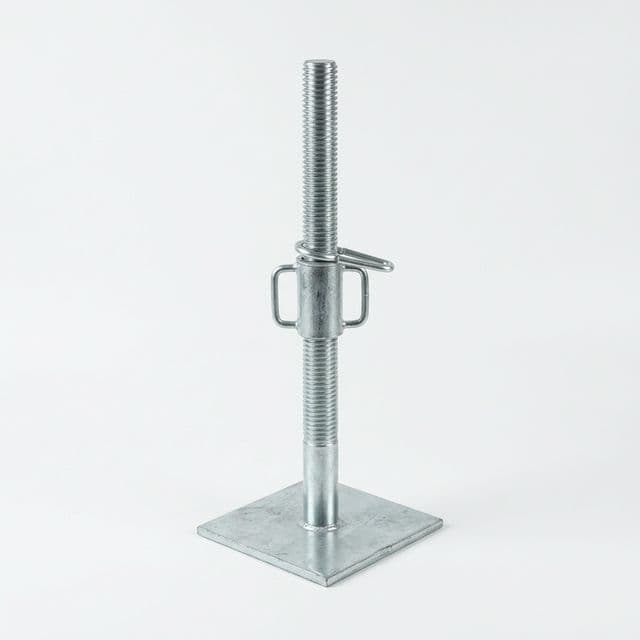
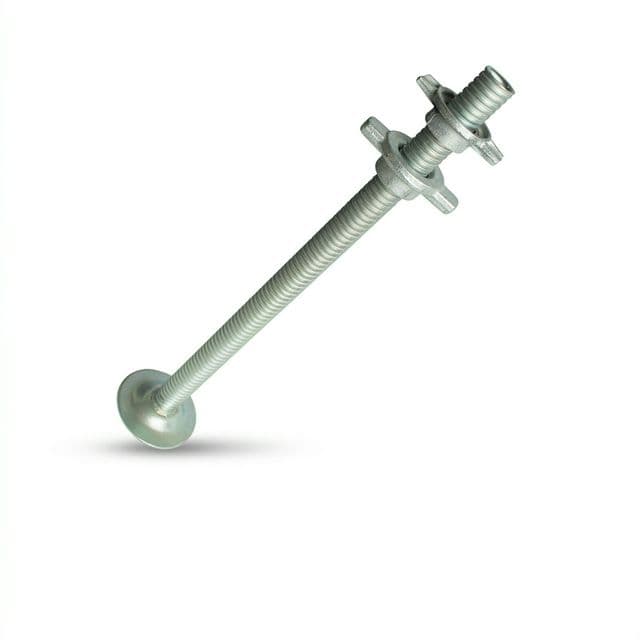
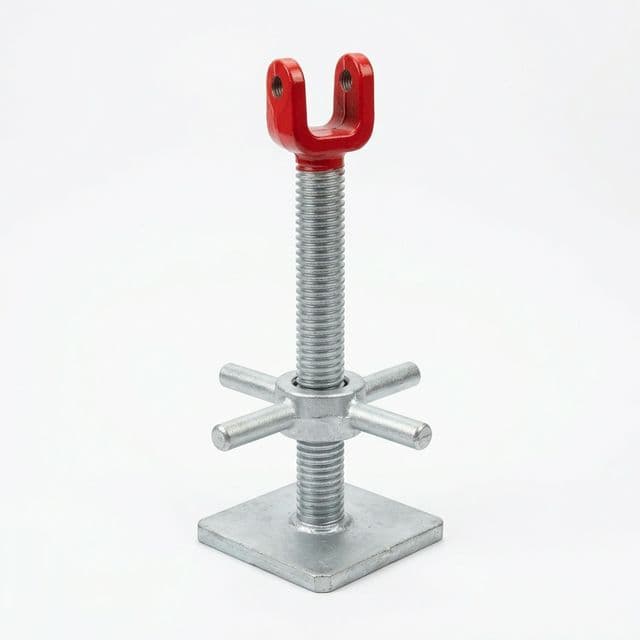
Adjustable base jacks and adjustable jack base alias intent, plus weight/height/capacity variants, stay on the canonical guide URL /learn/scaffolding-base-jack.
Immediate action lane
If your team searched for adjustable base jacks weight or height, or typed adjustable jack base or adjustable jack base scaffolding, run the checker first. You will get immediate pass/review/stop output plus model-lane context for exposure, utilization, and unit-weight planning before quote release or boundary escalation.
18
source rows
Each core conclusion has a visible source or an explicit uncertainty tag.
4
capacity bands
Exposure bands are mapped to decision actions, not just numeric ranges.
18
decision FAQs
FAQ answers are grouped by capacity basics, boundaries, and commercial actions.
Report summary
These sections keep short conclusions actionable: each conclusion is backed by method logic, source disclosure, and explicit boundary handling.
Mobile tip: swipe left and right on the data tables to review all columns.
| Who this page fits | Why it fits |
|---|---|
| Fit | Procurement teams comparing adjustable base jack capacity before RFQ release. |
| Fit | Estimators converting leg-load assumptions into a fast pass/review/stop decision. |
| Fit | Site teams that need one-page tool output plus evidence and risk boundaries. |
| Not fit | Projects treating this page as structural design signoff for non-standard shoring. |
| Not fit | Teams with no measured leg load, no exposure value, and no bearing detail. |
| Not fit | Requests requiring stamped engineering approval without project drawings. |
Capacity answer
This table is intentionally directional, not a substitute for supplier-certified declaration. It helps teams map search intent to a realistic action lane before RFQ release.
| Exposure band | Indicative capacity | Primary use | Action gate |
|---|---|---|---|
| 100-200 mm | About 39-59 kN in sampled published tables, depending on stated horizontal-load assumptions | Short extension where reserve is usually highest | Proceed only when footing, extension point, and lateral-load assumptions are explicitly documented |
| 201-300 mm | About 31-55 kN in sampled tables; assumption mismatch drives spread | Mid extension where published capacities diverge faster | Treat cross-supplier values as non-equivalent until basis normalization is complete |
| 301-400 mm | About 27-48 kN in sampled tables; sensitivity to assumptions remains high | Long extension where boundary flags become common | Require supplier-certified, condition-matched table before procurement release |
| >400 mm or undocumented | Often outside quick-check table range or requires project-specific verification | Boundary condition / engineering-led lane | Stop default procurement flow and move to drawing-backed engineering review |
Weight answer
This section answers the adjustable base jack weight intent directly on the canonical URL. Use it for quick freight planning, then confirm final net/gross values in supplier packing lists before booking.
| Model lane | Indicative unit weight | Indicative freight math | Evidence basis | Action gate |
|---|---|---|---|---|
| BJ-34-600 (34 x 600 mm stem) | 3.6 kg per piece | About 360 kg per 100 pcs (before pallet/packing) | Internal category row: /adjustable-base-jacks | Use as planning input only; confirm final packed gross weight in supplier packing list. |
| BJ-38-760 (38 x 760 mm stem) | 4.8 kg per piece | About 480 kg per 100 pcs (before pallet/packing) | Internal category row: /adjustable-base-jacks | Use for RFQ rough freight budgeting, then reconcile against actual pallet build. |
| UH-38-760 (38 x 760 mm U-head jack) | 5.2 kg per piece | About 520 kg per 100 pcs (before pallet/packing) | Internal category row: /adjustable-base-jacks | Weight generally rises with head geometry; avoid mixing with plain-base assumptions. |
| Custom stem/head combinations | N/A (public row not available) | N/A (depends on custom plate/head and finish) | No public row in current category dataset | Treat as unknown until supplier provides line-item net and gross weight confirmation. |
Weight benchmarks
Internal rows are useful for quick screening, but supplier negotiation and freight booking need cross-source checks with explicit model/length match. This block adds the minimum external evidence and quantified counterexamples.
| Source | Model/spec lane | Listed weight | Time marker | Decision use |
|---|---|---|---|---|
| Scaffolding Wholesale adjustable-base-jacks (internal baseline, reviewed 2026-04-22) | BJ-34-600 / BJ-38-760 / UH-38-760 | 3.6-5.2 kg | Internal page review 2026-04-22 | Fast baseline for early RFQ math; still requires supplier net/gross confirmation. |
| DokaScaff user information 999812402 (04/2017) | DokaScaff base jack 60 cm | 4.0 kg | Document 04/2017; accessed 2026-04-22 | External sanity check for 600 mm family before comparing supplier quotes. |
| ULMA DORPA catalogue CAT_DORPA_EN | Adjustable Base 0.5 (item 2124902) | 4.9 kg | Document code 03H117ENM; accessed 2026-04-22 | Use when quote family is around 0.5 m adjustment lane, not 1.0 m lane. |
| ULMA DORPA catalogue CAT_DORPA_EN | Adjustable Base 1 (item 2124907) | 8.7 kg | Document code 03H117ENM; accessed 2026-04-22 | Shows long-travel lane can be materially heavier; do not reuse short-lane kg assumptions. |
| ULMA DORPA catalogue CAT_DORPA_EN | Adjustable Swivel Base 1 (item 2127766) | 7.8 kg | Document code 03H117ENM; accessed 2026-04-22 | Swivel configuration is not weight-equivalent to plain base assumptions. |
| Assumption | Counterexample | Variance | Decision risk | Minimum action |
|---|---|---|---|---|
| Use 4.8 kg/pc for a 1.0 m adjustable-base lane | ULMA Adjustable Base 1 row lists 8.7 kg/pc. | +3.9 kg/pc (+81.3%); +1,950 kg at 500 pcs | Freight budget and load plan can be materially under-scoped. | Lock the exact model code and recalc with declared net and packed gross weight. |
| Treat swivel and plain base as weight-equivalent at 1.0 m | ULMA lists Adjustable Base 1 at 8.7 kg and Adjustable Swivel Base 1 at 7.8 kg. | -0.9 kg/pc (-10.3%); -450 kg at 500 pcs | Mixed-SKU substitutions can break pallet-density and cost assumptions. | Freeze head/plate type in RFQ line items before final logistics planning. |
| Use component net weight as booking-ready transport weight | Public rows normally list component weight, not pallet tare/dunnage/strapping. | N/A (depends on packing method and lot mix) | Container and truck booking can miss real gross constraints. | Mark as pending until supplier packing list provides line-level net and gross data. |
| Convert net unit-weight totals directly into truck dispatch plans | FHWA Interstate baseline limits gross to 80,000 lb with 20,000 lb single-axle and 34,000 lb tandem-axle caps; bridge formula may lower allowable weight further. | N/A (route, axle spacing, and jurisdiction dependent) | Loads can fail legal road checks and require rework before dispatch. | Run carrier axle-and-route compliance checks before locking shipment plans. |
Research delta
These additions are evidence-backed deltas, not wording refresh. Each row maps a newly verified fact to an executable procurement decision impact.
| New verified fact | Decision impact | Source and time marker |
|---|---|---|
| OSHA requires each scaffold/component to support own weight plus at least 4x maximum intended load. | Use this as a hard gate when reviewing supplier capacity statements and RFQ language. | 29 CFR 1926.451(a)(1); accessed 2026-04-23 |
| OSHA requires scaffolds to be designed by a qualified person and erected/moved/altered under competent-person supervision. | Treat base-jack capacity output as workflow evidence, not a standalone design approval; attach responsible-person ownership before release. | 29 CFR 1926.451(a)(6), 1926.451(f)(7), and 1926.450 definition; accessed 2026-04-23 |
| OSHA requires scaffold legs/uprights to bear on base plates and mud sills (or equivalent firm foundation), with level/sound/rigid footings. | Capacity checks without footing/bearing evidence should stay in review or boundary lane. | 29 CFR 1926.451(c)(2); accessed 2026-04-23 |
| OSHA 29 CFR 1926.451(c)(2)(ii) explicitly prohibits using unstable objects to support scaffold/platform units. | Treat ad-hoc blocks/shims as a hard stop condition even if modeled kN reserve looks acceptable. | 29 CFR 1926.451(c)(2)(ii); accessed 2026-04-23 |
| OSHA 29 CFR 1926.451(c)(2)(iv)-(v) limits equipment-supported platforms: front-end loaders/forks require manufacturer design intent and full platform-to-fork attachment when used. | Reject ad-hoc forklift support methods even if catalog capacity appears sufficient. | 29 CFR 1926.451(c)(2)(iv)-(v) + CPL 02-01-023 interpretation; accessed 2026-04-26 |
| OSHA 29 CFR 1926.451(b)(10) restricts mixed-manufacturer component use unless fit-without-force and structural-integrity conditions are met. | Quote substitutions across brands require compatibility proof and competent-person validation before release. | 29 CFR 1926.451(b)(10); accessed 2026-04-23 |
| OSHA 29 CFR 1926.451(c)(1) requires guying/tying/bracing when supported scaffold height-to-base ratio exceeds 4:1. | Treat tall-lane procurement as incomplete unless restraint method is declared with the capacity package. | 29 CFR 1926.451(c)(1); accessed 2026-04-23 |
| OSHA 29 CFR 1926.451(c)(1)(ii) adds repeat spacing limits after the 4:1 trigger: vertical intervals up to 20 ft for scaffolds 3 ft wide or less (26 ft when wider than 3 ft), and horizontal intervals up to 30 ft. | A one-time tie at 4:1 is not enough; procurement handoff should include a measurable tie grid instead of a generic restraint statement. | 29 CFR 1926.451(c)(1)(ii); accessed 2026-04-26 |
| OSHA 29 CFR 1926.451(f)(6) differentiates energized-line clearances by insulation and voltage: insulated lines under 300 V require at least 3 ft; most other line cases require 10 ft, with >50 kV using 10 ft plus 0.4 in per 1 kV (or two insulator lengths, whichever is greater). | Use the correct voltage/insulation branch to avoid both unsafe under-clearance and false over-conservative planning. | 29 CFR 1926.451(f)(6); accessed 2026-04-26 |
| OSHA 29 CFR 1926.451(f)(12) blocks scaffold work during storms/high winds unless a competent person determines safety; OSHA guidance states no single universal high-wind speed threshold. | Teams need project-specific wind go/no-go criteria instead of copying one mph number across all jobs. | 29 CFR 1926.451(f)(12) + CPL 02-01-023 (1997-01-07); accessed 2026-04-26 |
| For fabricated-frame scaffolds above 125 ft above base plates, OSHA requires registered professional engineer design. | When this threshold is triggered, route directly to engineering lane and stop catalog-only procurement decisions. | 29 CFR 1926.452(c)(6); accessed 2026-04-23 |
| OSHA Top 10 FY2025 list (updated 2026-04-15) ranks scaffolding standard 1926.451 at #6 among most frequently cited standards. | Scaffold-control gaps remain a live enforcement exposure, so unresolved boundary flags should not be treated as low-priority paperwork. | OSHA Top 10 Most Frequently Cited Standards; page updated 2026-04-15; accessed 2026-04-23 |
| OSHA penalties page shows maximums of $16,550 for serious/other-than-serious (and failure-to-abate per day) and $165,514 for willful/repeated violations. | Penalty ceilings create an explicit cost-risk tradeoff that can outweigh short-term unit-price savings when controls are missing. | OSHA Penalties; effective 2025-01-15; accessed 2026-04-23 |
| DokaScaff UNI 06/2020 tables show strong sensitivity to extension and horizontal-load assumptions: screw-base-jack values drop from 49.4 kN at 0.00 m to 27.1 kN at 0.40 m under V = 1.5 kN. | Do not compare supplier values without matching both extension position and horizontal-load assumptions. | Doka 999814502 (06/2020); accessed 2026-04-21 |
| Layher 08/2024 technical brochure publishes different extension envelopes by component (e.g., base plate 60 = 41 cm, base plate 80 reinforced = 55 cm). | Maximum adjustable travel is model-specific; route RFQ comparison by exact part family, not by generic "base jack" naming. | Layher Allround Technical Brochure 08/2024; accessed 2026-04-21 |
| DokaScaff 999812402 (04/2017) component overview lists base jack 60 cm at 4.0 kg. | Adds a second-party weight reference for the 600 mm lane, reducing single-source dependence in preliminary freight checks. | DokaScaff 999812402 (04/2017); accessed 2026-04-22 |
| ULMA DORPA catalogue rows list Adjustable Base 0.5 at 4.9 kg and Adjustable Base 1 at 8.7 kg (+77.6%). | Length family mismatch can invalidate one-size-fits-all kg assumptions and materially skew freight planning. | ULMA CAT_DORPA_EN; document code 03H117ENM; accessed 2026-04-22 |
| BLS CFOI 2024 reports 370 fatal falls/slips/trips out of 1,032 total fatalities in construction and extraction occupations. | Boundary conditions around footing, extension, and load path should be treated as safety-critical, not paperwork-only. | BLS CFOI release PDF; released 2026-02-19 |
| BLS CFOI Table 2 lists "fall to lower level from collapsing structure or equipment" at 79 (2023) and 64 (2024). | Use this as a macro collapse-risk signal, but do not treat it as an adjustable-base-jack-specific incident rate. | BLS CFOI Table 2 (2023-24) in cfoi.pdf; published 2026-02-19 |
| BLS IIF latest numbers list 479,480 fall/slip/trip DAFW cases out of 888,100 total DAFW cases in private industry (derived share about 54.0%) for 2024. | Nonfatal productivity-loss burden is material, so weather/clearance/footing controls should be treated as schedule and cost controls, not only safety notes. | BLS IIF latest numbers; release window 2026-01 to 2026-02 |
| FHWA federal guidance sets Interstate baseline vehicle-weight limits at 80,000 lb gross, 20,000 lb single axle, and 34,000 lb tandem axle, with bridge formula constraints. | Freight plans must verify gross and axle legality; net component totals alone are insufficient for dispatch decisions. | FHWA Bridge Formula Weights; accessed 2026-04-26 |
| As of 2026-04-21, no regulator-hosted unified public dataset was identified for cross-brand base-jack extension-versus-load curves in the reviewed sources. | Mark cross-supplier comparisons as partial evidence until model-specific certified tables are provided. | Evidence status check; OSHA/BLS/public regulator sources reviewed |
Regulatory triggers
The checker result is only the first gate. This table maps regulatory clauses to thresholds and required actions so teams can avoid false pass handoff.
| Trigger | Clause | Threshold | Why it matters | Required action |
|---|---|---|---|---|
| Load basis gate | 29 CFR 1926.451(a)(1) | Applies to each scaffold/component | Supplier value must support own weight plus at least 4x maximum intended load. | Reject quote rows that provide only a single kN number with no declared load basis. |
| Design ownership gate | 29 CFR 1926.451(a)(6) | Any scaffold configuration | Scaffolds must be designed by a qualified person and loaded per design. | Attach responsible design authority before releasing procurement assumptions. |
| Footing and base-plate gate | 29 CFR 1926.451(c)(2) | Supported scaffold legs/uprights | Legs must bear on base plates and mud sills (or equivalent firm foundation). | Do not promote pass results when footing condition is unknown or undocumented. |
| Unstable support object gate | 29 CFR 1926.451(c)(2)(ii) | Any supported scaffold base condition | Unstable objects cannot be used as support, even if nominal capacity appears acceptable. | Reject packages that rely on ad-hoc blocks/shims instead of base-plate and footing controls. |
| Equipment-supported platform gate | 29 CFR 1926.451(c)(2)(iv)-(v) | When front-end loaders/forks are used as scaffold support platforms | Use is restricted to manufacturer-designed intent, and platform support must be attached to forks instead of resting loosely. | Block ad-hoc forklift support methods and require manufacturer-intent evidence plus attachment method details. |
| Intermixing compatibility gate | 29 CFR 1926.451(b)(10) | Mixed-manufacturer scaffold components | Intermixing is restricted unless components fit without force and structural integrity is maintained. | Do not approve cross-brand substitutions without compatibility evidence and competent-person signoff. |
| 4:1 anti-tip restraint gate | 29 CFR 1926.451(c)(1) | Supported scaffold height-to-base ratio > 4:1 | Above this ratio, guying/tying/bracing (or equivalent means) is required to prevent tipping. | Attach restraint method and location plan before procurement handoff. |
| Tie-spacing cadence gate | 29 CFR 1926.451(c)(1)(ii) | After first 4:1 tie point: vertical spacing <=20 ft (<=3 ft width) or <=26 ft (>3 ft width), and horizontal spacing <=30 ft | Passing the first 4:1 trigger does not guarantee ongoing lateral stability if repeat spacing is missing. | Require a tie-grid layout with measured vertical/horizontal spacing before release. |
| Inspection cadence gate | 29 CFR 1926.451(f)(3) | Before each work shift and after integrity-affecting events | Visible defects must be checked by a competent person on a recurring basis. | Include inspection responsibility in handoff package, not only capacity numbers. |
| Power-line clearance gate | 29 CFR 1926.451(f)(6) | Insulated lines <300 V: >=3 ft; most other energized-line scenarios: >=10 ft; >50 kV: 10 ft + 0.4 in per 1 kV (or twice insulator length, whichever is greater) | Clearance checks fail if voltage and insulation branch are mixed; wrong branch can create unsafe proximity or false planning constraints. | Require utility-clearance confirmation or de-energization plan before release and erection. |
| Storm/high-wind operating gate | 29 CFR 1926.451(f)(12) | Work during storms/high winds allowed only when competent person determines safety | Regulation sets a condition-based control and OSHA guidance does not provide one universal mph trigger. | Set project-specific wind go/no-go criteria and document competent-person determination before continuing work. |
| Height escalation gate | 29 CFR 1926.452(c)(6) | >125 ft above base plates (fabricated-frame scaffolds) | Threshold triggers registered professional engineer design requirement. | Route directly to engineering workflow; stop catalog-only comparison logic. |
| Concept boundary | Boundary definition | Decision consequence |
|---|---|---|
| Exposed thread height vs max spindle travel | Exposed thread is measured field condition; max spindle travel is model-document limit and can differ by part family. | Treat out-of-envelope measurements as boundary even if nominal jack type appears similar. |
| Published permissible load vs release-ready allowable load | Published load is condition-bound; release-ready allowable load must include ground/load-path factors and policy safety factor. | Never copy table kN directly into PO without de-rating and assumption traceability. |
| Competent-person check vs qualified-person design | Competent person handles hazard recognition/inspection; qualified person owns design basis. | Tool output is valid only when both authority lanes are assigned and documented. |
| Catalog comparability vs engineering signoff | Catalog comparability requires aligned assumptions; engineering signoff is mandatory once statutory triggers are met. | When trigger conditions appear, comparison tables become supporting evidence only. |
| First 4:1 tie trigger vs full tie-grid compliance | A single tie at the 4:1 point is only the start; ongoing vertical/horizontal spacing limits still apply under 1926.451(c)(1)(ii). | Treat missing repeat tie spacing as boundary status, not as a completed stability control. |
| Commercial substitution vs compliant intermixing | Price-driven mixed-brand substitutions are valid only when fit-without-force and structural-integrity conditions are documented under 29 CFR 1926.451(b)(10). | Treat undocumented substitutions as boundary status, not as acceptable quote optimization. |
| Storm/high-wind condition vs universal mph shortcut | OSHA requires competent-person determination for storms/high winds and does not publish one universal mph value for every scaffold configuration. | Generic company-wide wind-speed shortcuts can produce false pass decisions; define project-specific criteria. |
| Component net unit weight vs packed gross shipment weight | Most catalogs publish component-level weight, while booking decisions require packed gross values with pallets and dunnage. | Treat transport planning as pending until supplier packing list confirms net and gross values by line item. |
| Packed gross shipment weight vs legal road limits | Dispatch legality depends on route and axle-group limits, not only summed component net mass. | Treat shipments as non-release-ready until carrier confirms gross and axle compliance. |
Enforcement economics
This block converts public OSHA ranking and penalty data into release actions. If the checker is in review or boundary status, these signals show why unresolved controls should not be treated as low-impact paperwork.
| Signal | Current public fact | Decision tradeoff | Minimum action |
|---|---|---|---|
| Citation exposure (public ranking) | OSHA FY2025 Top 10 table (updated 2026-04-15) lists scaffolding standard 1926.451 at #6. | Boundary flags are not low-priority paperwork when the standard remains frequently cited. | Attach clause checks (load basis, footing, intermixing, and anti-tip restraint) before PO release. |
| Nonfatal productivity-loss burden | BLS IIF latest numbers report 479,480 DAFW fall/slip/trip cases out of 888,100 DAFW cases in private industry for 2024 (about 54.0%). | Even when fatal events are avoided, unresolved controls can still create major schedule and labor-loss consequences. | Add weather, clearance, and footing controls to the same release package as capacity assumptions. |
| Serious / other-than-serious ceiling | OSHA penalties page shows a maximum of $16,550 per violation (and per day for failure-to-abate), effective 2025-01-15. | Short-term unit-price savings can be erased when unresolved controls become citable findings. | Assign owner and due date to every review/boundary flag before commercial lock. |
| Willful / repeated ceiling | OSHA penalties page shows a maximum of $165,514 per violation for willful or repeated citations, effective 2025-01-15. | Deliberate reuse of unresolved assumptions can create downside far above quote variance. | Escalate unresolved high-risk items into qualified-person or engineering signoff workflow. |
Method and evidence
The checker does not hide assumptions. It applies weighted input dimensions and shows where uncertainty reduces confidence.
| Decision dimension | Weight | Role | Decision note |
|---|---|---|---|
| Jack model and stem geometry | 28% | Base capacity lane | Model curves define the starting capacity envelope before condition reductions. |
| Exposed thread length | 24% | Primary degradation driver | Capacity falls as exposed length rises, especially beyond 500 mm. |
| Ground and sole-board condition | 24% | Bearing reliability gate | Unknown subgrade forces conservative factor and often review or boundary status. |
| Plumb / eccentricity certainty | 14% | Load-path confidence | Unknown offsets reduce trust in catalog-only capacity values. |
| Policy safety factor | 10% | Organizational threshold | Keeps client/site policy visible when converting capacity to allowable load. |
| Stage1b gap | Enhancement completed |
|---|---|
| Regulatory references covered core rules but omitted escalation triggers and role boundaries. | Added clause-level trigger matrix for 1926.451/1926.452 and role boundary (competent vs qualified person) with direct actions. |
| Capacity narrative did not quantify horizontal-load assumption sensitivity using newer technical tables. | Added Doka 06/2020 condition-driven deltas and refreshed comparison rows to show same-extension variance under different lateral assumptions. |
| Cross-supplier limits used legacy references with weaker revision transparency. | Upgraded to newer Layher 08/2024 technical brochure values and updated source dates. |
| Uncertainty disclosures were present but not isolated as explicit pending-evidence workflow items. | Added a dedicated pending-evidence section with impact and minimum next step for each unresolved data gap. |
| Risk context listed raw fatalities but did not express decision-relevant ratio. | Added BLS 2024 fall-share ratio (370 of 1,032 = 35.9%) with release marker (2026-02-19). |
| Alias coverage was explicit for height/capacity but under-specified for adjustable base jack weight intent. | Added dedicated weight-answer section, model-lane weight table, and alias anchors that route weight intent to the same canonical URL. |
| Weight evidence leaned on internal rows with limited external benchmark context. | Added Doka and ULMA external benchmark rows with explicit document markers and updated source ledger entries. |
| Weight discussion lacked executable counterexamples for freight planning bias. | Added a planning-variance table quantifying under/over-estimation risk and minimum corrective actions. |
| Cross-brand comparison language existed, but lacked explicit OSHA intermixing compliance gate. | Added 29 CFR 1926.451(b)(10) trigger coverage and boundary/risk rows for mixed-manufacturer substitution decisions. |
| Footing discussion did not explicitly convert unstable-support and anti-tip clauses into stop conditions. | Added 29 CFR 1926.451(c)(2)(ii) unstable-object gate and 1926.451(c)(1) 4:1 restraint gate with required actions. |
| 4:1 restraint logic lacked measurable repeat-spacing requirements. | Added 29 CFR 1926.451(c)(1)(ii) tie-spacing cadence gates (20 ft or 26 ft vertical by width class, and 30 ft horizontal) plus boundary/risk actions. |
| Risk narrative lacked enforcement-intensity context for procurement tradeoff. | Added OSHA FY2025 Top 10 ranking and penalty-ceiling matrix (effective 2025-01-15) as decision-cost evidence. |
| Incident section did not isolate base-jack-specific public-data gap as an explicit uncertainty. | Added pending-evidence ledger entry stating no reliable open base-jack-specific incident-rate dataset as of 2026-04-23. |
| Weather/wind discussion lacked clause-level trigger clarity and implied a universal threshold risk. | Added 29 CFR 1926.451(f)(12) trigger coverage plus OSHA directive note that no single universal high-wind mph threshold applies across all scaffold setups. |
| Electrical hazard boundary was not translated into numeric clearance checks. | Corrected 29 CFR 1926.451(f)(6) branch logic (including 3 ft for insulated lines under 300 V) and added voltage/insulation-aware release actions. |
| Equipment-supported scaffold misuse (forklift/front-end-loader) was not isolated as a stop gate. | Added 29 CFR 1926.451(c)(2)(iv)-(v) trigger coverage and positive-attachment requirement in boundary/risk/action tables. |
| Weight planning section lacked legal transport constraints beyond component net-weight math. | Added FHWA Interstate gross/axle baseline limits and route-dependent compliance actions into risk and counterexample tables. |
| Risk burden framing centered on fatalities and did not quantify nonfatal time-loss signal. | Added BLS IIF 2024 DAFW fall/slip/trip share (479,480 of 888,100; about 54.0%) to enforcement and key-number evidence. |
| Public fatality context lacked event-code boundary clarity for collapse-related falls. | Added BLS CFOI Table 2 event row movement (79 to 64) with explicit caveat that the category is broader than adjustable-base-jack-only incidents. |
Data sources
Time markers and uncertainty notes are visible so teams can audit where confidence is strong and where additional confirmation is still required.
| Source | Supports | Link | Date marker |
|---|---|---|---|
| OSHA 29 CFR 1926.450 (definitions) | Authority boundary: definition of competent person for hazard identification and prompt corrective action. | Open source | Accessed 2026-04-21 |
| OSHA 29 CFR 1926.451 (Subpart L scaffolds) | Load basis (4x), mixed-manufacturer intermixing limits, 4:1 anti-tip trigger plus repeat tie-spacing rules, footing/base-plate/mud-sill requirements, unstable-object prohibition, and pre-shift inspection controls. | Open source | Accessed 2026-04-23 |
| OSHA directive CPL 02-01-023 (Subpart L enforcement guidance) | Clarifies that OSHA does not set one fixed wind-speed value for 1926.451(f)(12), and that forklift-supported platforms under 1926.451(c)(2)(v) must be positively attached to forks. | Open source | Directive dated 1997-01-07; accessed 2026-04-26 |
| OSHA Top 10 Most Frequently Cited Standards (FY2025) | Enforcement exposure context: scaffolding (1926.451) is listed as #6 in the most frequently cited standards table. | Open source | Page updated 2026-04-15; accessed 2026-04-23 |
| OSHA Penalties | Decision-cost boundary: maximum penalties shown as $16,550 (serious/other-than-serious/failure-to-abate per day) and $165,514 (willful/repeated), effective 2025-01-15. | Open source | Effective 2025-01-15; accessed 2026-04-23 |
| OSHA 29 CFR 1926.452(c)(6) (fabricated frame scaffolds) | Engineer-signoff trigger: scaffolds above 125 ft above base plates require registered professional engineer design. | Open source | Accessed 2026-04-21 |
| OSHA interpretation letter on scaffold foundations | Foundation adequacy determination requires competent-person judgment with soil/load/weather awareness and ongoing reassessment. | Open source | Letter dated 2000-08-01; accessed 2026-04-21 |
| DokaScaff UNI user information (999814502, 06/2020) | Permissible-load tables for base jack and screw-base jack across 0.0-0.5 m extensions and multiple horizontal-load assumptions (0.0/1.5/3.0/6.0 kN). | Open source | Document 06/2020; accessed 2026-04-21 |
| Layher Allround Technical Brochure (Edition 08.2024) | Updated published examples: max spindle travel declarations (base plate 60 = 41 cm, base plate 80 reinforced = 55 cm) and permissible-load entries by stated conditions. | Open source | Edition 08/2024; accessed 2026-04-21 |
| Layher base-plates technical note (2020) | Cites DIN EN 12811-1 overlap condition: at least 25% spindle length remaining inside standard and minimum 15 cm overlap. | Open source | Document 2020; accessed 2026-04-21 |
| DokaScaff user information (999812402, 04/2017) | External weight benchmark row: DokaScaff base jack 60 cm listed at 4.0 kg in component overview. | Open source | Document 04/2017; accessed 2026-04-22 |
| ULMA DORPA frame scaffolding catalogue (CAT_DORPA_EN) | External weight-variance benchmark: Adjustable Base 0.5 = 4.9 kg; Adjustable Base 1 = 8.7 kg; Adjustable Swivel Base 1 = 7.8 kg. | Open source | Document code 03H117ENM; accessed 2026-04-22 |
| BLS Census of Fatal Occupational Injuries (2024 release PDF) | Risk context with explicit numerator/denominator: construction and extraction recorded 1,032 fatalities; falls/slips/trips were 370 in 2024. | Open source | Released 2026-02-19; accessed 2026-04-21 |
| BLS CFOI Table 2 (2023-24, event-level detail) | Adds event-code boundary: "fall to lower level from collapsing structure or equipment" moved from 79 (2023) to 64 (2024), but this category is not base-jack-specific. | Open source | Published 2026-02-19; accessed 2026-04-26 |
| BLS Injuries, Illnesses, and Fatalities (latest numbers) | Nonfatal severity context for prioritization: 479,480 DAFW falls/slips/trips and 888,100 total DAFW cases in private industry in 2024. | Open source | Release window 2026-01-22 to 2026-02-19; accessed 2026-04-26 |
| FHWA Bridge Formula Weights (Federal size and weight baseline) | Transport constraint boundary used in freight planning: Interstate baseline limits of 80,000 lb gross, 20,000 lb single axle, and 34,000 lb tandem axle, with bridge formula checks. | Open source | Accessed 2026-04-26 |
| Scaffolding Wholesale base-jack category data | Internal product lane context (dimensions, listed unit weights, and public range messaging) used for initial screening before supplier normalization. | Internal source | Reviewed 2026-04-22 |
| Cross-brand public registry status check | No regulator-hosted unified open dataset was identified for cross-brand base-jack extension-versus-load curves in the OSHA/BLS/public-regulator sources reviewed. | N/A (evidence gap retained; checked 2026-04-21) | Pending additional authoritative publication |
| Item | Known | Unknown | Handling rule |
|---|---|---|---|
| Model-level extension trend | Longer exposed thread reduces effective capacity in public model tables. | Exact reduction slope differs by supplier, weld process, and thread geometry. | Treat as directional; require supplier-certified table for final PO. |
| Ground bearing effect | Poor bearing condition increases settlement risk and reduces confidence. | Actual soil/pad modulus at each leg location without field confirmation. | Use conservative factor until bearing verification is provided. |
| Eccentricity influence | Offset load path reduces practical capacity and increases review need. | Offset magnitude when layout evidence is missing. | Classify as boundary and request drawing/photo packet. |
| Cross-supplier comparability | Catalog format and assumptions vary widely. | Whether two suppliers used identical test and declaration basis. | Use normalized RFQ matrix before price comparison. |
| Storm/high-wind numeric trigger | OSHA requires competent-person safety determination for work during storms/high winds. | A universal mph threshold applicable to every scaffold design and site condition. | Set project-specific wind criteria and keep determination records by shift/event. |
| Base-jack-specific public incident frequency | BLS CFOI Table 2 reports 79 (2023) and 64 (2024) fatalities for "fall to lower level from collapsing structure or equipment," and scaffolding remains highly cited in OSHA enforcement. | A reliable public dataset that isolates adjustable base-jack-specific incident counts and rates. | Treat as an explicit evidence gap and combine macro public signals with site-level incident records. |
| Net unit weight vs packed gross shipment weight | Public component tables can provide useful directional net unit-weight signals. | Gross uplift from pallets, dunnage, strapping, and mixed-SKU packing configuration. | Do not finalize freight booking until supplier provides net and gross packing-list values. |
| Route-legal gross and axle constraints | Federal Interstate baseline limits are published (80,000 lb gross / 20,000 lb single axle / 34,000 lb tandem axle). | Final legal payload for a specific route once axle spacing, bridge formula, and local rule overlays are applied. | Require carrier route-and-axle compliance confirmation before dispatch. |
Pending evidence
Items below remain open after this round of public-source verification. They are intentionally labeled as pending so teams can avoid false certainty.
| Pending topic | Current status | Decision impact | Minimum executable next step |
|---|---|---|---|
| Regulator-hosted cross-brand extension-load registry | No unified open registry was identified in reviewed OSHA/BLS/public regulator sources (checked 2026-04-21). | Cross-supplier comparisons remain partial evidence and can be biased by non-aligned assumptions. | Require supplier-certified tables under matched conditions before commercial ranking. |
| Public base-jack-specific incident-rate baseline | BLS CFOI Table 2 provides event-level counts for "fall to lower level from collapsing structure or equipment" (79 in 2023, 64 in 2024), but no reliable public split isolates adjustable base-jack-only incidents as of 2026-04-26. | Public counts can weight collapse exposure, but cannot be used as direct base-jack-specific incidence rates. | Keep this as pending subtype evidence and maintain an internal incident taxonomy for base-jack-related failures. |
| Universal legal max extension number across all scaffold systems | No single universal number was identified; limits vary by system documentation and jurisdiction scope. | Using one generic extension number can cause false pass or false rejection. | Anchor decisions to project scaffold type plus cited technical/standard document revision. |
| Project-specific wind stop threshold (numeric) | OSHA requires competent-person safety determination for storms/high winds, and enforcement guidance does not provide one universal mph threshold. | Teams can over- or under-stop work if they copy a generic wind number across different scaffold setups. | Define project-specific wind trigger criteria in temporary-works plan and keep determination records by shift/event. |
| Project-specific bearing capacity at each leg location | Public catalogs and regulations do not provide site-specific geotechnical confirmation. | Ground uncertainty can dominate failure risk even with higher-capacity jack models. | Collect bearing evidence (pad/subgrade/sole-board details) before final PO and field release. |
| Packed gross uplift vs published component unit weight | Public technical rows usually stop at component unit weight and do not disclose pallet tare, mixed-SKU dunnage, or strapping uplift. | Freight booking based on net-only assumptions can miss true transport gross constraints. | Require supplier packing-list gross and net weight by SKU and pallet before booking. |
| Route/state-specific legal freight cap after axle-spacing checks | Federal baseline limits are public (80,000 lb gross / 20,000 lb single axle / 34,000 lb tandem), but final legal payload can vary by axle spacing, route, and permit rules. | Dispatch plans can fail legal checks even when component weight math appears reasonable. | Collect carrier axle layout plus route compliance confirmation before final dispatch booking. |
Boundary conditions
This table defines when a conclusion is valid, when it fails, and the minimum executable next step. Evidence is treated as stateful, not binary.
| Concept | Valid when | Invalid when | Action rule |
|---|---|---|---|
| Catalog capacity number | Model family, spindle extension, horizontal-load assumption, and document revision are all aligned. | Any quote omits extension basis, uses different lateral assumption, or mixes unmatched revisions. | Keep quote in non-comparable status and request normalized supplier declaration. |
| Tool pass status | Measured exposure, leg load, bearing condition, and load path are documented and inside limits. | Input relies on unknown subgrade or unknown eccentricity, or exceeds recommended exposure. | Switch to review/boundary workflow and collect drawing/photo evidence before release. |
| Regulatory readiness | Footing/base-plate controls and competent-person checks are planned under applicable regulation. | Team relies on product kN values only, without footing and inspection controls. | Block procurement release until compliance controls are attached to the package. |
| 4:1 tie trigger and repeat spacing | First 4:1 tie point and subsequent vertical/horizontal spacing limits are documented per width class. | Only one restraint point is shown, or repeat spacing is not measurable from the layout. | Keep package in review/boundary lane until tie-grid spacing is documented and checkable. |
| Mixed-manufacturer component package | Components fit without force, structural integrity is confirmed, and no ad-hoc modification is used without competent-person determination. | Cross-brand substitution is driven by price only, with no compatibility record or forced-fit modifications. | Hold the package in boundary status until compatibility evidence and responsible-person signoff are attached. |
| Power-line proximity control | Minimum clearances to energized lines are documented or utilities are de-energized/insulated by owner request. | Scaffold route enters energized-line clearance zones without verified protection plan. | Stop release and require utility-clearance package before erection. |
| Storm/high-wind work decision | Competent person documents that work is safe under current wind/weather conditions with required controls. | No competent-person determination exists or weather shifts beyond project criteria. | Pause operations and resume only after updated go/no-go determination is documented. |
| Forklift/front-end-loader support method | Support setup is manufacturer-intended and the platform is attached to fork support per 1926.451(c)(2)(v). | Platform rests loosely on forks or uses ad-hoc equipment support without design intent evidence. | Treat as boundary stop and require compliant support method documentation. |
| Cross-supplier comparability | Both suppliers declare equivalent test basis, extension window, and usage conditions. | Declarations are based on different standards, assumptions, or undocumented calculations. | Use normalized RFQ matrix and require supplier-certified equivalent-condition tables. |
Comparison and tradeoffs
Comparison is reproducible by dimension. If any dimension is not aligned, mark the quote as non-comparable.
| Option | Capacity signal | Commercial signal | Risk signal | Best-for lane |
|---|---|---|---|---|
| 34 mm solid stem lane | Medium at short exposure, drops faster at long exposure | Usually lower unit price and lighter pallet math | Lower reserve when exposure or eccentricity rises | Controlled short-to-mid extension on verified bearing |
| 38 mm solid stem lane | Highest default reserve across common extensions | Moderate price premium and shipping weight increase | Still sensitive to unknown ground and offset assumptions | General scaffold base where uncertainty must be reduced quickly |
| 38 mm hollow stem lane | Middle lane; depends on supplier wall and thread profile | Weight saving can improve container density | Capacity claims vary more by supplier documentation quality | Programs balancing freight efficiency with documented capacity tables |
| U-head 38 mm lane | Sensitive to top-seat alignment and bearer contact | Useful when formwork bearer support is required | Misalignment and point contact can invalidate assumptions fast | Top-support scenarios with clear alignment control |
| Counterexample dimension | Sample A | Sample B | Decision implication |
|---|---|---|---|
| Same supplier, different lateral assumptions | Doka screw-base jack at 0.10 m extension with V = 1.5 kN: 43.6 kN (06/2020 document). | Doka screw-base jack at 0.10 m extension with V = 3.0 kN: 37.4 kN (same document family). | Even with matching extension, load assumption change materially shifts published capacity. |
| Declared extension envelope | Doka base-jack tables in 06/2020 span values through 0.50 m extension for stated assumptions. | Layher 08/2024 brochure publishes base plate 60 max travel 41 cm and base plate 80 reinforced max travel 55 cm. | Maximum usable extension is system-specific and document-specific, not a universal constant. |
| Normative framing in documents | OSHA clauses define load, footing, inspection, and trigger conditions for U.S. compliance workflows. | Manufacturer manuals publish condition-bound permissible loads and travel limits for specific components. | RFQ matrix should record jurisdictional rule + manufacturer condition set, otherwise values are not decision-equivalent. |
| Same catalog family, different adjustment lane (weight) | ULMA Adjustable Base 0.5 is listed at 4.9 kg. | ULMA Adjustable Base 1 is listed at 8.7 kg. | A single per-piece kg assumption can understate logistics mass when lane length changes. |
| Net component mass vs legal transport envelope | Catalog and internal rows usually provide component net unit weight only. | FHWA Interstate baseline limits gross to 80,000 lb with 20,000 lb single-axle and 34,000 lb tandem-axle caps (bridge formula may reduce further). | Dispatch planning must include gross-and-axle compliance, not only net-weight multiplication. |
Risk limits
These are not generic cautions. Each risk has a concrete mitigation step tied to procurement execution.
| Risk | Impact | Likelihood | Mitigation |
|---|---|---|---|
| Thread exposure exceeds model recommendation | Capacity reduction and instability risk | Medium | Re-set scaffold lift plan or use higher-capacity lane and documented geometry. |
| Bearing condition is unknown | Settlement can invalidate capacity assumptions | High | Add sole-board detail, confirm subgrade condition, and re-run tool with verified lane. |
| Eccentric load path not checked | Unexpected bending at stem and plate weld | Medium to high | Request one elevation or node photo and confirm plumb/tie condition before PO. |
| Regulatory trigger crossed (>125 ft fabricated-frame scaffold) | Catalog-only lane becomes non-compliant for design signoff | Low to medium (project dependent) | Switch to registered-professional-engineer design workflow before commercial lock. |
| 4:1 restraint trigger met once but repeat tie spacing is undocumented | Progressive sway/instability risk and compliance exposure | Medium | Verify tie-grid intervals by scaffold width class and include spacing evidence in handoff. |
| Quote compares non-equivalent capacity declarations | Commercial mismatch and procurement rework | High | Normalize exposure condition, load basis, and safety factor in one quote matrix. |
| Mixed-brand substitution without compatibility proof | Compliance breach and structural-integrity uncertainty | Medium | Require fit-without-force evidence and competent-person structural confirmation before substitution. |
| Unit-weight assumption copied across mismatched base-jack families | Freight underestimation and transport plan drift | Medium | Benchmark against external rows by exact lane and require supplier net/gross packing confirmation. |
| Storm/high-wind work continues without documented safety determination | Elevated overturn/fall risk and compliance exposure | Medium (weather dependent) | Use project wind go/no-go criteria and keep competent-person determination records before each affected shift. |
| Power-line clearance assumptions are missing or wrong | Electrocution hazard and immediate stop-work risk | Low to medium | Verify energized-line clearance or de-energization plan before scaffold setup and handoff. |
| Forklift/front-end-loader support is used as ad-hoc scaffold platform | Platform instability, drop risk, and regulatory non-compliance | Low to medium | Allow only manufacturer-intended support methods with full platform attachment to forks where applicable. |
| Truck dispatch ignores gross/axle legal limits | Route rejection, reloading delays, and freight cost creep | Medium | Run axle-spacing and route-legal checks with carrier before final booking. |
Minimum continuation path when result is boundary
Mid-page action
Share checker output with one drawing or photo so the quote can be normalized against exposure, bearing condition, and load-path assumptions before procurement lock.
Scenario examples
Each scenario includes assumptions, process, and outcome so teams can replicate the decision chain instead of copying a number.
FAQ
Questions are grouped by decision intent so teams can move from keyword intent to execution-ready action without leaving the canonical page.
Searching for adjustable base jack weight and adjustable base jacks and adjustable jack base scaffolding should resolve on this same canonical URL, together with adjustable base jack height and capacity, with no separate duplicate guide route.
Related resources and CTA
Final action
Keep the same canonical URL for both immediate tooling and decision-depth reporting. This preserves intent coverage for scaffolding base jack, adjustable base jack weight, adjustable base jack height, and adjustable base jack capacity while reducing duplicate-route risk.
Priority inquiry email
Share model lane, exposure, leg load, and one layout image. We can route the request to a review-ready RFQ package.
Compliance note
This page is a procurement and workflow aid, not structural design certification. Always align with project engineer requirements and applicable jurisdiction rules before field execution.