First-screen quick start
Start from the tool with baseline adjustable props sizes inputs (2.44 m, 12 kN, safety factor 1.5, fully braced) to get a fast proceed/review/boundary decision before reading the full report.
Use the tool first to normalize adjustable props sizes wording into measurable load and extension values, then use the report layer to verify method, source evidence, fit boundaries, and price-risk actions before RFQ release.
This single canonical page covers high-intent alias queries such as adjustable props, adjustable props price, adjustable props heavy duty, adjustable props for sale, adjustable props jack, adjustable prop sizes, adjustable props sizes, adjustable props supplier (and adjustable props suppliers), adjustable props specification, adjustable props hsn code, and 8 foot adjustable telescopic prop. Full alias mapping stays on this URL to avoid duplicate routes.
Section 1 • Tool layer
The first-screen promise is execution. Input your measured values and get a deterministic result with explanation, uncertainty, and action path.
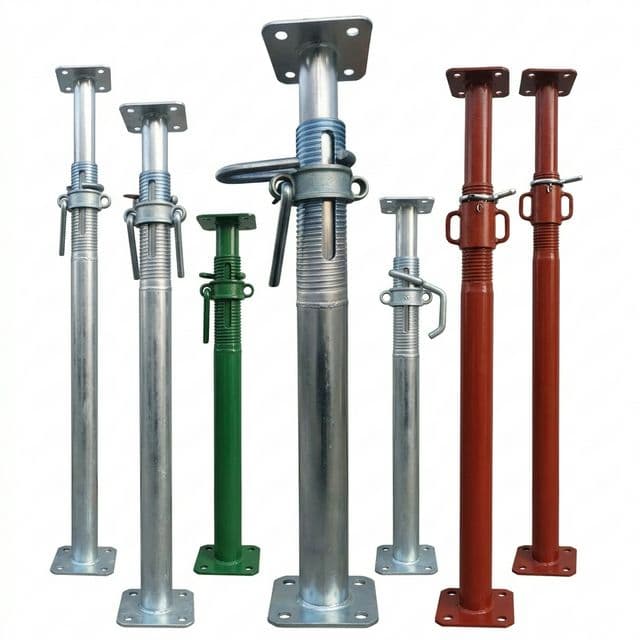
This planner converts alias queries like "acrow props adjustable for sale", "adjustable steel props for sale", "adjustable base jacks prop", "adjustable prop sizes", "adjustable prop jack", "adjustable props jack", "adjustable building steel props", "adjustable construction props", "adjustable construction scaffolding prop", "acrow adjustable floor prop", "adjustable props hsn code", "adjustable props specification", and "8 foot adjustable telescopic prop" into measurable inputs: working height, service load, safety factor, and bracing condition. It then compares your values against public capacity envelopes and tells you whether you can proceed, review, or stop before building the specification packet.
Start with the language your buyer uses, then normalize it to measurable inputs. For "acrow props adjustable for sale", "adjustable steel props for sale", "adjustable base jacks prop", "acrow adjustable floor prop", "adjustable props price", "adjustable prop sizes", "adjustable props sizes", "adjustable prop jack", "adjustable props jack", "adjustable building steel props", "adjustable construction props", "adjustable construction scaffolding prop", "adjustable props hsn code", "adjustable props specification", or "8 foot adjustable telescopic prop", begin at 2.44 m and replace default load with project values.
Priority inquiry email
Send the planner output plus your measured height, service load, and one site photo. We can map your inquiry to a documented RFQ lane.
Section 2 • Report summary
| Metric | Value | Why it matters |
|---|---|---|
| 8 ft conversion | 2.4384 m | Input normalization prevents wrong extension lane selection. |
| OSHA load rule | 4x intended load | Establishes the baseline support-capacity expectation. |
| OSHA stability trigger | >4:1 height/base ratio | Requires documented restraint and tie-map spacing before release. |
| Public model coverage | 1.50-5.50 m | Inputs outside this range must be boundary state in tool output. |
| Cross-supplier signal | 41.4 to 10.9 kN | Confirms capacity variance and extension sensitivity across public sources. |
| Pipe/tube PPI signal | 350.128 (May 2026) | Tracks forming-cost pressure specific to steel tube manufacturing. |
Section 3 • Alias intent answer
In this page model, adjustable props, acrow-adjustables, acrow-for-sale, adjustable steel props for sale, adjustable props for sale, adjustable props supplier, adjustable props suppliers, adjustable props price, adjustable props heavy duty, acrow-price, adjustable prop jack, adjustable props jack, adjustable prop sizes, adjustable props sizes, adjustable base jacks prop, adjustable base props, adjustable metal prop, adjustable metal props, adjustable props specification, adjustable construction props, adjustable construction scaffolding prop, adjustable building steel props, adjustable aluminium props, adjustable props hsn code, and 8-foot wording are treated as alias intents, not separate pages. Convert to meters, run conservative load check, build the specification packet, and keep one canonical URL for both do and know intent.
| Alias query | Canonical keyword | Route | Required action |
|---|---|---|---|
| adjustable props price | adjustable steel props | /learn/adjustable-steel-props | alias_merge: price intent answered on canonical page with tool-first RFQ normalization and no dedicated route |
| acrow props adjustable price | adjustable steel props | /learn/adjustable-steel-props | alias_merge: price intent answered on canonical page with RFQ normalization path |
| acrow props adjustables | adjustable steel props | /learn/adjustable-steel-props | alias_merge: canonical-only answer path + internal anchors + no dedicated route |
| acrow props adjustable for sale | adjustable steel props | /learn/adjustable-steel-props | alias_merge: canonical-only answer path + internal anchors |
| adjustable props for sale | adjustable steel props | /learn/adjustable-steel-props | alias_merge: canonical-only answer path + tool-first CTA + internal anchors + no dedicated route |
| adjustable steel props for sale | adjustable steel props | /learn/adjustable-steel-props | alias_merge: canonical-only answer path + tool-first CTA + internal anchors + no dedicated route |
| adjustable props hsn code | adjustable steel props | /learn/adjustable-steel-props | alias_merge: canonical-only answer path + HSN/HTS classification guardrails + trade-remedy gates + no dedicated route |
| adjustable props specification | adjustable steel props | /learn/adjustable-steel-props | alias_merge: canonical-only answer path + specification packet checklist + tool-first load/height gates + no dedicated route |
| adjustable props heavy duty | adjustable steel props | /learn/adjustable-steel-props | alias_merge: canonical-only answer path + heavy-duty boundary guidance + jurisdiction/load-class gates + no dedicated route |
| acrow adjustable floor prop | adjustable steel props | /learn/adjustable-steel-props | alias_merge: canonical-only answer path + internal anchors |
| adjustable base jacks prop | adjustable steel props | /learn/adjustable-steel-props | alias_merge: tool-first answer + alias clarification + internal anchors |
| adjustable prop jack | adjustable steel props | /learn/adjustable-steel-props | alias_merge: canonical-only answer path + dedicated alias card + FAQ/internal anchors + no dedicated route |
| adjustable props jack | adjustable steel props | /learn/adjustable-steel-props | alias_merge: canonical-only answer path + dedicated alias card + FAQ/internal anchors + no dedicated route |
| adjustable prop sizes | adjustable steel props | /learn/adjustable-steel-props | alias_merge: canonical-only answer path + size-first tool CTA + internal anchors |
| adjustable props sizes | adjustable steel props | /learn/adjustable-steel-props | alias_merge: canonical-only answer path + same size-first tool CTA + internal anchors |
| adjustable base props | adjustable steel props | /learn/adjustable-steel-props | alias_merge: canonical-only answer path + explicit alias FAQ + internal anchors |
| adjustable construction props | adjustable steel props | /learn/adjustable-steel-props | alias_merge: canonical-only answer path + construction-scope boundary gates + internal anchors |
| adjustable construction scaffolding prop | adjustable steel props | /learn/adjustable-steel-props | alias_merge: canonical-only answer path + construction-scope boundary gates + internal anchors + no dedicated route |
| adjustable building steel props | adjustable steel props | /learn/adjustable-steel-props | alias_merge: canonical-only answer path + dedicated building-intent anchor + internal links |
| adjustable metal prop | adjustable steel props | /learn/adjustable-steel-props | alias_merge: canonical-only answer path + heading/FAQ/internal-anchor updates + no dedicated route |
| adjustable metal props | adjustable steel props | /learn/adjustable-steel-props | alias_merge: canonical-only answer path + heading/FAQ/internal-anchor updates + no dedicated route |
| 8 foot adjustable telescopic prop | adjustable steel props | /learn/adjustable-steel-props | alias_merge: title/meta variant + FAQ + H2 + internal anchors |
| adjustable telescopic prop | adjustable steel props | /learn/adjustable-steel-props | alias_merge: no dedicated route |
| telescopic prop adjustable | adjustable steel props | /learn/adjustable-steel-props | alias_merge: canonical-only answer path |
| adjustable telescopic props | adjustable steel props | /learn/adjustable-steel-props | alias_merge: preserve one canonical URL |
| adjustable props supplier | adjustable steel props | /learn/adjustable-steel-props | alias_merge: canonical-only answer path + supplier/manufacturer check + internal anchors + no dedicated route |
| adjustable props suppliers | adjustable steel props | /learn/adjustable-steel-props | alias_merge: canonical-only answer path + supplier/manufacturer check + internal anchors + no dedicated route |
Adjustable props is too broad to release as a purchase specification. In this cluster it is merged into the canonical adjustable steel props page, then narrowed by measured extension, service-load basis, material lane, jurisdiction/code lane, and whether the request is really for a telescopic prop, prop jack, base prop, or aluminium prop.
Evidence status: public standards and official tariff/price sources support the boundary workflow, but there is no reliable public dataset that converts the phrase “adjustable props” into one universal load class, HSN/HTS code, or global unit price. Keep ambiguous requests in review until drawings, model tables, origin, and destination compliance lane are attached.
Adjustable props price is an alias_merge query on this canonical URL, not a separate price page. Use the planner first to normalize height, load, safety factor, and bracing risk; then compare supplier prices only after the quote matrix aligns Incoterm, currency date, origin, duty lane, model certificate, extension range, and accessories included.
Evidence status: official price signals can show market pressure and release timing, but they do not publish one transferable landed unit price for every adjustable prop. As of the June 17, 2026 review, BLS May 2026 PPI is the current public PPI release and June 2026 PPI is scheduled for July 15, 2026, so final-award comparisons need a release-day refresh.
First action
Run the tool and keep proceed/review/boundary status in the RFQ note.
Price gate
Compare landed cost only after Incoterm, duty, origin, and currency date match.
Stop condition
No certified load row, unclear origin, or mixed accessory scope keeps price ranking in review.
Adjustable prop jack and adjustable props jack are alias_merge queries that stay on this canonical URL /learn/adjustable-steel-props; no dedicated `/learn/adjustable-prop-jack` or `/learn/adjustable-props-jack` route is published.
Use the same tool-first workflow: run the planner at target height and service load, then gate RFQ release by bracing, extension-table evidence, and scope-lane checks.
Adjustable prop sizes and adjustable props sizes are alias_merge queries that stay on the canonical URL /learn/adjustable-steel-props; no dedicated `/learn/adjustable-prop-sizes` or `/learn/adjustable-props-sizes` route is published.
Use the same tool-first flow: convert size wording into measured height (m), run conservative load checks, then release RFQ only when extension-row evidence and boundary controls are complete.
Adjustable steel props for sale and adjustable props for sale are alias_merge queries mapped to the same canonical URL /learn/adjustable-steel-props; no dedicated `/learn/adjustable-steel-props-for-sale` or `/learn/adjustable-props-for-sale` route is published.
Run the same tool-first path: normalize working height and load, check proceed/review/boundary output, then keep RFQ release gated by evidence completeness.
Adjustable props hsn code is an alias_merge query on the same canonical URL /learn/adjustable-steel-props; no dedicated `/learn/adjustable-props-hsn-code` route is published.
Use this flow: run tool sizing first, then normalize customs code assumptions in lanes. Use HS-6 as a bridge concept, split HSN/GST and HTS/import workflows, then keep AD/CVD scope plus origin evidence gates before ranking landed-cost quotes.
Adjustable props specification is an alias_merge query on this canonical URL /learn/adjustable-steel-props; no dedicated `/learn/adjustable-props-specification` route is published. The practical answer is a specification packet, not a separate article.
Use the tool-first workflow before writing the spec: measured min/max height, service load per prop, safety factor, bracing condition, head/base type, tube diameter and thickness, finish, standard/certificate scope, origin, Incoterm, inspection record, and any HSN/HTS or local jurisdiction lane must be stated together.
First action
Run the checker and copy proceed/review/boundary status into the specification note.
Spec gate
Require model-specific load rows at target extension, not a generic duty-class label.
Stop condition
Missing tube data, certificate scope, origin, or bracing evidence keeps the request in review.
Adjustable props heavy duty is an alias_merge query on the same canonical URL /learn/adjustable-steel-props; no dedicated `/learn/adjustable-props-heavy-duty` route is published.
Do not treat heavy-duty as one universal prop-capacity number. First map the duty-class and jurisdiction lane, then verify extension-specific prop kN rows before RFQ release.
Section 3S • Specification packet evidence
Stage1b audit finding: the alias answer already told users to build a specification packet, but it did not separate source-backed fields from supplier/project fields that remain to be confirmed. The table below turns the checklist into evidence gates with dated sources and stop conditions.
| Spec field | Verified basis | Boundary / limitation | Executable gate | Source/date |
|---|---|---|---|---|
| Measured height range and extension-row lock | Doka Eurex 20 basic public data shows model-specific working lengths and load rows: 300/350/400 variants list EN 1065 class B/D context, 12.3-19.9 kg product weights, minimum 20 kN load-bearing capacity, and up to 31.8 kN depending on extension line. | A nominal "adjustable props specification" is incomplete until min/max working height and exact extension row are named. | Run the checker first, then attach supplier row screenshot or datasheet page for the target extension before quote release. | Doka Eurex 20 basic datasheet Issue 12/2025 (251201CA); accessed June 17, 2026 |
| Tube orientation and cross-brand capacity spread | Public prop tables show orientation-sensitive capacity. At 2400 mm, ULMA C+D 30 lists 33.6 kN with inner tube up versus 45.8 kN with inner tube down; Doka and Scafom tables also split rows by orientation/model. | Two props at the same height are not automatically equivalent when tube orientation, model family, or table basis differs. | Require drawing/photo evidence for orientation and keep substitution in review until both brands publish comparable rows at target extension. | ULMA EP certified props catalogue; Doka and Scafom public load tables ULMA accessed May 13, 2026; Doka/Scafom reviewed June 17, 2026 |
| Standard edition and certificate scope | BSI lists BS EN 1065:1999 for adjustable telescopic steel props with descriptors including dimensions, threads, steels, corrosion protection, testing, loading, design, verification, and marking. | A marketing phrase such as EN 1065, class B/D, or heavy duty does not prove the quoted SKU, certificate year, issuing body, test scope, or model-row validity. | Request certificate year, issuing body, model/test report scope, and revision identifier; mark legal/compliance interpretation as to-be-confirmed when clause-level evidence is not public. | BSI Knowledge listing for BS EN 1065:1999 Publication listed Nov 15, 1999; accessed June 17, 2026 |
| Temporary-works lane and falsework load determination | DIBt states shoring props are temporary works equipment outside the Construction Products Regulation and points to DIN EN 12812 falsework guidance; DIBt also separates approval/permit routes when products deviate from applicable technical building rules. | Product approval and product standard evidence do not replace project planning for falsework load determination. | If the prop supports concrete/formwork or falsework, attach method statement, drawing revision, and project load-determination owner before procurement release. | DIBt shoring props product-group guidance Accessed June 17, 2026 |
| Head/base contact and eccentric-load exclusion | OSHA 1926.703(b)(6) requires base plates, shore heads, extension devices, and adjustment screws to be in firm contact and secured when necessary; 1926.703(b)(7) prohibits eccentric loads unless designed for them. | A load-table pass is not release-ready if base seating, head contact, adjustment-screw engagement, or eccentric-load design status is unknown. | Attach site photo/drawing showing base and head contact; any eccentric load, offset bearing, or unclear shore-head condition stays boundary until engineered design is documented. | OSHA 1926.703(b)(6)-(7) Official standard text accessed June 17, 2026 |
| Inspection timing and damaged-equipment stop | OSHA 1926.703(b)(1)-(3) requires shoring-equipment inspection before erection and immediately before/during/after concrete placement; 1926.451(f)(3)-(4) requires scaffold inspection before each shift and removal or repair of damaged components. | Inspection records are part of the specification packet when props are used in active work, not optional handover paperwork. | Name inspection owner, timing, and damaged-part withdrawal process in the packet; missing records keep the result in review/boundary even when numeric fit passes. | OSHA 1926.703(b)(1)-(3) and 1926.451(f)(3)-(4) Official standard text accessed June 17, 2026 |
| Finish, origin, Incoterm, and landed-cost comparability | Public evidence can support duty route, market-pressure, and freight-lane checks, but it cannot normalize a live supplier quote without origin, Incoterm, finish, packing/accessory scope, currency date, and certificate scope. | A technical specification packet and a commercial RFQ packet must stay linked; otherwise price comparisons can reward missing finish or compliance scope. | Use the quote-normalization matrix before ranking; if origin, Incoterm, finish, accessory scope, or certificate scope is missing, mark price and award decision as to-be-confirmed. | Public-source audit of tariff, price-driver, Incoterm, and standards evidence Audit updated June 17, 2026 |
| Supplier certificate packet and project drawings | 暂无可靠公开数据: supplier certificates, mill/test reports, drawing revisions, and site-specific load-path calculations are not available from generic public web sources. | The page can define the evidence gate, but cannot certify a supplier SKU or project-specific load path from public data alone. | Keep specification status as to-be-confirmed until selected supplier packet, drawing revision, and qualified project owner signoff are attached. | Project/supplier documentation, not public market data To be confirmed in live RFQ cycle |
Uncertainty disclosure: public sources can verify standards context, official safety gates, and example load-table behavior. They cannot prove your selected supplier certificate, mill/test report, current approval status, drawing revision, or site-specific load path.
If any row is missing evidence, keep the request in review/boundary status and issue the RFQ as a data request instead of a purchase-ready specification.
Section 3H • HSN/HTS boundaries
This table separates HS concept overlap from legal-lane differences. If destination jurisdiction, document purpose, or owner is missing, keep review/boundary status instead of forcing one code output.
| Boundary field | Verified data | Risk if skipped | Executable gate | Source/date |
|---|---|---|---|---|
| HS/HSN/HTS concept layer | CBIC press release states customs tariff follows globally accepted HSN coding and that 6-digit HSN goods codes are common between Customs and GST. | Teams can compare quotes with mismatched code layers (HS concept vs country-specific tariff suffix) and create false landed-cost conclusions. | Normalize in order: HS-6 concept lane, destination-country tariff suffix lane, then duty/tax lane. Do not rank quotes on a raw keyword code string. | CBIC press release on HSN/SAC requirement changes Issued Dec 15, 2020; accessed May 23, 2026 |
| India invoice HSN digit gate | Notification 78/2020 amends Rule 46 to require 4-digit or 6-digit HSN reporting on invoices depending on turnover and B2B conditions (effective Apr 1, 2021). | A quote can look classified, but invoicing/compliance fails later because the HSN-digit requirement is not met for the supplier lane. | Record turnover lane, B2B/B2C lane, and invoice HSN-digit evidence before release when India GST compliance is in scope. | CBIC Notification 78/2020-Central Tax Dated Oct 15, 2020; effective Apr 1, 2021; accessed May 23, 2026 |
| India GST rate baseline for heading 7308 | Notification 1/2017-Central Tax (Rate) Schedule III (9%) includes heading 7308 in the schedule table. | Users may carry U.S. HTS duty assumptions into India GST pricing and miss a separate domestic tax lane. | For India lanes, start from heading-7308 GST baseline, then verify later amendments/exemptions and project-specific rulings before award. | CBIC Notification 1/2017-Central Tax (Rate) schedules Notification dated Jun 28, 2017; schedule PDF accessed May 23, 2026 |
| 8-digit lane visibility (India ITC-HS reference) | Official DGFT policy-notice annex tables include ITC-HS code 73084000, confirming that 8-digit country-level lanes exist beyond the HS-6 concept. | Teams can assume HS-6 alone is enough and skip country-suffix validation when switching between trade-policy and tax workflows. | Where the document lane requires 8-digit code ownership, capture ITC-HS evidence and map it to the exact legal context (customs, policy, or GST filing). | DGFT policy-notice annex (ITC-HS code table) Policy notice dated Jul 8, 2016; accessed May 23, 2026 |
| Facilitation-tool boundary | GST Search HSN/SAC manual marks the tool as advisory, non-binding, and partly taxpayer-populated; technical descriptions are aligned to Customs Tariff Act context. | Teams may treat tool output as a legal ruling and lock procurement decisions without formal classification ownership. | Use search output only for discovery; keep review/boundary state until broker/compliance validation and legal-document mapping are attached. | GST portal Search HSN/SAC Tax Rate user manual Manual version 1.3 (last updated Jul 8, 2024); accessed May 23, 2026 |
| U.S. HTS legal-suffix boundary | USITC FAQ notes HTS lines use 10 digits and that the last two digits are statistical suffixes that generally do not have legal significance for duty-rate determination. | Teams can overfit decisions to statistical suffixes or misread U.S. statistical detail as universal global classification logic. | When U.S. import lane is active, lock the full HTS row plus Chapter 99 and AD/CVD checks, but avoid treating suffix-level formatting as a cross-country classification proof. | USITC HTS FAQ FAQ page accessed May 23, 2026 |
Uncertainty disclosure: this page does not provide a jurisdiction-wide binding customs/GST ruling. GST Search HSN output is advisory, and project-specific legal classification still needs named compliance ownership.
If your package mixes countries or filing lanes without clear ownership, keep boundary status and escalate before pricing award.
Section 3A • Heavy-duty boundaries
This table separates verified public thresholds from unknowns. If the request only says “heavy duty” without the required lane data, keep review or boundary status.
| Boundary field | Verified data | Risk if skipped | Executable gate | Source/date |
|---|---|---|---|---|
| Federal scaffold-duty class framing (non-mandatory appendix) | OSHA Subpart L Appendix A lists light-duty (25 psf), medium-duty (50 psf), and heavy-duty (75 psf) platform classes, with special-duty at designed loads >75 psf. | Teams can misread “heavy-duty” as a universal prop-axial capacity number and skip platform-load mapping. | Map stated duty class to platform loading assumptions first, then convert to per-prop service load before planner use. | OSHA Appendix A to Subpart L of 29 CFR 1926 Current text accessed May 23, 2026 |
| California state-plan heavy-vs-special-duty split | Cal/OSHA Title 8 section 1637 defines heavy-duty scaffold as designed to carry <=75 psf and special-duty as designed to carry >75 psf. | Applying one federal-only interpretation in California can miss local threshold language and review expectations. | If site lane is California, bind release notes to section 1637 definitions before quote ranking. | Cal/OSHA Title 8 section 1637 Current text accessed May 23, 2026 |
| NYC supported-scaffold RDP trigger | NYC Buildings states supported scaffolds are allowable without RDP only when designed for <75 psf and <40 ft high; exceeding 75 psf or 40 ft requires RDP design. | Urban tenders can be released under the wrong documentation lane, causing redesign or permit delay later. | For NYC packages, route >75 psf or >40 ft requests to boundary until RDP ownership and design evidence are attached. | NYC Buildings project requirements for supported scaffold Current page accessed May 23, 2026 |
| Open-data limit: no universal kN mapping for “heavy-duty prop” | Public supplier tables publish extension- and orientation-specific prop capacities, but no reliable open global standard maps the marketing term “heavy-duty” to one transferable telescopic-prop kN value. | Buyers can force false cross-supplier equivalence and overstate reserve margin on long extensions. | If only heavy-duty wording is provided with no model-row evidence, keep review/boundary status and request extension-specific load table. | Public ULMA + Doka + Scafom tables and EN listings Accessed May 23, 2026 |
Uncertainty disclosure: there is no reliable single public global table that maps the phrase “heavy-duty prop” to one transferable telescopic-prop kN value.
When supplier model-row evidence is missing, keep boundary status and escalate to engineering/compliance review.
Section 2A • Size-definition boundaries
This gate converts size language into reproducible checks. If any required field is missing, keep the workflow in review or boundary status instead of forcing a nominal-size decision.
| Field boundary | Verified data | Decision risk | Executable gate | Source/date |
|---|---|---|---|---|
| Nominal size wording to measured lane | NIST defines 1 ft exactly as 0.3048 m, so 8 ft = 2.4384 m and must be mapped to supplier extension rows, not treated as a stand-alone model spec. | Rounding or name-only selection can land on the wrong extension row and overstate available capacity. | Keep at least three decimals in height conversion, then lock the exact extension row before RFQ release. | NIST SI conversion notice Updated Feb 3, 2026; accessed May 13, 2026 |
| Load basis behind a “size pass” | OSHA 1926.451(a)(1) requires scaffold + components to support self-weight plus at least 4x maximum intended load; OSHA interpretation clarifies maximum intended load excludes scaffold self-weight. | Mixing self-weight into intended-load input can distort utilization and create false proceed/review decisions. | Split self-weight and intended-load lines in the worksheet and retain the clause reference in the RFQ packet. | OSHA 1926.451(a)(1) + OSHA standard interpretation (2013-12-06) Standard accessed May 13, 2026; interpretation updated Apr 24, 2020 and accessed May 13, 2026 |
| Extension-row lock and orientation proof | Public tables show large same-height spread: ULMA C+D 30 at 2400 mm lists 33.6 kN (tube up) vs 45.8 kN (tube down), a 12.2 kN gap. | Cross-vendor comparison can look equivalent while actual reserve margin differs materially at the same nominal size. | Require model-row screenshot + tube-orientation evidence (drawing/photo) before substitution decisions. | ULMA EP certified props catalogue Accessed May 13, 2026 (catalogue text has no explicit issue date) |
| Family range is not interchangeability proof | Public rows remain family-specific (for example Doka 350: 2.0-3.5 m with 31.2 to 13.8 kN; Scafom EP20: 1.5-5.5 m with 32.4 to 20.6 kN). | Selecting by family name alone can hide non-overlapping extension/capacity envelopes. | Treat “same size” as review lane unless both vendors publish comparable rows at the target extension and boundary assumptions match. | Doka Eurex 20 basic datasheet + Scafom-rux props brochure Accessed May 13, 2026 |
Evidence boundary: No reliable public dataset can prove your project-specific bracing quality, tie-map details, or mixed-brand compatibility by itself.
If these items are missing, keep boundary status and collect drawing/photo evidence before award.
In this intent cluster, adjustable base jacks prop is handled on this canonical URL so buyers can run one tool and one evidence workflow before RFQ release.
If your request is specifically for threaded scaffold base-jack accessories instead of telescopic shoring props, use the dedicated base-jack checker while keeping this page as the canonical alias answer path.
Adjustable base props is an alias-merge term in this workflow, so it stays on the canonical page /learn/adjustable-steel-props instead of creating a separate route.
Use the same tool-first flow: normalize the target height, compare extension-specific capacity, and then release RFQ only when boundary evidence is complete.
Adjustable metal prop and adjustable metal props are merged into the canonical route /learn/adjustable-steel-props. There are no separate `/learn/adjustable-metal-prop` or `/learn/adjustable-metal-props` pages in this cluster.
Keep the same executable path: run the tool with measured height and service load, then use the boundary/evidence gates before RFQ release.
Adjustable building steel props is handled as an alias_merge query on this same canonical URL /learn/adjustable-steel-props. No dedicated route is published for this phrase.
Run the same executable flow: confirm measured working height, check conservative load envelope, and keep boundary evidence in the RFQ packet when utilization or model coverage is uncertain.
Adjustable construction props and adjustable construction scaffolding prop are both handled as alias_merge queries on this canonical URL /learn/adjustable-steel-props; no separate route is published.
The decision boundary is stricter for active concrete-support work: use OSHA 1926.701(a) pre-load determination and 1926.703(b)(9)-(10) post-pour adjustment/reshoring gates before RFQ release.
The queries “adjustable props supplier” and “adjustable props suppliers” are handled as an alias_merge on this canonical page (/learn/adjustable-steel-props). Procuring telescopic steel props for commercial sites requires rigorous technical triage. Awarding contracts based on nameplate family maximums (e.g., “30 kN rating”) without validating extension-specific capacity, physical marking compliance, national technical approvals, and import tariff exposure presents significant safety, legal, and cost risks.
Follow this structured compliance path before finalizing any procurement award:
| Verification Item | Verified Technical Basis | Decision Boundary & Blockers | Actionable Procurement Gate | Verified Reference Source |
|---|---|---|---|---|
| Permanent Marking (物理标识印记) | EN 1065 Clause 10 requires legible, permanent embossed or engraved markings on the prop body specifying: the EN 1065 standard name, the capacity class and max length (e.g., D30), the manufacturer code, and the year of manufacture. | Blocker: Unmarked props, or props with only surface paint labels, fail standard compliance and must be rejected at factory audits or receiving gates. | Implement a random audit gate where inspectors check 5% of steel props in the batch for physical embossed/engraved steel markings before container loading. | BS EN 1065:1999 Clause 10 Accessed June 20, 2026 |
| National Technical Approvals (DIBt / WSH MOM) | In Germany, falsework and shoring props deviate from standard building rules and require Deutsches Institut für Bautechnik (DIBt) technical approvals (abZ - allgemeine bauaufsichtliche Zulassung or aBG - allgemeine Bauartgenehmigung). In Singapore, steel shoring must comply with Singapore Standards like SS 659 and Workplace Safety and Health (WSH) Act requirements under a Qualified Person (QP/RP) check. | High Risk: Procurement of unapproved or uncertified brands for European/Singapore sites blocks building permits and legal handovers. | Verify the supplier's abZ/aBG registration number directly in the DIBt registry and check if the Singapore QP design layout references EN 1065 certified load rows. | DIBt Germany & Singapore WSH (MOM) Scaffolding Guidelines Accessed June 20, 2026 |
| Tariff and AD/CVD Gates (HTS 7308.40) | HTS 7308.40.00 (Equipment for scaffolding, shuttering, propping, or pit-propping) is classified as a derivative steel article under Section 232, rendering it subject to up to 25%-50% additional U.S. ad valorem duties. General scaffolding/shoring from China is subject to Section 301 tariffs, but scaffolding and shoring are explicitly excluded from the scope of active steel racks AD/CVD orders when safety-compliant. | Medium Risk: Procuring under Incoterms (like FOB/CFR) without auditing Section 232/301 customs exposure leads to catastrophic landed cost overruns. | Require the supplier to provide a verified Mill Certificate showing the "melt and pour" country of origin and seek binding ruling or lock DDP terms to shift customs risks to the vendor. | USITC Harmonized Tariff Schedule & DOC Enforcement and Compliance Updated June 20, 2026 |
| Welding & Mill Test Certificates (MTR) | Quality shoring relies on certified weld penetration (e.g., ISO 3834 or AWS D1.1 standards). Steel tubes must be verified via physical and chemical Mill Test Reports (MTR) showing exact yield strength (Fy) of Q235, Q345/Q355, or equivalent structural grades. | High Risk: Suppliers who only provide marketing catalogs without heat-number-traceable mill test certificates present load-capacity failure risks. | Make the release of down payment and final loading dependent on the delivery of Heat Number traceable Mill Certificates and ISO 3834 weld audit logs. | ISO 3834 Quality requirements for fusion welding & AWS D1.1 Accessed June 20, 2026 |
| Extension-Specific Load Curves | Telescopic steel props exhibit steep capacity degradation as extension increases. For instance, at 8 ft (2.44 m), capacities vary wildly between tube orientation up/down (e.g., ULMA C+D 30 varies by 12.2 kN: 33.6 kN vs 45.8 kN) and class A-E definitions. | Blocker: Reject quotes that only state family maximum capacity (e.g., "30 kN rating") without supplying the official capacity curve for the target extension height. | Compare design calculations for maximum slab load against the supplier's official load-capacity row at the exact 2.44 m/target height prior to issuing the PO. | ULMA, Doka, and Scafom-rux Certified Load Tables Reviewed June 20, 2026 |
Section 3B • Price intent answer
There is no reliable public dataset that gives one transferable global price for adjustable props. Quotes are decision-ready only after duty route, technical equivalence, and commercial terms are normalized in the same matrix.
Known
Public sources provide duty routes, steel/fabrication price indices, transport-cost signals, and FX benchmarks with explicit dates.
Unknown
Project-level landed unit price stays to-be-confirmed until quote terms, origin, and certificate scope are aligned.
Action now
Use the quote normalization table below. If any hard gate is missing, keep the decision in review/boundary status.
Section 3C • Price driver evidence
Confirmed PPI rows now include May 2026 as of the June 17 review. June 2026 PPI values are to be confirmed until BLS/FRED publish the scheduled July 15, 2026 release, so final-award price narratives should be refreshed after that date.
| Driver | Latest public signal | Decision use | Source/date |
|---|---|---|---|
| Steel mill products PPI (WPU1017) | 348.530 in May 2026; +2.12% month over month. | Use as a steel-input pressure proxy before treating supplier price jumps as random noise. June 2026 value is pending until the scheduled July 15, 2026 PPI release. | Federal Reserve Bank of St. Louis (FRED, BLS series) Accessed June 17, 2026; next release July 15, 2026 |
| Fabricated structural metal products PPI (WPU107) | 412.645 in May 2026; +1.07% month over month. | Treat fabrication-cost movement separately from raw steel so quotation deltas can be diagnosed by component. June 2026 value is pending until the scheduled July 15, 2026 PPI release. | Federal Reserve Bank of St. Louis (FRED, BLS series) Accessed June 17, 2026; next release July 15, 2026 |
| BLS headline Producer Price Index release context | Confirmed public release summary shows May 2026 final demand +1.1% month-over-month and +6.5% year-over-year. | Use this release-level marker to version price commentary. The June 11, 2026 release is now the current BLS PPI publication; next refresh is the June-data release on July 15, 2026. | U.S. Bureau of Labor Statistics PPI news release Released June 11, 2026; accessed June 17, 2026; June PPI scheduled July 15, 2026 |
| BLS final-demand split + revision behavior | May 2026: final-demand goods +2.8% MoM, services +0.3% MoM, and final demand less foods/energy/trade services +0.8% MoM. | Do not use one blended escalation factor. Split goods-heavy and service-heavy lanes, and restamp commentary whenever BLS revisions are published. | U.S. Bureau of Labor Statistics PPI news release Released June 11, 2026; accessed June 17, 2026; June PPI scheduled July 15, 2026 |
| BLS FD-ID aggregation-weight methodology change | BLS says the FD-ID structure now uses 2017 Input-Output commodity weight allocations, effective with January 2026 data. | When comparing trend narratives across cycles, record the methodology vintage so mix-shift effects are not misread as pure market movement. | U.S. Bureau of Labor Statistics PPI notice Notice dated Jan 16, 2026; accessed May 17, 2026 |
| Iron and steel pipe/tube manufacturing PPI (PCU3312133121) | 350.128 in May 2026; +1.31% month over month. | Use as a prop-material-forming signal to separate pipe/tube fabrication pressure from broad steel benchmarks. June 2026 value is pending until the scheduled July 15, 2026 PPI release. | Federal Reserve Bank of St. Louis (FRED, BLS series) Accessed June 17, 2026; next release July 15, 2026 |
| General freight trucking (long-distance truckload) PPI (PCU484121484121) | 216.119 in May 2026; +5.53% month over month. | Adds inland-freight cost pressure beyond diesel-only monitoring when comparing landed quotes. June 2026 value is pending until the scheduled July 15, 2026 PPI release. | Federal Reserve Bank of St. Louis (FRED, BLS series) Accessed June 17, 2026; next release July 15, 2026 |
| Deep sea freight transportation PPI (PCU483111483111) | 466.381 in May 2026; +5.05% month over month. | Separate ocean-freight pressure from inland trucking and diesel so landed-cost assumptions are not blended into one false signal. June 2026 value is pending until the scheduled July 15, 2026 PPI release. | Federal Reserve Bank of St. Louis (FRED, BLS series) Accessed June 17, 2026; next release July 15, 2026 |
| U.S. on-highway diesel retail benchmark | US average $5.059/gal for week of June 15, 2026, versus $5.210 week-ago and +$1.488 year-ago; same release lists next publication date as June 23, 2026. | Use as a transport-cost stress signal and force weekly refresh on release cadence before locking freight assumptions. | U.S. Energy Information Administration (EIA) Diesel release dated June 16, 2026; accessed June 17, 2026 |
| HTS route for scaffolding/propping equipment | HTS 7308.40.00.00 shows General duty “Free”, Other duty “45%”, with footnote to 9903.88.03. | Do not compare prices until HTS line and Chapter 99 additions are normalized by country of origin. | U.S. International Trade Commission HTS API Queried April 23, 2026 |
| China-origin additional duty trigger | HTS 9903.88.03 states “applicable subheading duty +25%” for covered China-origin articles. | If origin is China and no exclusion applies, price benchmarking without this layer is invalid. | U.S. International Trade Commission HTS API Queried April 23, 2026 |
| India GST baseline for heading 7308 (HSN lane) | Notification 1/2017-Central Tax (Rate) places heading 7308 in Schedule III (9% CGST). Standard intra-state lane therefore starts from 18% combined GST before exemptions, amendments, or project-specific rulings. | If destination/compliance lane is India, do not reuse U.S. HTS duty assumptions as a tax answer. Keep a separate HSN/GST lane and confirm current amendments before final ranking. | CBIC Notification 1/2017-Central Tax (Rate) schedules Notification dated Jun 28, 2017; schedule PDF accessed May 23, 2026 |
| USD/CNY reference exchange rate (DEXCHUS) | Latest available 6.7626 on June 12, 2026; observed range 6.7622 to 6.9119 from Mar 3 to June 12, 2026. | Currency clauses and validity windows must be explicit before cross-supplier quote ranking. | Federal Reserve Bank of St. Louis (FRED, Board H.10 series) Accessed June 17, 2026 |
Section 3C.1 • Price comparison limits
Network research did not find a reliable public dataset that publishes one transferable global unit price for adjustable props. The useful public evidence is narrower: it identifies which quote fields must match before a price can be compared. Rows below convert those evidence boundaries into stop conditions.
| Comparison trap | Verified boundary | Decision impact | Executable check + source |
|---|---|---|---|
| EXW/FOB/CIF/DDP quotes placed in one price column | ICC Incoterms 2020 rules define cost, risk, and delivery obligations by named term, so the same supplier unit price can move materially once freight, insurance, import clearance, and last-mile delivery are assigned. | A lower EXW number can lose after port drayage, ocean freight, import charges, and site delivery are added; a DDP number may include costs hidden outside a FOB quote. | Rank only within one Incoterm lane, or convert every quote to one landed-cost worksheet with named responsibility for freight, insurance, clearance, duties, and delivery. International Chamber of Commerce, Incoterms rulesIncoterms 2020 rules in force since Jan 1, 2020; reviewed June 17, 2026 |
| HTS 7308 baseline used as the full import-cost answer | USITC HTS can show the tariff row, but Commerce AD/CVD scope guidance says written order language controls scope while tariff classifications are convenience references. | A China-origin or scope-covered product can need additional duty screening even when the base HTS row looks simple. | Require broker/legal memo for product description, origin, active order status, and narrative-scope fit before final award ranking. U.S. Commerce scope-ruling guidance + USITC HTSCommerce guidance published Apr 1, 2022; HTS route reviewed June 17, 2026 |
| Marketing “EN 1065” or “heavy duty” claims treated as equal certificate scope | Public EN 1065 listings and supplier pages do not prove the exact model, certificate year, issuing body, extension row, orientation, coating, or approval validity for the SKU in the quote. | A cheaper quote may be cheaper because the certificate packet, current approval, finish, or extension-specific load row is missing or outside project scope. | Keep price in review until certificate year, issuing body, model-row screenshot, tube orientation, coating, and approval-validity status are attached. BSI/ANSI EN 1065 listings, DIBt approval registry, public supplier load tablesEvidence reviewed Apr 12-May 17, 2026; page restamped June 17, 2026 |
| Old PPI, diesel, or FX snapshot reused after a new release date | BLS/FRED PPI rows are confirmed through May 2026 on the June 17 review, EIA diesel is weekly, and June 2026 PPI remains pending until the scheduled July 15, 2026 release. | A quote comparison can be internally consistent on Monday and stale after the next official release, especially when inland trucking and steel signals move differently. | Restamp PPI, diesel/freight, and FX rows within 7 calendar days of award; if a scheduled release has landed, rerun the landed-cost comparison. BLS PPI release calendar, FRED BLS series, EIA diesel releaseReviewed June 17, 2026; next PPI checkpoint July 15, 2026 |
| Public web prices used as universal adjustable props price | Public sources support market-pressure, duty, freight, and standards boundaries, but no reliable public dataset normalizes prop unit price by model, extension, certification, origin, Incoterm, freight lane, accessory scope, and live MOQ. | Publishing one global unit number would be false precision and could send users toward the wrong supplier or compliance lane. | Mark the unit price as to-be-confirmed until live RFQ rows are collected; show a range only after the matrix fields are complete and dated. Public-source audit of official price, tariff, freight, and standards evidenceAudit updated June 17, 2026 |
Section 3D • Quote normalization
| Normalization field | Minimum evidence | Stop condition | Executable path |
|---|---|---|---|
| Tariff baseline | HTS line (7308.40), Chapter 99 flags, country of origin | Duty stack unclear or Chapter 99 applicability unresolved | Hold ranking; request broker-reviewed landed-cost sheet before PO. |
| HSN/HTS jurisdiction lane ownership | Declared destination/compliance lane, HS-6 baseline, and country-specific suffix lane (for example ITC-HS/GST or U.S. HTS) with named owner | HSN and HTS are mixed in one sheet without jurisdiction mapping or legal-lane ownership | Keep review lane; split quote matrix by jurisdiction and attach documented classification owner before ranking. |
| Trade-remedy scope screen (AD/CVD) | Broker memo confirming AD/CVD scope check by product description, origin, and current order status | HTS route is known but no written AD/CVD scope screening is attached | Keep review lane and block final ranking until scope screening and contingency note are added. |
| AD/CVD scope-ruling escalation | Named legal/compliance owner and documented escalation path to 19 CFR 351.225 scope-ruling workflow when scope remains ambiguous | Scope ambiguity remains after broker review and no formal escalation path is documented | Keep review lane and open formal scope-ruling/legal workstream before final award recommendation. |
| Jurisdiction inspection/report cadence | Declared jurisdiction lane (for example U.S. OSHA or UK WAH), applicability trigger owner (including UK >=2 m fall potential test), inspection-frequency owner, and report-retention owner | Cross-border package has no written cadence (shift/event vs <=7-day with >=2 m trigger) or no retention handoff | Block release until jurisdiction-specific inspection/report workflow is attached to RFQ records. |
| U.S. federal-vs-state-plan enforcement lane | Project-state lane map (federal OSHA vs OSHA-approved State Plan), plus documented owner for penalty and appeal procedure assumptions | Multi-state package applies one federal enforcement assumption without checking state-plan coverage or procedure differences | Hold ranking and map each site to the governing enforcement lane before final award recommendation. |
| Penalty-stacking exposure check | Working-level hazard count, employee exposure count, and closure records for repeated scaffold nonconformities | Repeated unresolved hazards remain and no per-instance exposure estimate is documented | Escalate corrective-action review and hold award until closure evidence is signed off. |
| Technical equivalence | Working-length lane, class/model, tube orientation, extension-specific kN row | Only nominal “8-foot prop” text with no load-row attachment | Move to review lane and require supplier table at target extension. |
| Material-standard and galvanic compatibility | Material lane (steel EN 1065 or aluminium EN 16031), certificate scope, and dissimilar-metal galvanic assessment ownership | Cross-material substitution proposed with no standard-scope proof or no OSHA 1926.451(b)(11) check | Keep boundary lane and require competent-person signoff plus current certificate packet before comparison. |
| Stability and weather controls | Height/base ratio check, tie-map spacing evidence, access route method, and storm/high-wind stop protocol owner | 4:1 restraint evidence missing, cross-brace access implied, or weather restart authority undefined | Force boundary lane; require competent-person signoff and site-method update before quote award. |
| Commercial scope | Incoterm, destination port/site, packing basis, quote validity date | Mixed EXW/FOB/CIF/DDP assumptions in the same comparison | Rebuild matrix with one Incoterm lane before any winner selection. |
| Currency and payment terms | Invoice currency, FX fixing method, payment milestone and surcharge rule | Quoted totals use different FX dates or undefined conversion method | Convert to one valuation date and document FX assumption beside each quote. |
| Evidence recency and review timestamp | Access dates for price signals (PPI/diesel/FX) and approval-register checks within 7 calendar days of RFQ release | Critical source snapshot is stale, broken, or pre-refresh data is reused | Refresh source snapshot, update decision log date, and rerun quote ranking before award. |
| Release-calendar refresh gate | Check BLS PPI release calendar and confirm whether a new publication landed since the last quote-normalization run | New PPI release is published but RFQ still references pre-release snapshot | Recompute price-driver notes on release day and rerun landed-cost comparison with updated timestamps. |
| PPI revision/version-control gate | Store the exact BLS PPI release date used for pricing notes and check whether referenced months are subject to subsequent revision in later releases | Price commentary has no release-version marker or ignores revision notes published by BLS | Freeze award recommendation until price notes are restamped with the current BLS release and variance commentary is recalculated if revisions occurred. |
| Certificate and compliance scope | Certificate year, issuing body, test/report scope, revision identifier | Only marketing claim without certificate packet | Mark as to-be-confirmed and block final award until dossier is supplied. |
| Inspection/document gates | Drawing revisions, inspection ownership, receiving-check records | No accountable handoff for pre-use inspection and damaged-part removal | Keep boundary status and attach OSHA-trigger checklist to RFQ release. |
| Workforce training and retraining readiness | User training record (1926.454(a)), erector/dismantler training record (1926.454(b)), and retraining trigger check (1926.454(c)) | No qualified/competent trainer traceability or no proof that change-driven retraining has been completed | Hold release; schedule required training/retraining and attach dated roster before ranking quotes. |
Section 3E • Trade-remedy and refresh gates
HTS baseline alone is not enough for landed-cost certainty. This gate layer adds U.S. Commerce AD/CVD screening logic and BLS release-calendar refresh checkpoints to keep price conclusions auditable.
| Signal | Verified public data | Decision risk | Executable gate + source |
|---|---|---|---|
| AD/CVD can add duty layers beyond HTS baseline rates | U.S. Commerce FAQ states that when Commerce and ITC final findings are affirmative, duties are assessed as a percentage of entered value. | A quote can look competitive under HTS-only math but become non-competitive when AD/CVD scope applies. | Require broker scope memo (product description + origin + active order check) before final quote ranking. U.S. Department of Commerce AD/CVD FAQAccessed April 24, 2026 |
| Administrative reviews can change cash-deposit rates over time | Commerce FAQ explains that annual administrative reviews can determine final duties owed and set new cash-deposit rates for future entries. | Long validity windows can drift from final landed cost if review-cycle updates are ignored. | For quotes with longer validity windows, add a duty-contingency note and refresh broker screening before PO. U.S. Department of Commerce AD/CVD FAQAccessed April 24, 2026 |
| Formal scope-ruling path exists when AD/CVD coverage is unclear | Trade.gov scope-ruling guidance points to 19 CFR 351.225 as the governing regulation and states the scope rules were significantly revised in September 2021 with an effective date of November 4, 2021. | Without a formal escalation path, teams may treat unresolved scope ambiguity as if it were a cleared duty position. | If broker memo still marks scope uncertainty, escalate to formal scope-ruling/legal review and keep ranking in review lane. U.S. Department of Commerce scope-ruling guidanceAccessed April 25, 2026 |
| Written-scope language controls; HTS lines are convenience references | Commerce scope-ruling guidance states every AD/CVD order contains a written description of scope and that this language is dispositive, while tariff classifications are for convenience and customs purposes only. | Treating HTS-only mapping as final can hide narrative-scope exposure and distort landed-cost ranking. | Require narrative-scope check against order language; keep review lane until broker/legal memo confirms written-scope fit. U.S. Department of Commerce scope-ruling guidance PDFPublished April 1, 2022; accessed April 28, 2026 |
| Official refresh checkpoint for PPI-driven price commentary | BLS schedule shows May 2026 PPI was released at 8:30 AM ET on June 11, 2026 and the next cycle (June 2026 data) is scheduled for July 15, 2026. | If release checkpoints are skipped, commentary can remain tied to an outdated cycle during active RFQ rounds. | Set a release-day refresh task and rerun price normalization at each scheduled publication checkpoint. U.S. Bureau of Labor Statistics PPI release calendarAccessed June 17, 2026 |
Section 3F • Stability and weather gates
Even if price and capacity look acceptable, the RFQ should stay in boundary mode when stability restraints, weather-stop governance, or access-route controls are missing.
| Trigger | Requirement | Decision risk | Action + source |
|---|---|---|---|
| Height-to-base ratio exceeds 4:1 | Apply guying/ties/bracing, with ties repeated <=20 ft (<=3 ft width) or <=26 ft (>3 ft width), and horizontal intervals <=30 ft. | Procurement may approve a numerically adequate prop setup that still fails anti-tip restraint controls. | Hold in boundary lane until tie-map evidence is attached to drawings/photos. OSHA 1926.451(c)(1)Accessed April 23, 2026 |
| Storm/high-wind or slippery surface conditions | No work from scaffolds during storms/high winds without competent-person determination; no work on snow/ice-covered surfaces except removal. | Teams may continue work without a defensible weather stop/restart decision, increasing fall and instability exposure. | Document weather authority and stop/restart criteria before release in exposed sites. OSHA 1926.451(f)(12)-(13)Accessed April 23, 2026 |
| Access route relies on cross braces or unclear transfer gap | Use ladders/ramps/stairways or equivalent; cross braces are not access. Direct access from another surface is limited to <=14 in horizontal and <=24 in vertical gap. | Load checks can pass while daily access remains non-compliant and unsafe. | Require access sketch/photo and include direct-gap checks in RFQ handoff. OSHA 1926.451(e)(1) and (e)(8)Accessed April 23, 2026 |
Section 3G • Energized-line clearance gate
This section converts OSHA 1926.451(f)(6) into an RFQ action table. If voltage class, measured clearance, or utility-company exception evidence is missing, keep boundary status regardless of price or capacity results.
| Line type | Voltage band | Minimum distance | Alternative rule | Release gate |
|---|---|---|---|---|
| Insulated line | <300 V | 3 ft (0.9 m) | None | If measured clearance is below 3 ft, hold release and escalate for utility coordination. |
| Insulated line | 300 V to 50 kV | 10 ft (3.1 m) | None | Require documented field measurement before approving work near energized lines. |
| Insulated line | >50 kV | 10 ft + 0.4 in per 1 kV over 50 kV | 2x line-insulator length, but never less than 10 ft | Use boundary lane unless voltage band and distance rule are both documented. |
| Uninsulated line | <50 kV | 10 ft (3.1 m) | None | Block release when voltage class or measured distance is unknown. |
| Uninsulated line | >50 kV | 10 ft + 0.4 in per 1 kV over 50 kV | 2x line-insulator length, but never less than 10 ft | Treat as engineering-required lane unless exact voltage and clearance evidence is attached. |
| OSHA exception to 1926.451(f)(6) | Any | Closer work is allowed only when utility/operator has been notified and acted | Deenergized, relocated, or protective coverings in place | Do not release RFQ/work package without utility confirmation record when closer clearance is required. |
Source: OSHA 1926.451(f)(6), accessed April 23, 2026. Exception path requires utility/operator action (deenergize, relocate, or protective coverings) before closer work.
Section 3H • Scope-lane boundary
“Adjustable base props”, “adjustable construction props”, and “adjustable construction scaffolding prop” wording often mixes scaffold-access and formwork-support tasks. This boundary table keeps clause applicability explicit so Subpart L and Subpart Q controls are not conflated in one unchecked release.
| Decision lane | Official meaning | Use when | Do not use when | Required clause lane + source |
|---|---|---|---|---|
| Supported scaffold lane | Scaffold means a temporary elevated platform and support structure used to support employees or materials; supported scaffolds bear on rigid supports. | Primary use is access/work platform plus temporary support for workers/materials at elevation. | Request is only about temporary concrete-support behavior with no scaffold work platform context. | Start with 1926 Subpart L (1926.451 controls) and keep training gate in 1926.454 active. OSHA 1926.450 (definitions)Accessed April 24, 2026 |
| Formwork and shoring lane | Formwork means forms and associated supports used to support freshly placed concrete, including shoring and reshoring; a shore is a support resisting compressive force. | Primary risk is fresh-concrete support, form removal timing, and reshoring sequence. | Task is only scaffold-access setup without formwork load-path obligations. | Activate 1926 Subpart Q gates (1926.700 definitions + 1926.703 design/inspection/removal triggers). OSHA 1926.700 (definitions)Accessed April 24, 2026 |
| Construction-load release gate | No construction loads may be placed on a concrete structure unless the employer determines, from a person qualified in structural design, that the structure can support those loads. | Any adjustable construction props or adjustable construction scaffolding prop request tied to fresh or partially cured concrete support. | Only scaffold-access setup is requested and no concrete-support load transfer is involved. | Apply OSHA 1926.701(a) pre-load determination and 1926.703(b)(9)-(10) post-pour adjustment/reshoring sequencing before release. OSHA 1926.701(a) + 1926.703(b)(9)-(10)Accessed April 25, 2026 |
| Mixed scaffold + shoring lane | When both scaffold-access and concrete-support tasks coexist, each lane keeps its own design and release checks. | Same work package includes elevated access plus temporary support to slab/formwork operations. | No integrated drawing and inspection ownership is defined across both lanes. | Use 1926.451(a)(6) qualified-design requirement with Subpart Q drawing/inspection triggers before release. OSHA 1926.451(a)(6) + 1926.703(a)(2)/(b)(3)Accessed April 24, 2026 |
| EN 12812 temporary-support (falsework) lane | DIBt states these shoring props are not CE-marked under CPR and that, for temporary support structures according to DIN EN 12812, the loads to be applied are derived from project planning. | Request includes temporary support of formwork/concrete operations in EN-based project lanes and needs planning-derived load determination. | Only marketing claims or class labels are available and no project load-determination pack is attached. | Keep EN 1065/EN 16031 material lane and require DIN EN 12812 load-determination ownership before release. DIBt shoring props product-group guidanceAccessed May 17, 2026 |
Section 3I • Training and risk pressure
This section turns OSHA training rules and BLS/OSHA pressure signals into release controls. If training evidence is incomplete, keep boundary status even when numeric fit appears acceptable.
| Gate | Requirement | Minimum evidence | Stop condition | Executable path + source |
|---|---|---|---|---|
| Scaffold-user hazard training | 1926.454(a) requires each employee who performs work while on a scaffold to be trained by a qualified person on relevant hazards and procedures. | Named qualified trainer, scope of hazards covered, and dated worker roster tied to this site/package. | Workers assigned but no qualified-person training trace in RFQ release packet. | Pause release and complete role-specific scaffold-user training before field deployment. OSHA 1926.454(a) + 1926.32(m)Accessed April 24, 2026 |
| Erector/dismantler procedural training | 1926.454(b) requires employees involved in erecting, disassembling, moving, operating, repairing, maintaining, or inspecting scaffolds to be trained by a competent person. | Competent-person name, training scope by task type, and assignment list for erection/inspection roles. | Installation/inspection roles are assigned but no competent-person training record exists. | Move to boundary and require competent-person-led training signoff before work order release. OSHA 1926.454(b) + 1926.32(f)Accessed April 24, 2026 |
| Change-driven retraining trigger | 1926.454(c) requires retraining when inadequacies appear or when workplace/scaffold/equipment changes create new hazards. | Change log (site conditions, scaffold type, fall-protection systems) plus retraining completion date when trigger conditions occur. | Scope changed since prior project but retraining evidence is missing or stale. | Block final quote award until retraining closure and revised method acknowledgment are attached. OSHA 1926.454(c)Accessed April 24, 2026 |
| Signal | Latest public data | Decision use | Source/date |
|---|---|---|---|
| Fatal falls/slips/trips burden | BLS CFOI 2024 reports 844 fatal occupational injuries from falls, slips, and trips, with 370 in construction and extraction occupations. | Treat fall-control packet completeness as a release gate, not a post-award cleanup item. | BLS CFOI 2024 news release Released Feb 19, 2026; accessed April 24, 2026 |
| Falls to lower level concentration | BLS Table A-9 reports 666 fatal falls to lower level in 2024, including 373 in construction. | Prioritize tie-map, access-route, and base-condition evidence when ranking RFQs. | BLS CFOI Table A-9 (2024) Published Feb 19, 2026; accessed April 24, 2026 |
| Nonfatal falls/slips/trips DART burden | BLS SOII 2023-2024 annualized estimates show 721,720 DART cases for falls/slips/trips (479,480 with days away from work + 242,240 with job transfer/restriction). | Use training and inspection gates to control downtime risk, not only catastrophic-failure risk. | BLS Employer-Reported Workplace Injuries and Illnesses Released Jan 22, 2026; accessed April 24, 2026 |
| Enforcement exposure for scaffold controls | OSHA FY2025 Top 10 list ranks 29 CFR 1926.451 (Scaffolding, construction) at #6. | Assume inspection exposure is material; keep clause-level records in every release package. | OSHA Top 10 Most Frequently Cited Standards Updated Apr 15, 2026; accessed May 8, 2026 |
Section 3J • Enforcement and jurisdiction gates
This layer adds quantifiable enforcement exposure and jurisdiction split checks. It prevents RFQ release when penalty stacking risk, reporting cadence, or retention ownership is undefined.
| Signal | Verified public data | Decision risk | Executable gate + source |
|---|---|---|---|
| Federal OSHA penalty caps define immediate financial exposure | For penalties proposed after January 15, 2025, OSHA lists $16,550 max for serious/other-than-serious/posting, $16,550 per day for failure-to-abate, and $165,514 max for willful/repeat; 1903.15 also sets a willful minimum of $11,823. | Treating compliance gaps as minor paperwork can create material direct-cost exposure in addition to schedule risk. | Quantify potential penalty exposure in high-risk lanes and require closure evidence before final award. OSHA penalties page + 29 CFR 1903.15Accessed May 13, 2026 |
| Instance-by-instance policy can multiply scaffold citations | OSHA April 17, 2024 memo says separate violations may be issued per instance when standard language supports it, including a scaffold example where each non-fully-planked level under 1926.451(b)(1) can be cited separately. | Repeated unresolved scaffold defects can scale from one assumed citation to multiple citations in one inspection. | Track hazards by level/employee, close repeated findings before release, and keep unresolved clusters in boundary lane. OSHA instance-by-instance citation policy memoIssued April 17, 2024; accessed April 25, 2026 |
| U.S. state-plan coverage and penalty procedures can differ from federal lane | OSHA state-plan overview lists 22 plans covering private + state/local workers and 7 plans covering only state/local workers, and states approved plans must be at least as effective as federal OSHA. | Using one federal-only process assumption across state-plan jurisdictions can misstate release controls in multi-state RFQs. | Tag each site as federal or state-plan lane before award and bind workflow controls to the mapped lane. OSHA State Plans overviewAccessed April 28, 2026 |
| State-plan penalty-reduction and appeal procedures may differ | OSHA State Plan FAQ notes that state-plan penalty reduction and appeal procedures may differ from federal OSHA. | Applying federal-only penalty and appeal workflow to state-plan sites can understate compliance-process risk. | For state-plan sites, require explicit local penalty/appeal procedure owner and documentation path before final recommendation. OSHA State Plan FAQsAccessed April 28, 2026 |
| California state-plan duty wording adds heavy-vs-special split | Cal/OSHA section 1637 defines heavy-duty scaffold as designed for loads not to exceed 75 psf and special-duty scaffold as designed for loads exceeding 75 psf. | If California projects are processed with only generic “heavy-duty” wording, local threshold intent can be misclassified. | For California sites, record whether requested platform loading stays <=75 psf or crosses into >75 psf special-duty lane before release. Cal/OSHA Title 8 section 1637Accessed May 23, 2026 |
| NYC adds explicit RDP trigger at >75 psf or >40 ft | NYC Buildings says supported scaffold may proceed without RDP when designed for less than 75 psf and less than 40 ft height; exceeding either threshold requires RDP design. | Treating all heavy-duty language as routine procurement in NYC can bypass required design ownership and delay approvals. | For NYC lanes, mark >75 psf or >40 ft requests as boundary until registered design professional scope and packet are attached. NYC Buildings supported scaffold requirementsAccessed May 23, 2026 |
| UK construction platform inspection cadence differs from U.S. lane | UK Work at Height Regulations 2005 Regulation 12(4) requires construction working platforms (fall height >=2 m) to be inspected within the previous 7 days; Regulation 12(7)-(8) requires report preparation timing and retention at site until completion, then at office for 3 months. | Using a U.S.-only inspection packet on UK-governed projects can fail mandatory documentation timing/retention duties. | Declare jurisdiction lane in RFQ, record whether the >=2 m trigger applies, and map inspection/report cadence before quote ranking. UK Work at Height Regulations 2005, Regulation 12In force April 6, 2005; accessed May 8, 2026 |
| UK HSE operational guidance clarifies 24-hour report handoff | HSE CIS47 requires competent-person inspection reporting with copy delivery within 24 hours, plus site retention until completion and office retention for a further 3 months. | Late reporting handoff can invalidate otherwise complete technical packets in UK-regulated workflows. | Assign report owner and 24-hour handoff checkpoint before mobilization or award. HSE CIS47 (Inspection and reports)Publication rev1 (11/2005); accessed April 25, 2026 |
Section 4 • Applicability boundaries
Section 5 • Method and evidence
1) Normalize feet to meters. 2) Calculate design load using service load and user factor. 3) Interpolate public model capacities at the target extension. 4) Apply conservative reduction for bracing uncertainty. 5) Output proceed, review, or boundary with next action.
| Gap found | Risk | Enhancement |
|---|---|---|
| Alias intent "adjustable base jacks prop" had no explicit tool-first answer path. | Users could mistake prop-vs-base-jack wording and exit without a deterministic next action. | Added direct alias answer module with anchor navigation, planner-first CTA, and base-jack checker fallback guidance while keeping one canonical URL. |
| Alias intents "adjustable props price" and "acrow props adjustable price" had no explicit first-screen answer path. | Price-intent users could leave without understanding why quotes cannot be compared directly or why one global list price is not defensible. | Added dedicated price-intent answer sections and tied them to quote normalization actions instead of generic alias copy. |
| Price discussion lacked fresh, source-backed market drivers. | The page said “price pending” without enough evidence for what moves quotes week to week. | Added dated driver table using BLS steel PPIs, EIA diesel, HTS duty triggers, and USD/CNY benchmark range. |
| June 11, 2026 PPI and June 16, 2026 diesel releases were not reflected in the report layer. | Quote-normalization users could keep using the pre-release June 7 snapshot even though May 2026 PPI, newer diesel, and newer FX data are now public. | Restamped price-driver evidence to June 17, 2026 with May 2026 FRED/BLS rows, EIA June 15 diesel, DEXCHUS June 12 FX, and the next hard PPI refresh on July 15, 2026. |
| No executable normalization checklist existed for quote comparison. | Teams could compare EXW/FOB/CIF quotes and different duty routes as if they were equivalent prices. | Added RFQ normalization matrix with minimum evidence gates and stop conditions when key fields are missing. |
| Firm-contact and eccentric-load controls were mapped to wrong OSHA subclauses. | Even with correct safety intent, wrong clause references can fail EHS/compliance review. | Re-indexed these controls to OSHA 1926.703(b)(6) and 1926.703(b)(7), then synchronized the trigger table and FAQ wording. |
| Execution gate lacked mandatory drawing-revision and inspection timing checks. | Teams could release RFQ on numeric fit while missing required site documentation controls. | Added OSHA 1926.703(a)(2) and 1926.703(b)(3) triggers to force drawing packet and timed-inspection handoff before PO. |
| 8-foot evidence had no third-party counterexample showing orientation spread at the same extension. | Users could assume equal capacity at 2.4 m across suppliers and configurations. | Added ULMA 2400 mm data (33.6 vs 45.8 kN), expanded comparison content, and linked each claim to source/date markers. |
| Time marker for unit-conversion authority was outdated. | Core conversion evidence looked stale in procurement audit trails. | Updated NIST marker to its latest public page update (February 3, 2026) and refreshed page-level review date. |
| Execution guidance did not include a named competent-person gate for shift-start checks. | Teams could treat inspection as optional and release RFQ without accountable hazard-control ownership. | Added OSHA 1926.450(b) and 1926.451(f)(3)-(4) references, plus explicit risk controls for shift inspection and damaged-part withdrawal. |
| High-risk shoring scenarios lacked explicit tiered-post and form-removal triggers. | Complex pours could bypass engineer inspection and concrete-strength checks under schedule pressure. | Added OSHA 1926.703(b)(8)(i) and 1926.703(e)(1)-(2) boundaries to the trigger logic, FAQ, and source ledger. |
| Standards comparison did not separate EN 1065 version drift from certificate validity. | Cross-market substitutions could assume class-name equivalence without matching certificate year and scope. | Added BSI/ANSI comparison signals and supplier-page constraints to force certificate-year and scope verification before substitution. |
| Stability triggers were implicit but missing numeric restraint thresholds. | Teams could accept capacity pass results while missing mandatory anti-tip restraint logic. | Added OSHA 1926.451(c)(1) 4:1 trigger plus tie-spacing thresholds and converted missing tie map into a hard boundary gate. |
| Weather and restart controls were under-defined for exposed scaffold work. | Crews could keep working in storms/high winds without documented competent-person clearance. | Added OSHA 1926.451(f)(12)-(13) weather stop/restart constraints to normalization and risk tables with explicit escalation actions. |
| Access-route compliance had no measurable threshold in procurement checks. | Teams could rely on cross braces or oversized direct-access gaps, creating fall-path risk outside load calculations. | Added OSHA 1926.451(e)(1) and (e)(8) access boundaries (cross-brace ban, 14 in/24 in direct-access limit) to decision controls and FAQ. |
| Material-standard boundary for steel vs aluminium props was implicit. | Buyers could treat EN 1065 steel-prop language and EN 16031 aluminium-prop language as directly interchangeable. | Added DIBt-backed material boundary table clarifying EN 1065 vs EN 16031 split and temporary-support scope limits. |
| Mixed-metal assembly risk lacked an explicit regulatory gate. | Steel and aluminium components could be combined without a documented galvanic-action check. | Added OSHA 1926.451(b)(11) dissimilar-metals requirement and converted missing galvanic assessment into boundary state. |
| Approval validity was discussed as static compliance evidence. | Expired or near-expiry approvals could enter RFQ comparison as if still valid. | Revalidated DIBt entries on Apr 23, 2026 and updated near-term validity examples (including a 2026-04-30 cutoff) with mandatory PO-date approval-status check. |
| Price-driver values were frozen at Apr 13 snapshots. | Teams could make quote decisions using stale market signals and unsupported variance explanations. | Refreshed FRED/BLS, EIA diesel, and FX checkpoints to March/April 2026 latest observations and updated source timestamps. |
| DIBt evidence link had drifted to a non-resolving path. | Broken source links weaken auditability and can hide expired approval assumptions. | Replaced DIBt URL with current path, then restated live approval-window examples to keep evidence chain verifiable. |
| Power-line clearance rule was referenced but not executable by voltage class. | Field teams could miss minimum-distance thresholds or exception preconditions during release checks. | Added an OSHA 1926.451(f)(6) voltage-band clearance table, including insulated/uninsulated thresholds and utility-company exception gate. |
| Quote workflow did not force evidence-recency checks before award. | Old market/regulatory snapshots could be reused in fast RFQ cycles. | Added a recency gate requiring current-source timestamps (price signals and approval register checks) before final ranking. |
| No explicit scope-lane matrix existed for scaffold-vs-formwork vocabulary. | Teams could mix Subpart L and Subpart Q triggers without a documented applicability decision. | Added OSHA-definition-based scope-lane table (1926.450 + 1926.700 + 1926.451(a)(6)) with use/not-use conditions and mixed-lane release actions. |
| No workforce training gate existed in RFQ normalization flow. | Projects could release procurement packages without worker, erector, or retraining records required by OSHA. | Added explicit 1926.454(a)-(c) training/retraining gates with stop conditions and accountable recovery path before quote ranking. |
| Risk prioritization lacked official incident and enforcement pressure context. | Scaffold controls could be treated as low-probability paperwork instead of high-frequency operational exposure. | Added BLS CFOI/SOII injury signals and OSHA FY2025 citation ranking to justify training and clause-level evidence as mandatory release gates. |
| Freight discussion used diesel and inland trucking signals but lacked ocean-lane verification. | Teams could assume all freight moves in the same direction and misprice landed-cost variance across port-heavy routes. | Added deep-sea freight PPI (PCU483111483111) as a separate lane signal and tied it to normalization logic for inland-vs-ocean quote splits. |
| Tariff baseline stopped at HTS/Chapter 99 and did not force trade-remedy scope screening. | Quote ranking could be finalized without checking AD/CVD scope exposure or review-cycle cash-deposit changes. | Added a dedicated trade-remedy gate section using U.S. Commerce AD/CVD FAQ evidence plus a hard stop for missing broker scope memo. |
| Price-driver recency gate did not include the official next PPI release checkpoint. | Teams could keep using March 2026 signals after the next BLS publication without triggering refresh. | Added BLS PPI release-calendar checkpoint (next release: May 13, 2026) and connected it to source-refresh action before new RFQ rounds. |
| Alias queries "adjustable construction props" and "adjustable construction scaffolding prop" were not explicitly named in first-screen and alias answer copy. | Users could assume this query needs a separate route and miss the canonical tool-first flow. | Inserted explicit adjustable construction props + adjustable construction scaffolding prop coverage in alias mapping, hero copy, dedicated alias answer card, FAQ, and schema metadata while preserving one canonical URL. |
| Construction-stage load gates were not explicit for concrete structures in the alias flow. | Teams could pass scaffold-fit math but still violate pre-load and reshoring requirements during pours. | Added OSHA 1926.701(a) and 1926.703(b)(9)-(10) boundaries to scope, risk, and source sections, with executable stop conditions for missing qualified-person determination and reshoring sequence. |
| Price commentary lacked a source-backed note on official PPI revision behavior. | Procurement teams could freeze quote logic on preliminary values without version control. | Added BLS PPI March 2026 release marker (+0.5% MoM, +4.0% YoY) plus documented revision-window caution and a release-version gate in normalization workflow. |
| Enforcement risk was discussed qualitatively but lacked penalty magnitude and stacking mechanics. | Teams could underestimate financial exposure when repeated scaffold issues are cited per instance across work levels. | Added OSHA penalty-cap rows and instance-by-instance citation policy evidence, then converted them into release controls tied to corrective-action closure. |
| Cross-jurisdiction inspection cadence and report-retention rules were not explicit. | Cross-border projects could apply U.S.-only habits to UK-regulated work packages and fail statutory reporting expectations. | Added a US-vs-UK enforcement/jurisdiction table with Work at Height Regulation 12 timing/retention gates and HSE CIS47 operational reporting checkpoints. |
| Trade-remedy flow lacked a formal escalation path when AD/CVD scope remains ambiguous. | RFQ award could proceed on unresolved scope assumptions with no documented legal path to resolve ambiguity. | Added a scope-ruling escalation gate tied to 19 CFR 351.225 process references and explicit stop conditions in normalization workflow. |
| Trade-remedy flow did not state that HTS headings are not the dispositive AD/CVD scope test. | Teams could finalize ranking after HTS mapping while missing narrative-scope exposure in order text. | Added Commerce scope-guidance evidence that scope is determined by the written order language and moved HTS-only outcomes to review lane until narrative-scope screening is documented. |
| Jurisdiction logic emphasized U.S.-vs-UK but did not force federal-vs-state-plan laning inside the U.S. | Multi-state projects could apply one federal penalty/appeal assumption where state-plan procedures differ. | Added OSHA state-plan counts (22 comprehensive + 7 public-only), at-least-as-effective requirement, and state-plan penalty-procedure variance gate in normalization, risk, and enforcement sections. |
| Price commentary lacked explicit goods-vs-services divergence in the latest PPI release. | Buyers could apply one blended escalation factor even when goods and services move differently. | Added BLS March 2026 split (+1.6% goods, 0.0% services, +3.6% core YoY) and tied it to lane-specific price-normalization controls. |
| Diesel evidence lacked a release-cadence checkpoint in the same source snapshot. | Freight assumptions could stay stale across weekly updates during active RFQ windows. | Updated EIA marker with release-date/next-release cadence and converted pending-release states into a forced refresh gate. |
| Diesel and FX rows were not restamped after the latest May 2026 public releases. | Teams could use an outdated downtrend narrative after a week-over-week diesel rebound and newer FX observations. | Restamped EIA diesel to the May 5, 2026 release (week of May 4 value + week-ago/year-ago deltas) and restamped DEXCHUS to the latest available May 1, 2026 observation. |
| UK 7-day inspection cadence was described without a precise applicability trigger. | Cross-border teams could over-apply or under-apply the cadence when fall-height context is not documented. | Added explicit Regulation 12(4)(b) applicability language: the previous-7-day construction-platform check is tied to work platforms where a person could fall 2 m or more. |
| UK design-route boundary between standard configuration and bespoke calculation was under-specified. | Non-standard scaffold requests could be processed as routine procurement without required design-proof ownership. | Added HSE design-route evidence showing strength/stability calculations are required unless configuration is recognized standard, with non-standard cases routed to competent-person bespoke calculation. |
| “Adjustable prop sizes” answer lacked a field-level size-definition boundary. | Teams could treat nominal size wording as sufficient and skip the minimum data packet needed to reproduce load-row selection. | Added a dedicated size-boundary section with field-level gates (height conversion, intended-load basis, extension-row lock, and orientation evidence) linked to executable next actions. |
| 4x load requirement was present, but the “maximum intended load” interpretation boundary was implicit. | RFQ worksheets could mix scaffold self-weight into intended-load input and distort utilization decisions. | Added OSHA interpretation evidence (Dec 6, 2013; updated Apr 24, 2020) clarifying intended-load basis and tied it to the 1926.451(a)(1) gate. |
| Release-cycle markers were stale after the May 2026 publication window. | Price and FX commentary could remain locked to prior access timestamps despite new official release checkpoints. | Restamped BLS schedule/FRED/EIA source markers to the current review window and updated the release-gate wording for the next PPI publication date. |
| April 2026 PPI release was published, but decision copy still carried March-only and pending-confirmation wording. | Procurement teams could keep escalation logic on superseded snapshots and miss the largest final-demand jump since March 2022. | Restamped headline and split commentary to the May 13, 2026 BLS release (April data: +1.4% final demand MoM, +6.0% YoY, +0.6% core MoM, +4.4% core YoY). |
| Driver rows did not reflect the full May 12-13, 2026 publication window for freight and steel signals. | Quotes could be ranked using stale steel/freight assumptions when the latest cycle moved materially. | Updated FRED WPU/PCU rows and EIA diesel row to latest released observations and synchronized release-date markers and next-release checkpoints. |
| EU falsework applicability boundary was implied but not explicit in the scope matrix. | Teams could treat EN 1065/EN 16031 supplier labels as enough and skip DIN EN 12812 load-determination ownership for falsework scenarios. | Added a dedicated EN 12812 falsework lane in scope boundaries and source ledger, including DIBt CPR-exclusion context and required project-level load-determination gate. |
| Alias intent "adjustable props heavy duty" was not explicitly answered in the alias card cluster. | Users could assume heavy-duty wording needs a separate route and miss the canonical tool-first workflow. | Added dedicated alias anchor coverage for "adjustable props heavy duty" with one canonical URL path, tool CTA, FAQ support, and internal links. |
| “Heavy-duty” wording lacked jurisdiction-specific thresholds and concept boundaries. | Teams could treat heavy-duty as a universal prop-axial capacity claim and skip platform-load and local design gates. | Added a heavy-duty boundary table with OSHA Appendix A duty classes, Cal/OSHA heavy-vs-special-duty split, and NYC >75 psf / >40 ft RDP trigger, plus explicit stop conditions when thresholds are not mapped. |
| Diesel lane evidence was one release cycle behind the current weekly publication. | Freight assumptions could be finalized with stale week-over-week direction despite a newer official EIA release. | Restamped diesel benchmark to week of May 18, 2026 ($5.596/gal) and updated source release marker plus next-release checkpoint language. |
| HSN alias coverage treated code normalization mainly as a U.S. HTS step and lacked India invoice/rate lane boundaries. | Cross-border teams could apply one code string across jurisdictions and skip GST invoice-digit, heading-rate, and legal-binding checks. | Added an HSN/HTS lane map with CBIC press-release rules, Notification 78/2020 invoice-digit requirements, Notification 1/2017 Schedule III heading 7308 baseline, and GST Search HSN non-binding disclaimer gates. |
| The bare alias keyword "adjustable props" was covered through long-tail variants but lacked an explicit concept-boundary answer. | Users could treat adjustable props as a complete product specification and skip material, load, extension, jurisdiction, or tax-code ownership before RFQ release. | Added a direct "adjustable props" boundary answer and tied it to the same canonical tool-first workflow, with no duplicate route and explicit stop conditions for ambiguous prop/base-jack/aluminium/HSN usage. |
| Public price-driver rows were reviewed before the June 2026 release window and did not distinguish confirmed April PPI data from pending May PPI data. | Decision copy could imply May 2026 PPI values exist before the official June 11, 2026 release, or let stale April values pass a June award gate. | Restamped BLS/FRED rows as accessed June 7, 2026, preserved April 2026 as the latest confirmed observation, and added a mandatory refresh checkpoint after the scheduled June 11, 2026 PPI release. |
| Diesel freight evidence was behind the latest EIA June 2, 2026 publication. | Freight normalization could overstate or understate inland cost pressure by using the May 18 diesel row after newer weekly data was public. | Updated EIA diesel to the June 1, 2026 U.S. average ($5.350/gal), including week-over-week and year-over-year deltas plus the June 9, 2026 next-release checkpoint. |
| Price section still lacked concrete “do not compare these two quotes” counterexamples. | Users could read the driver table but still compare FOB, CIF, DDP, mixed certificate scope, and mixed duty-lane quotes as if they were the same unit price. | Added a price-comparison limits matrix that turns Incoterms, HTS/AD-CVD scope, supplier certificate scope, PPI timing, and diesel/freight lanes into reproducible stop conditions with source-backed update dates. |
| Evidence status did not clearly name which price conclusions remain unprovable from public sources. | The page could imply a public benchmark can replace live RFQ data for adjustable props price. | Added explicit “publicly supported vs to-be-confirmed” rows for global unit price, supplier SKU AD/CVD exposure, and release-date source refresh. |
| The "adjustable props specification" alias answer named checklist fields but did not separate source-backed fields from project-specific unknowns. | Users could treat a generic spec checklist as compliance-ready even when extension row, tube orientation, certificate edition, head/base contact, or inspection timing evidence is missing. | Added a dedicated specification evidence gate with official/source-backed requirements, applicability limits, stop conditions, and explicit to-be-confirmed rows for supplier certificate packet and project drawings. |
| Alias intent "adjustable props supplier" had no dedicated answer path or supplier selection checklist on the canonical page. | Procurement teams could make supplier awards without comparing certificate scope, country of origin, and extension capacities. | Added a dedicated answer card for adjustable props supplier alias query, linking to the planner tool and price normalization guidelines while keeping one canonical URL. |
Section 6 • Public capacity evidence
| Model family | Extension range (m) | Capacity range (kN) | Source and date | Evidence note |
|---|---|---|---|---|
| Doka Eurex 20 basic 300 (conservative lane) | 1.70-3.00 | 30.3-20.7 | Doka Eurex 20 basic datasheet Issue 12/2025 (251201CA) | Values use the lower orientation line in the public table to avoid optimistic interpolation. |
| Doka Eurex 20 basic 350 (conservative lane) | 2.00-3.50 | 31.2-13.8 | Doka Eurex 20 basic datasheet Issue 12/2025 (251201CA) | 8-foot lane model family; conservative values selected from orientation split. |
| Doka Eurex 20 basic 400 (conservative lane) | 2.20-4.00 | 31.8-16.0 | Doka Eurex 20 basic datasheet Issue 12/2025 (251201CA) | Long extension lane from the same product family, keeping table assumptions consistent. |
| Scafom-rux AN 350 (inner tube on top) | 2.00-3.50 | 32.3-14.5 | Scafom-rux props brochure (North America) 2024 brochure (EN edition) | Class B lane with explicit orientation split; lower line selected for conservative matching. |
| Scafom-rux AN 400 (inner tube on top) | 2.20-4.00 | 32.3-10.9 | Scafom-rux props brochure (North America) 2024 brochure (EN edition) | Longer AN lane where extension quickly narrows available capacity. |
| Scafom-rux EP20 (inner tube on top) | 1.50-5.50 | 32.4-20.6 | Scafom-rux props brochure (North America) 2024 brochure (EN edition) | Class D lane used to avoid unsupported extrapolation up to 5.5 m. |
| Cross-supplier check | 1.50-5.50, 2.00-4.00 | 41.4 to 10.9 | Scafom-rux props brochure (North America) 2024 brochure (EN edition) | Brochure tables explicitly show extension-sensitive decline and orientation-dependent differences. |
Section 7 • 8-foot evidence snapshot
This table turns “acrow props adjustable price”, “acrow props adjustables”, “acrow props adjustable for sale”, “adjustable props for sale”, “adjustable base jacks prop”, “adjustable metal prop”, “adjustable metal props”, “adjustable construction props”, “adjustable construction scaffolding prop”, “acrow adjustable floor prop”, “adjustable aluminium props”, and “8 foot adjustable telescopic prop” phrasing into reproducible evidence points with explicit dates and implications.
| Source | Date marker | 8-foot data point | Decision implication |
|---|---|---|---|
| NIST SI conversion notice (U.S. Department of Commerce) | Created Sep 23, 2019; updated Feb 3, 2026 | 1 ft = 0.3048 m exactly, so 8 ft = 2.4384 m | Input rounding should keep at least three decimals before selecting extension lane. |
| Doka Eurex 20 basic datasheet | Issue 12/2025 (251201CA) | At 2400 mm, published capacities span 30.3-31.8 kN (300) and 31.5-31.8 kN (350) | At around 8 ft, model/orientation details still change the usable margin. |
| Scafom-rux props brochure (North America) | 2024 brochure (EN edition) | At 2400 mm, AN lines show 27.3-32.3 kN depending on model and tube orientation | Cross-brand substitutions should be reviewed, not assumed interchangeable at equal height. |
| Scafom-rux props brochure (North America) | 2024 brochure (EN edition) | EP20 class-D line at 2400 mm publishes 31.1-38.9 kN and declines to 20.6-22.1 kN by 5500 mm | Prop class and extension band must be paired; “8-foot prop” alone is not a complete spec. |
| ULMA EP certified props catalogue | Accessed Apr 12, 2026 (catalogue text has no explicit issue date) | At 2400 mm, C+D 30 lists 33.6 kN (inner tube up) versus 45.8 kN (inner tube down) | At the same 8-foot lane, orientation can shift available capacity by 12.2 kN, so unknown orientation should stay in review/boundary path. |
Section 8 • Assumption boundaries
| Boundary | Why it changes decisions | Status | Source |
|---|---|---|---|
| EN 1065 references can point to different adoption years across markets | Public listings show BS EN 1065:1999 (under review) and ONORM EN 1065:2021 (revises 2013), so class labels alone do not prove equivalent compliance context. | Known variance; request certificate year and issuing body before cross-market substitution. | BSI Knowledge listing for BS EN 1065:1999 |
| Public EN 1065 listing states no information is given on building-support use | A product-standard claim does not replace project-specific method, load-path, and temporary-works design decisions. | Public scope limit; treat legal and design interpretation as to-be-confirmed in RFQ packet. | ANSI Webstore listing for ONORM EN 1065:2021 |
| High-load alternatives may be different systems, not one-to-one steel-prop replacements | PERI MULTIPROP lists higher maximum loads but uses an aluminium slab-prop/shoring-tower system with different geometry and usage context. | Known tradeoff; treat as alternative design path, not direct steel-prop swap. | PERI MULTIPROP aluminium slab props product data |
| Supplier tables can use different safety-factor frameworks | Scafom table declares y=1.65, while project safety factors and approval bases may differ. | Known difference; normalize assumptions before comparing vendors. | Scafom-rux brochure + project calculation basis |
| Inner-tube orientation can shift published capacity at the same extension | Capacity rows provide top/bottom variants, so missing orientation evidence can overstate margin. | Known difference; request drawing/photo confirmation before PO. | Doka and Scafom public load tables |
| Orientation spread in public steel-prop tables can exceed 10 kN at the same extension | ULMA C+D 30 at 2400 mm shows 33.6 kN (tube up) versus 45.8 kN (tube down), so orientation-unknown RFQs can overstate usable margin. | Known difference; require tube-orientation evidence before supplier comparison. | ULMA EP certified props catalogue |
| Compliance needs drawing revisions and timed inspections, not only load-table checks | OSHA 1926.703(a)(2) and 1926.703(b)(3) require jobsite drawing availability and inspection around concrete placement, which can block release even when capacity appears adequate. | Known requirement; treat missing drawing/inspection evidence as boundary. | OSHA 1926.703(a)(2) and 1926.703(b)(3) |
| Construction loads cannot be placed before structural readiness is determined | OSHA 1926.701(a) prohibits construction loads on a concrete structure unless the employer determines, based on information from a person qualified in structural design, that the structure can support those loads. | Known requirement; treat missing qualified-person load determination as a hard boundary for construction-prop requests. | OSHA 1926.701(a) |
| Post-pour jack adjustment and reshoring sequence are controlled gates | OSHA 1926.703(b)(9) forbids adjusting single-post shores to raise formwork after concrete placement, and 1926.703(b)(10) requires reshoring as forms/shores are removed whenever loads could exceed slab capacity. | Known requirement; if pour-stage sequencing and reshoring plan are not documented, keep boundary status. | OSHA 1926.703(b)(9)-(10) |
| 4:1 stability threshold and tie-map evidence are missing | OSHA 1926.451(c)(1) sets explicit ratio and tie-spacing thresholds, so a numeric capacity pass can still be non-compliant if restraint layout is undocumented. | Known requirement; keep boundary status until tie-map/drawing/photo packet is attached. | OSHA 1926.451(c)(1) |
| Weather-stop and restart criteria for storm/high-wind conditions are undefined | OSHA 1926.451(f)(12)-(13) prohibits work in storms/high winds without competent-person safety determination and also blocks work on slippery scaffold surfaces. | Known requirement; treat exposed projects as boundary until weather protocol ownership is documented. | OSHA 1926.451(f)(12)-(13) |
| Access route is not documented and crews may rely on cross braces | OSHA 1926.451(e)(1) forbids cross braces as access and 1926.451(e)(8) limits direct-access gaps to 14 in horizontal and 24 in vertical. | Known requirement; keep review/boundary until ladder/stair access evidence is attached. | OSHA 1926.451(e)(1) and (e)(8) |
| Unstable objects and non-designed mobile equipment cannot be used as scaffold support | OSHA 1926.451(c)(2)(ii) bans unstable objects as support, and 1926.451(c)(2)(iv) allows front-end loaders/forklifts only when configured by the manufacturer for such use. | Known requirement; treat pallet/block/loader support claims without manufacturer configuration proof as a hard stop. | OSHA 1926.451(c)(2)(ii) and (iv) |
| EN 1065 clause-level text is not fully open access in official channels | This page can cite manufacturer-declared class outputs, but cannot claim full clause-by-clause compliance interpretation. | Public evidence limited; treat legal/compliance interpretation as “to be confirmed”. | ANSI webstore listing for ONORM EN 1065:2021 |
Section 9 • Standards and certification boundaries
These signals show where standards listings, supplier claims, and product-family maxima can mislead procurement decisions if certificate year, scope, and model table context are missing.
| Signal | Verified public data | Limit / counterexample | Required action | Source/date |
|---|---|---|---|---|
| EN 1065 adoption status (UK listing) | BSI lists BS EN 1065:1999 as current and under review; publication date shown as Nov 15, 1999. | Status on a listing page does not confirm your supplier certificate edition for this project. | Request exact certificate year, issuing body, and validity scope in the RFQ packet. | BSI Knowledge listing for BS EN 1065:1999 Accessed Apr 12, 2026 |
| EN 1065 adoption status (Austria listing) | ANSI listing shows ONORM EN 1065:2021 (revises 2013), 35 pages, with five classes B-D based on working length and type. | Listing text is not a substitute for full clause interpretation and notes no information is given on use of building supports. | Treat listing-only compliance claims as to-be-confirmed until full certificate/test dossier is provided. | ANSI Webstore listing for ONORM EN 1065:2021 Accessed Apr 12, 2026 |
| Supplier-declared class range and coating | Scafom page states EN1065 classes B-E, MPA Munich certificate, and hot-dip galvanizing per EN ISO 1461. | Class declarations do not normalize orientation assumptions or safety-factor basis across other suppliers. | Require model-specific load row, orientation condition, and certificate reference before substitution. | Scafom-RUX props solution page Accessed Apr 12, 2026 |
| Certified steel-prop line maxima | ULMA certified props page lists EP max working load 49.4 kN and SP B max working load 33.9 kN, with working lengths up to 5.0 m. | Maximum line values are not guaranteed at 2.4384 m without the exact model table and site assumptions. | Use extension-specific supplier rows and do not buy only from family-level maxima. | ULMA certified steel props page Accessed Apr 12, 2026 |
| UK scaffold design route: standard configuration vs bespoke calculation | HSE states strength and stability calculations are required unless a recognized standard configuration is used; scaffolds outside that configuration must be designed by bespoke calculation by a competent person. | Configuration labels alone do not prove compliance. TG20/manufacturer-guidance scope limits still apply. | If the requested layout falls outside recognized standard configuration, move to boundary/review until the design calculation pack and plan reference are attached. | HSE scaffolding information page Accessed May 8, 2026 |
| High-load alternative system signal | PERI MULTIPROP page lists load-bearing capacities up to 100 kN with working lengths up to 6.25 m for an aluminium slab-prop system. | This is a different system architecture and cannot be treated as direct steel-prop equivalence. | Escalate to engineering comparison before switching from steel-prop lane to alternative high-load systems. | PERI MULTIPROP product page Accessed Apr 12, 2026 |
Section 9A • Material boundary checks
This section answers the common alias confusion behind “adjustable aluminium props” searches: standards lane, approval validity, and mixed-material galvanic controls must be checked before any cross-material quote comparison.
| Decision question | Verified signal (with date) | Limit / tradeoff | Required action | Source |
|---|---|---|---|---|
| Can "adjustable aluminium props" be treated as the same compliance lane as steel props? | DIBt product-group guidance maps steel telescopic props to EN 1065 and aluminium telescopic props to EN 16031, states shoring props are not regulated under the CPR, and notes DIN EN 12812 temporary-support loads must come from project planning. | EN class labels and certificates must stay in their material-specific standard lane; direct equivalence is not automatic and EN 12812 load-determination ownership is still required in falsework scenarios. | Keep substitution in review until certificate year, standard edition, scope, and EN 12812 load-determination ownership are matched for the selected material lane. | DIBt shoring props product-group guidance Accessed May 17, 2026 |
| Are approval IDs valid indefinitely once documented? | DIBt registry entries show explicit validity windows, for example Z-8.311-1000 valid until 2026-10-12, Z-8.312-877 valid until 2026-08-02, Z-8.311-1013 valid until 2031-02-09, and Z-8.311-980 already expired on 2026-04-30. | Approval IDs remain useful for traceability, but validity status can change release decisions within days and can already be expired by PO review date. | Add PO-date approval-status verification to the RFQ gate; unresolved status stays in boundary. | DIBt approval registry entries Accessed May 17, 2026 |
| Can steel and aluminium scaffold-support components be mixed by default? | OSHA 1926.451(b)(11) allows dissimilar metals only when a competent person determines galvanic action will not reduce strength below required levels. | Load checks can still fail compliance if galvanic risk is unassessed in mixed-metal assemblies. | Treat mixed-material builds as review/boundary until galvanic assessment ownership and documentation are attached. | OSHA 1926.451(b)(11), official standard text Accessed April 23, 2026 |
| Is an aluminium prop always lighter or always better at comparable working heights? | ULMA ALUPROP catalogue lists basic components around 17.7-29.6 kg and EN 16031 criterion load 26.1 kN at 6.0 m; Doka Eurex 20 basic steel lists 12.3-19.9 kg, EN 1065 Class B/D, minimum 20 kN and up to 31.8 kN depending on extension line. | Material label alone does not determine handling or capacity outcome; geometry, extension band, and system architecture control the decision. | Run extension-specific checks in the planner and keep cross-material substitutions in review unless model-table evidence is complete. | ULMA ALUPROP catalogue + Doka Eurex 20 basic datasheet Accessed April 18, 2026 |
Section 10 • Comparison and tradeoffs
| Decision path | Speed | Evidence work | Mismatch risk | Best for | Not for |
|---|---|---|---|---|---|
| Keyword-only quick order | Fastest | Low | High | Only repeat orders with already-proven model, extension, and bracing conditions. | Any new site, mixed inventory, or uncertain loading. |
| Planner + field photo + model table | Fast | Medium | Medium to low | Most wholesale RFQs where time matters but failures are expensive. | No measured height or no supplier table at target extension. |
| Engineering review + supplier confirmation | Slower | High | Lowest | High-value jobs, mixed brands, high extension, or low utilization margin. | Simple repeat jobs with unchanged conditions and proven records. |
| Condition | Observed evidence | Decision risk | Minimum control | Source/date |
|---|---|---|---|---|
| Same 2.4 m extension, orientation unknown | ULMA C+D 30 publishes 33.6 kN (inner tube up) versus 45.8 kN (inner tube down). | A single “8-foot prop” label can hide a 12.2 kN capacity spread at the same extension. | Require orientation evidence in drawing/photo package before cross-vendor comparison. | ULMA EP certified props catalogue Accessed Apr 12, 2026 |
| Same product family, longer extension | Scafom AN 350 public values drop from 32.3 kN at 2.0 m to 14.5 kN at 3.5 m. | Ordering by nominal family without extension-specific check can overstate available margin. | Treat extension-near-maximum requests as review/boundary until exact model table is attached. | Scafom-rux props brochure (North America) 2024 brochure (EN edition) |
| Compliance statement uses EN 1065 without clause text | Public workflow has standards listings and manufacturer claims, but not full open clause text. | Teams may over-interpret compliance claims without document-level verification in the RFQ packet. | Mark compliance interpretation as to-be-confirmed and request supplier certificates/test reports. | ANSI listing for ONORM EN 1065:2021 Accessed Apr 12, 2026 |
| Layout falls outside recognized standard scaffold configuration | HSE states strength/stability calculations are required unless assembled to a generally recognized standard configuration; outside that scope, design must be by competent-person bespoke calculation. | Teams can misclassify non-standard layouts as routine procurement and skip mandatory design-proof ownership. | Escalate to boundary/review and require bespoke calculation reference, assembly/use/dismantling plan, and responsible competent-person signoff. | HSE scaffolding information page Accessed May 8, 2026 |
Mid-page action gate
Send your measured height, service load, and one site photo. We will map the inquiry to the right RFQ lane and call out any missing evidence before release.
Section 11 • Risk limits and controls
| Risk | Impact | Likelihood | Mitigation |
|---|---|---|---|
| Treating 8-foot label as final model selection | High | High | Convert to measured meters, then verify extension-specific load table before PO. |
| Treating “heavy-duty” wording as a universal prop-axial kN claim | High | Medium | Separate platform-duty thresholds (psf) from prop-extension capacity rows (kN), then apply jurisdiction-specific gates before release. |
| Bracing condition unknown | High | Medium | Use boundary mode and request site photos that confirm bracing and base details. |
| 4:1 anti-tip restraint threshold not verified | High | Medium | Capture scaffold height/base ratio and tie-map intervals before accepting tool output as release-ready. |
| Storm/high-wind stop criteria not defined | High | Low to medium | Assign competent-person weather authority and document stop/restart rules for exposed work areas. |
| Cross braces treated as access route | High | Low to medium | Document ladder/stair access path and direct-access gap checks; do not use cross braces for access. |
| Mixed-brand substitution | High | Medium | Treat as compatibility review unless fit and structural integrity evidence is available. |
| Steel and aluminium parts mixed without galvanic-action check | High | Low to medium | Apply OSHA 1926.451(b)(11): require competent-person determination that galvanic action will not reduce required strength. |
| Load path estimated but not documented | Medium | High | Record service load assumptions and safety factor directly in RFQ package. |
| Comparing vendor tables without normalizing assumptions | High | Medium | Normalize safety-factor basis, tube orientation, and class/approval context before any cross-brand substitution. |
| Using stale market/compliance snapshots in fast RFQ cycles | Medium to high | Medium | Refresh price and approval sources (FRED/EIA/USITC/DIBt) within the same review window before final ranking. |
| HTS baseline used without AD/CVD scope screening | High | Medium | Require broker scope memo for product description + origin and keep award in review lane until trade-remedy exposure is cleared. |
| HTS mapping treated as dispositive for AD/CVD scope | High | Medium | Use written-order narrative scope as controlling test and escalate unresolved scope to formal ruling/legal lane before award. |
| Federal OSHA penalty assumptions applied in state-plan jurisdictions | Medium to high | Medium | Create per-site federal/state-plan lane map and verify local penalty/appeal workflow ownership before release. |
| UK inspection cadence used without recording the >=2 m trigger and design route | Medium to high | Medium | For UK-governed packages, explicitly record whether fall potential is >=2 m (Regulation 12 applicability) and escalate non-standard configurations to competent-person bespoke calculation before release. |
| Tool output used as engineering stamp | High | Low | State scope limit in RFQ and escalate complex jobs to engineered review. |
| No competent-person shift inspection record | High | Medium | Assign and document a competent person for pre-shift and post-event inspections before continuing work. |
| Required worker training or retraining not documented | High | Medium | Apply OSHA 1926.454(a)-(c) gates: keep qualified/competent training roster and retraining trigger log before release. |
| Tiered single-post shores used without engineer inspection | High | Low to medium | Move to engineering lane and attach qualified-designer plan plus structural-engineer inspection record. |
| Concrete strength not verified before form/reshore removal | High | Medium | Block release until strength confirmation meets plan requirement or appropriate ASTM test evidence is attached. |
| Construction loads placed before qualified structural determination | High | Medium | Apply OSHA 1926.701(a) as a hard gate: no load placement until qualified structural-design information confirms capacity. |
| Post-pour shore adjustment or reshoring sequence is undocumented | High | Low to medium | Use OSHA 1926.703(b)(9)-(10) gates: do not adjust single-post shores to raise forms after placement, and require reshoring sequence when removal transfers excess load. |
| Unstable objects or non-designed loaders used as support | High | Low to medium | Enforce OSHA 1926.451(c)(2)(ii)/(iv): ban unstable support objects and require manufacturer-configured equipment proof for loader/forklift support use. |
| Power-line clearance unknown during setup | High | Low to medium | Capture voltage band and minimum clearance check before work near energized lines. |
| Clause | Threshold | Procurement implication |
|---|---|---|
| OSHA 1926.450(b) | competent person must identify hazards and have authority to correct them | Daily scaffold/prop checks should be assigned to a named competent person, not only a generic supervisor role. |
| OSHA 1926.451(f)(3) | inspect scaffolds/components before each work shift and after integrity-impacting events | Without shift-level inspection evidence, procurement handoff should remain in review or boundary state. |
| OSHA 1926.451(f)(4) | damaged or weakened scaffold parts must be repaired, replaced, braced, or removed from service | A pass from load tables is not enough if damaged hardware is present at site intake or receiving checks. |
| OSHA 1926.451(f)(6) | clearance: 3 ft (<300 V), 10 ft (300 V-50 kV), then +0.4 in per kV above 50 kV | If field clearance data is missing, mark as boundary and require utility/engineering coordination before release. |
| OSHA 1926.451(a)(1) | support at least 4x the maximum intended load | The purchase decision cannot stop at nominal prop size; verified capacity and load path are required. |
| OSHA 1926.451(c)(2) | base plates and adequate footing are required | Even a correctly sized prop can fail if base condition and seating are not controlled. |
| OSHA 1926.451(c)(1) | supported scaffolds above 4:1 height-to-base ratio need restraint; tie intervals are <=20 ft (<=3 ft width) or <=26 ft (>3 ft width), with horizontal intervals <=30 ft | If tie-map and restraint evidence are missing, keep procurement output in boundary mode even when capacity checks pass. |
| OSHA 1926.703(a)(1) | formwork and shoring must support all vertical and lateral loads | Any prop decision that lacks lateral-load or load-path clarity should move from quick order to review lane. |
| OSHA 1926.703(a)(2) | drawings/plans with all revisions for jack layout and formwork must be available at the jobsite | RFQ release should include a document gate: if drawing revision is missing, route to boundary instead of quantity confirmation. |
| OSHA 1926.703(b)(1) | all shoring equipment must be inspected before erection for drawing conformance | Receiving and pre-assembly inspection records are required before interpreting planner output as actionable. |
| OSHA 1926.703(b)(2) | shoring equipment with strength reduction below design requirement must not be used | Any damaged shoring finding is a hard stop until reinforced or replaced. |
| OSHA 1926.703(b)(3) | erected shoring must be inspected immediately prior to, during, and immediately after concrete placement | Procurement needs an inspection handoff checkpoint; a pass at delivery time alone is not sufficient. |
| OSHA 1926.703(b)(6) | base plates, shore heads, extension devices, and adjustment screws must be in firm contact | Load-table checks are insufficient when seating/contact details are unknown in site photos or drawings. |
| OSHA 1926.703(b)(7) | shoring must not be subjected to eccentric loads unless designed | If load is off-center, this page must be treated as boundary and escalated to engineered review. |
| OSHA 1926.703(b)(8)(i) | tiered single post shore design by qualified designer and erected system inspected by engineer | If tiered posts are present, quick-order lane is invalid without engineer inspection evidence. |
| OSHA 1926.701(a) | no construction loads on a concrete structure until qualified structural-design information confirms capacity | Construction-props requests must stay in boundary lane when pre-load determination records are missing. |
| OSHA 1926.703(b)(9)-(10) | single-post shores may not be adjusted to raise formwork after concrete placement, and reshoring must be erected during form/shore removal when loads could exceed capacity | Without a documented post-pour adjustment and reshoring sequence, RFQ release should remain blocked. |
| OSHA 1926.703(e)(1)-(2) | forms/reshores removed only after adequate concrete strength is confirmed per plans or appropriate ASTM method | Schedule pressure cannot override strength verification; otherwise keep procurement in boundary mode. |
| OSHA 1926.451(g)(1) | fall protection required above 10 ft | Jobs that include 8-foot props can still cross this threshold when deck and worker elevation are added. |
| OSHA 1926.451(f)(12)-(13) | work on scaffolds is prohibited during storms/high winds unless a competent person determines safety; no work on snow/ice-covered surfaces except removal | Exposed-site jobs need a documented weather stop/restart rule before release, not only static load checks. |
| OSHA 1926.451(e)(1) and (e)(8) | access must use ladders/ramps/stair towers or equivalent; cross braces are not access, and direct access gap must be <=14 in horizontal and <=24 in vertical | If access route evidence is missing, treat as boundary because fall-path risk is independent from prop capacity. |
| OSHA 1926.451(c)(2)(ii) and (iv) | unstable objects are prohibited as supports; front-end loaders/forklifts may support scaffolds only when configured by the manufacturer for that use | Pallet/block support shortcuts and non-configured loader support should be treated as hard-stop nonconformance. |
| OSHA 1926.451(b)(10) | mixed components only when fit and structural integrity are maintained | Cross-brand substitutions should be treated as boundary state until compatibility is documented. |
| OSHA 1926.451(b)(11) | dissimilar metals may not be used together if galvanic action reduces strength below required levels | Mixed steel-aluminium assemblies need competent-person galvanic assessment before procurement release. |
Section 12 • Scenario examples
Setup: Buyer asks for 8 foot adjustable telescopic prop and provides 2.45 m height with known 10 kN service load.
Process: Planner shows moderate utilization with fully braced condition and returns review lane.
Outcome: Team proceeds after supplier sends model table at 2.45 m and site photo confirms bracing.
Setup: Procurement has height and load but cannot confirm compatibility of old and new prop families.
Process: Planner output moves to boundary because compatibility evidence is missing.
Outcome: RFQ is paused until compatibility proof and load chart are attached.
Setup: Site needs 3.9 m extension with partly braced condition and tight schedule.
Process: Planner reports low conservative margin and high utilization.
Outcome: Team switches from fast-order lane to engineering review path.
Setup: Request uses construction-props wording for back-propping on a partially cured slab with no reshoring sequence in the packet.
Process: Scope lane switches to Subpart Q and triggers 1926.701(a) plus 1926.703(b)(9)-(10) gates for pre-load determination and post-pour sequence control.
Outcome: RFQ remains in boundary lane until qualified-structural determination and reshoring plan are attached.
Setup: Buyer asks for “adjustable props heavy duty” for a supported scaffold lane that may exceed 75 psf and 40 ft.
Process: Alias stays on canonical page, but heavy-duty boundary table and jurisdiction gates map the request to NYC RDP requirements plus extension-specific prop-row evidence.
Outcome: Package stays in boundary lane until RDP ownership, platform-load assumptions, and model-row capacity proof are attached.
Section 13 • Known vs unknown
| Topic | Source | Date marker | Known / unknown status |
|---|---|---|---|
| Competent person accountability gate | OSHA 1926.450(b), OSHA official standard text | Accessed April 12, 2026 | Defines competent person authority requirement for hazard identification and corrective action. |
| Scaffold support load requirement | OSHA 1926.451(a)(1), OSHA official standard text | Accessed April 12, 2026 | Provides four-times intended load requirement. |
| Federal heavy-duty scaffold class thresholds | OSHA Appendix A to Subpart L of 29 CFR 1926 | Current appendix text accessed May 23, 2026 | Appendix A lists light-duty 25 psf, medium-duty 50 psf, heavy-duty 75 psf, and special-duty as designed load >75 psf; use as scaffold-duty framing, not a substitute for prop-extension kN rows. |
| California heavy-duty vs special-duty definitions | Cal/OSHA Title 8 section 1637 | Current text accessed May 23, 2026 | Defines heavy-duty scaffold as <=75 psf and special-duty scaffold as >75 psf, so California lane decisions should map to these thresholds explicitly. |
| NYC supported-scaffold RDP threshold | NYC Buildings supported scaffold requirements | Current page accessed May 23, 2026 | NYC states supported scaffold can proceed without RDP only if designed for <75 psf and <40 ft; exceeding either threshold requires registered design professional involvement. |
| Maximum intended load interpretation boundary | OSHA standard interpretation letter (2013-12-06) | Issued Dec 6, 2013; page updated Apr 24, 2020; accessed May 13, 2026 | OSHA interpretation states maximum intended load excludes scaffold weight and associated parts, which should be tracked separately from the 4x gate. |
| Scaffold base and footing requirement | OSHA 1926.451(c)(2), OSHA official standard text | Accessed April 12, 2026 | Confirms base-plate and adequate footing expectations. |
| Unstable support-object prohibition for scaffold bases | OSHA 1926.451(c)(2)(ii) and (iv), OSHA official standard text | Accessed April 25, 2026 | Bans unstable objects as supports and permits front-end loaders/forklifts only when configured by the manufacturer for scaffold support use. |
| Supported scaffold anti-tip threshold and tie spacing | OSHA 1926.451(c)(1), OSHA official standard text | Accessed April 23, 2026 | Defines >4:1 restraint trigger plus tie-spacing intervals (20 ft/26 ft vertical bands and <=30 ft horizontal spacing). |
| Storm/high-wind and slippery-surface work limits | OSHA 1926.451(f)(12)-(13), OSHA official standard text | Accessed April 23, 2026 | Work is prohibited during storms/high winds unless competent-person safety determination exists; work on snow/ice-covered scaffolds is prohibited except removal. |
| Scaffold access-route limits (cross-brace ban + direct gap) | OSHA 1926.451(e)(1) and (e)(8), OSHA official standard text | Accessed April 23, 2026 | Cross braces cannot be used as access; direct access from another surface is limited to 14 in horizontal and 24 in vertical gap. |
| Dissimilar-metal (steel + aluminium) galvanic-action gate | OSHA 1926.451(b)(11), OSHA official standard text | Accessed April 23, 2026 | Allows dissimilar-metal components only when a competent person determines galvanic action will not reduce strength below required levels. |
| Shift inspection and damaged-component withdrawal | OSHA 1926.451(f)(3)-(4), OSHA official standard text | Accessed April 12, 2026 | Requires pre-shift/post-event inspection and repair/replacement/removal of damaged parts. |
| Power-line clearance thresholds near scaffold work | OSHA 1926.451(f)(6), OSHA official standard text | Accessed April 23, 2026 | Provides insulated/uninsulated voltage-band clearances (3 ft, 10 ft, and >50 kV formula) plus utility-company exception conditions for closer work. |
| Scaffold-vs-supported-scaffold scope definitions | OSHA 1926.450 (definitions), OSHA official standard text | Accessed April 24, 2026 | Defines scaffold and supported scaffold vocabulary used to decide whether a request stays in Subpart L lane. |
| Formwork, shoring, and reshoring scope definitions | OSHA 1926.700 (definitions), OSHA official standard text | Accessed April 24, 2026 | Defines formwork/shoring terms, including that formwork includes shores and reshores for freshly placed concrete support. |
| Scaffold worker training and retraining requirements | OSHA 1926.454(a)-(c), OSHA official standard text | Accessed April 24, 2026 | Adds mandatory training by qualified/competent person and retraining triggers when hazards or scaffold conditions change. |
| Formwork/shoring vertical and lateral load requirement | OSHA 1926.703(a)(1), OSHA official standard text | Accessed April 12, 2026 | Requires designed support for all vertical and lateral loads without failure. |
| Concrete-structure pre-load determination gate | OSHA 1926.701(a), OSHA official standard text | Accessed April 25, 2026 | No construction loads may be placed on a concrete structure until determination from qualified structural-design information confirms support capacity. |
| Shoring equipment pre-erection and damage checks | OSHA 1926.703(b)(1)-(2), OSHA official standard text | Accessed April 12, 2026 | Requires pre-erection conformance inspection and bans weakened shoring equipment below design strength. |
| Formwork drawing and inspection gate | OSHA 1926.703(a)(2) and 1926.703(b)(3), OSHA official standard text | Accessed April 12, 2026 | Adds mandatory drawing-revision availability and inspection timing checkpoints. |
| Tiered shore and form/reshore removal limits | OSHA 1926.703(b)(8)(i) and 1926.703(e)(1)-(2), OSHA official standard text | Accessed April 12, 2026 | Tiered single-post shores need qualified design plus engineer inspection, and form/reshore removal requires adequate concrete strength verification. |
| Post-pour shore-adjustment and reshoring sequence controls | OSHA 1926.703(b)(9)-(10), OSHA official standard text | Accessed April 25, 2026 | Single-post shores may not be adjusted to raise formwork after concrete placement; reshoring must be erected as forms/shores are removed when concrete support capacity would be exceeded. |
| Formwork contact and eccentric-load constraints | OSHA 1926.703(b)(6)-(7), OSHA official standard text | Accessed April 12, 2026 | Defines firm-contact requirements and prohibits eccentric loads unless designed. |
| Exact foot-to-meter conversion basis | NIST PML update on U.S. survey foot retirement | Created Sep 23, 2019; updated Feb 3, 2026; accessed Apr 12, 2026 | Provides exact conversion basis: 1 ft = 0.3048 m, so 8 ft = 2.4384 m. |
| Steel mill products pricing pressure benchmark | FRED WPU1017 (BLS series) | Latest May 2026 observation, accessed June 17, 2026; next release July 15, 2026 | Series shows 348.530 in May 2026, +2.12% month over month versus Apr 2026; June 2026 value is pending until the scheduled July 15, 2026 PPI release. |
| Fabricated structural metal pricing benchmark | FRED WPU107 (BLS series) | Latest May 2026 observation, accessed June 17, 2026; next release July 15, 2026 | Series shows 412.645 in May 2026, +1.07% month over month versus Apr 2026; June 2026 value is pending until the scheduled July 15, 2026 PPI release. |
| Steel pipe/tube manufacturing price pressure benchmark | FRED PCU3312133121 (BLS series) | Latest May 2026 observation, accessed June 17, 2026; next release July 15, 2026 | Series shows 350.128 in May 2026, up +1.31% month over month from Apr 2026; June 2026 value is pending until the scheduled July 15, 2026 PPI release. |
| Inland truckload transport cost benchmark | FRED PCU484121484121 (BLS series) | Latest May 2026 observation, accessed June 17, 2026; next release July 15, 2026 | Series shows 216.119 in May 2026, up +5.53% month over month from Apr 2026; June 2026 value is pending until the scheduled July 15, 2026 PPI release. |
| Deep-sea freight transport cost benchmark | FRED PCU483111483111 (BLS series) | Latest May 2026 observation, accessed June 17, 2026; next release July 15, 2026 | Series shows 466.381 in May 2026, up +5.05% month over month from Apr 2026; inland and ocean freight lanes still need separate normalization. |
| Transport-cost proxy for landed quote drift | EIA U.S. On-Highway Diesel Fuel Prices | Diesel release dated June 16, 2026; accessed June 17, 2026 | US average shown at $5.059/gal for week of June 15, 2026 (week-ago delta -$0.151 and year-ago delta +$1.488); same page lists next release date as June 23, 2026, so freight assumptions should be release-day refreshed. |
| Tariff baseline for scaffolding/propping equipment | USITC HTS API search result for 7308.40 | Current release queried Apr 23, 2026 | Returns HTS 7308.40.00.00 with General duty Free, Other duty 45%, and footnote reference to 9903.88.03. |
| China-origin additional-duty trigger | USITC HTS API search result for 9903.88.03 | Current release queried Apr 23, 2026 | Shows additional duty language as applicable subheading duty plus 25% for covered China-origin products. |
| HS-6 classification wording for scaffolding/shuttering/propping | U.S. Census Schedule B chapter 73 list | Schedule B 2021 chapter page accessed May 23, 2026 | Shows heading 7308.40 wording as equipment for scaffolding, shuttering, propping or pit-propping, which is the HS-6 concept bridge before country-specific suffixes. |
| HSN and customs shared six-digit baseline | CBIC press release on HSN/SAC requirement changes | Issued Dec 15, 2020; accessed May 23, 2026 | States customs tariff follows globally accepted HSN coding and that 6-digit HSN codes for goods are common between Customs and GST. |
| India invoice HSN-digit requirement gate | CBIC Notification 78/2020-Central Tax | Dated Oct 15, 2020; effective Apr 1, 2021; accessed May 23, 2026 | Rule 46 amendment table sets invoice HSN requirements by turnover and B2B condition (4-digit or 6-digit lanes). |
| India GST heading baseline for 7308 | CBIC Notification 1/2017-Central Tax (Rate) schedule PDF | Notification dated Jun 28, 2017; schedule PDF accessed May 23, 2026 | Schedule III is the 9% CGST schedule and includes heading 7308; standard intra-state interpretation starts from 18% combined GST before checking amendments/exemptions. |
| India ITC-HS 8-digit lane evidence (73084000) | DGFT policy-notice annex table | Policy notice dated Jul 8, 2016; accessed May 23, 2026 | Official annex table includes code 73084000, showing that document lanes can require country-specific 8-digit mapping beyond HS-6. |
| GST Search HSN/SAC legal-binding boundary | GST portal Search HSN/SAC Tax Rates user manual | Manual version 1.3 (last updated Jul 8, 2024); accessed May 23, 2026 | Manual explicitly says tool results are advisory and not legally binding; taxpayer-reported outputs can vary, so legal classification still needs formal validation. |
| U.S. HTS suffix legal-significance boundary | USITC HTS FAQ | FAQ page accessed May 23, 2026 | USITC explains HTS uses 10-digit lines and the final two digits are statistical suffixes that generally do not control legal duty determination. |
| Trade-remedy duty layer and cash-deposit review mechanism | U.S. Department of Commerce AD/CVD FAQ | Accessed Apr 24, 2026 | FAQ explains that AD/CVD duties can be assessed on covered imports and that administrative reviews may set new cash-deposit rates for future entries. |
| AD/CVD scope language vs HTS convenience references | U.S. Department of Commerce scope-ruling guidance PDF | Published Apr 1, 2022; accessed Apr 28, 2026 | Guidance states scope is determined by the written order description and that tariff classifications are for convenience and customs purposes only. |
| PPI official release-calendar checkpoint | U.S. Bureau of Labor Statistics PPI schedule | Accessed June 17, 2026 | Calendar shows the May 2026 release on June 11, 2026 and the next publication for June 2026 data on July 15, 2026; both are hard refresh checkpoints for price commentary. |
| PPI headline movement and revision-window note | U.S. Bureau of Labor Statistics PPI news release | Released June 11, 2026; accessed June 17, 2026 | May 2026 release shows final demand +1.1% MoM (+6.5% YoY), goods +2.8% MoM, services +0.3% MoM, and final demand less foods, energy, and trade +0.8% MoM; BLS tables mark current figures preliminary and subject to revision. |
| FD-ID weight-allocation methodology boundary | U.S. Bureau of Labor Statistics PPI notice | Notice dated Jan 16, 2026; accessed May 17, 2026 | BLS states 2017 Input-Output commodity weight allocations were implemented effective with January 2026 data, and that these allocations are updated every 5 years; trend commentary should include this method-vintage marker. |
| USD/CNY reference rate for quote normalization | FRED DEXCHUS series (Board H.10 source) | Latest June 12, 2026; accessed June 17, 2026 | Recent observed range from Mar 3 to June 12, 2026 is 6.7622 to 6.9119, supporting explicit FX-date alignment in quote comparisons. |
| Fatal falls/slips/trips burden in construction decision context | BLS CFOI 2024 news release (Table 6) | Released Feb 19, 2026; accessed April 24, 2026 | Reports 844 fatal falls/slips/trips overall and 370 within construction and extraction occupations in 2024. |
| Falls-to-lower-level concentration by industry | BLS CFOI Table A-9 (2024) | Published Feb 19, 2026; accessed April 24, 2026 | Shows 666 fatal falls to lower level in 2024, including 373 in construction, reinforcing elevation-control release gates. |
| Nonfatal falls/slips/trips DART burden | BLS Employer-Reported Workplace Injuries and Illnesses 2023-2024 (Table 2) | Released Jan 22, 2026; accessed April 24, 2026 | Annualized estimate lists 721,720 DART cases for falls/slips/trips (479,480 days-away + 242,240 transfer/restriction), highlighting downtime risk. |
| Scaffolding enforcement-frequency signal | OSHA Top 10 Most Frequently Cited Standards (FY2025) | Updated Apr 15, 2026; accessed May 8, 2026 | Ranks 29 CFR 1926.451 at #6 in OSHA FY2025 citation totals, supporting clause-level evidence as a procurement control. |
| U.S. state-plan coverage and equivalence requirement | OSHA State Plans overview | Accessed Apr 28, 2026 | OSHA lists 22 state plans covering private + state/local government workers and 7 state plans covering state/local government workers only; approved plans must be at least as effective as federal OSHA. |
| State-plan penalty and appeal procedure variance signal | OSHA State Plan FAQs | Accessed Apr 28, 2026 | OSHA notes state-plan penalty reduction and appeal procedures may differ from federal OSHA, requiring explicit jurisdiction-lane mapping in multi-state RFQs. |
| OSHA civil-penalty cap levels for post-2025 proposals | OSHA penalties page | Penalty table for penalties assessed after Jan 15, 2025; accessed May 13, 2026 | Lists federal cap levels including $16,550 serious/other-than-serious and $165,514 willful/repeat. |
| Willful minimum and adjusted penalty text | 29 CFR 1903.15 (OSHA adjusted civil monetary penalties) | Current text including Jan 9, 2025 amendment; accessed Apr 25, 2026 | Adds willful minimum $11,823 and confirms adjusted cap values for violations proposed after Jan 15, 2025. |
| Per-instance citation multiplication conditions | OSHA memo on instance-by-instance citation policy | Issued Apr 17, 2024; accessed Apr 25, 2026 | Explains separate citations may be issued per instance where language supports it, including scaffold-level examples. |
| UK construction-platform inspection and retention duties | Work at Height Regulations 2005 (Regulation 12) | In force Apr 6, 2005; accessed May 8, 2026 | Regulation 12(4)(b) ties the <=7-day cycle to construction working platforms where a person could fall 2 m or more; Regulation 12(7)-(8) sets report timing and retention (site until completion, office for 3 months). |
| UK operational reporting cadence reference | HSE CIS47 inspection and reports guidance | CIS47 rev1 (11/2005); accessed Apr 25, 2026 | Operationalizes competent-person reporting, including 24-hour report handoff and retention workflow. |
| UK standard-vs-bespoke scaffold design boundary | HSE scaffolding information page | Accessed May 8, 2026 | HSE states strength/stability calculations are required unless a generally recognized standard configuration is used; non-standard configurations require competent-person bespoke calculation. |
| Formal AD/CVD scope-ruling escalation path | U.S. Department of Commerce scope-ruling guidance | Accessed Apr 25, 2026 | Points to 19 CFR 351.225 and notes major revisions in Sep 2021 (effective Nov 4, 2021), providing formal escalation path when scope remains ambiguous. |
| Public prop model capacity curves (Doka) | Doka Eurex 20 basic datasheet | Issue 12/2025 (251201CA), accessed Apr 12, 2026 | Used for conservative model lanes with explicit orientation split. |
| Cross-supplier extension and capacity trend (Scafom-rux) | Scafom-rux North America props brochure | 2024 brochure (EN edition), accessed Apr 12, 2026 | Provides class B/D rows and orientation-dependent capacity ranges. |
| 2.4 m orientation counterexample (ULMA) | ULMA EP certified props catalogue | Accessed Apr 12, 2026 (catalogue text has no explicit issue date) | At 2400 mm, C+D 30 lists 33.6 kN (tube up) versus 45.8 kN (tube down), showing a 12.2 kN same-height spread. |
| EN 1065 edition status (UK listing) | BSI Knowledge listing for BS EN 1065:1999 | Accessed Apr 12, 2026 | Shows BS EN 1065:1999 as current-under-review, indicating edition context must be checked in project documents. |
| EN 1065 scope visibility (purchase listing) | ANSI Webstore listing for ONORM EN 1065:2021 | Accessed April 12, 2026 | Clause-level standard text is not openly published in this page workflow; legal interpretation remains to be confirmed. |
| Supplier class range and coating declaration | Scafom-RUX props solution page | Accessed Apr 12, 2026 | Public supplier page states EN1065 class range B-E and EN ISO 1461 galvanizing context; cross-brand normalization still required. |
| Certified steel-prop line maxima and working-length ranges | ULMA certified steel props page | Accessed Apr 12, 2026 | Provides family-level maximum working loads and length ranges; extension-specific table checks remain mandatory. |
| Steel vs aluminium standards split and approval validity windows | DIBt shoring props product-group guidance and register | Accessed May 17, 2026 | Public listing maps steel props to EN 1065 and aluminium props to EN 16031, states shoring props are not CE-marked under CPR, requires EN 12812 planning-based load determination for temporary supports, and shows product-specific validity windows (including 2026-04-30 expired and near-term 2026-08-02 / 2026-10-12 entries). |
| Aluminium prop EN 16031 benchmark (load and self-weight) | ULMA ALUPROP catalogue | Accessed Apr 18, 2026 | Lists EN 16031 criterion load 26.1 kN at 6.0 m and basic-component weights around 17.7 kg to 29.6 kg, showing geometry-dependent tradeoffs. |
| Steel prop EN 1065 benchmark (class + weight + load lane) | Doka Eurex 20 basic datasheet | Issue 12/2025 (251201CA), accessed Apr 18, 2026 | Shows EN 1065 class context, model weights from 12.3 kg to 19.9 kg, and extension-specific load rows up to 31.8 kN in published lanes. |
| High-load alternative slab-prop system benchmark | PERI MULTIPROP product page | Accessed Apr 12, 2026 | Shows up to 100 kN and longer working lengths for aluminium system; not a direct steel-prop equivalence. |
| Alias merge mapping | Public alias evidence extract (keyword triage dataset) | 2026-03-24 dataset | Public extract confirms acrow, telescopic, adjustable steel props for sale, adjustable props for sale, adjustable props hsn code, adjustable props heavy duty, adjustable prop jack, adjustable props jack, adjustable prop sizes, adjustable props sizes, adjustable base jacks prop, adjustable base props, adjustable metal prop, adjustable metal props, adjustable construction props, adjustable construction scaffolding prop, adjustable building steel props, and adjustable aluminium props aliases map to one canonical URL. |
| Adjustable props specification alias merge | OpenSpec alias decision for add-kw-adjustable-props-specification-page | Confirmed June 17, 2026 | The keyword adjustable props specification maps to the same canonical tool-and-report page and requires a specification packet checklist instead of a dedicated route. |
| Adjustable props supplier alias merge | OpenSpec alias decision for add-kw-adjustable-props-supplier-page | Confirmed June 20, 2026 | The keyword adjustable props supplier maps to the same canonical page and is resolved via a direct supplier answer card instead of a dedicated route. |
| Adjustable props suppliers alias merge | OpenSpec alias decision for add-kw-adjustable-props-suppliers-page | Confirmed June 20, 2026 | The keyword adjustable props suppliers maps to the same canonical page and is resolved via a direct supplier answer card instead of a dedicated route. |
| Supplier-specific certifications | Not public in this page scope | Unknown until RFQ exchange | Must be collected from your selected supplier before final PO. |
| Site-specific load path calculations | Project engineering output | Unknown at content stage | This page intentionally flags boundary instead of guessing engineering inputs. |
| Qualified structural determination before construction loading | Employer/project engineer decision record (not public market data) | To be confirmed before load placement in active pour cycles | OSHA 1926.701(a) requires this determination before placing construction loads on concrete structures. Keep boundary status until dated record is attached. |
| Site weather-stop protocol and tie-map field evidence | Not publicly available in generic market data | To be confirmed per project before release | No reliable public dataset can replace a competent-person-approved stop/restart protocol plus field tie-map verification. |
| Workforce training and retraining completion records | Employer/site documentation (not public market data) | To be confirmed before release for each crew assignment | OSHA sets mandatory training/retraining gates, but roster evidence is project-specific and must be attached before quote award. |
| Scope-lane classification for mixed scaffold and formwork packages | Method statement + drawing set (not in public datasets) | To be confirmed by project team before procurement release | Official definitions are public, but lane assignment is job-specific. If scope is mixed and undocumented, keep boundary status. |
| Site-specific galvanic-corrosion risk in mixed steel/aluminium assemblies | No reliable universal public rate for every environment | To be confirmed by competent-person assessment before use | OSHA defines the decision gate, but environment-specific galvanic risk still needs project documentation. Keep this lane in boundary until assessed. |
| Utility deenergization / relocation lead time for close-clearance work | No reliable universal public lead-time dataset | To be confirmed with local utility/operator before release | OSHA gives the clearance rule and exception mechanism, but response timing is local and operational. Keep boundary state until utility coordination evidence is attached. |
| Cross-market spot pricing benchmark for adjustable props | No reliable normalized public dataset in this workflow | To be confirmed in live RFQ cycle (Incoterm/spec/cert dependent) | Public list prices are not directly comparable across load class, finish, certificate scope, and freight term. Keep price conclusion as pending until quote matrix is collected. |
| Universal landed unit price for “adjustable props price” | 暂无可靠公开数据: official sources cover market pressure, tariff route, freight pressure, and standards boundaries, not one SKU-normalized global unit price | To be confirmed in live RFQ after Incoterm, origin, certificate scope, extension row, MOQ, and freight lane are fixed | Do not publish a universal price conclusion. Use the price-comparison limits matrix and keep quote ranking in review until live supplier rows are normalized. |
| Quote comparability across Incoterms and accessory scope | ICC defines responsibility boundaries by Incoterm, but supplier accessory inclusion, packing, destination, and delivery responsibilities are quote-specific | To be confirmed before final award; reviewed June 17, 2026 | EXW, FOB, CIF, and DDP rows should not be ranked together unless converted into one landed-cost lane with named responsibility for freight, insurance, clearance, duties, accessories, and site delivery. |
| Release-date freshness for price-driver evidence | BLS/FRED May 2026 PPI was the latest confirmed public PPI observation on June 17, 2026; EIA diesel updates weekly and BLS June 2026 PPI is scheduled for July 15, 2026 | Pending refresh after each official release checkpoint | If a new PPI, diesel, or FX release lands after the last quote-normalization run, rerun the price-driver notes before award instead of reusing stale commentary. |
| Universal numeric mapping for “adjustable props heavy duty” | No reliable single global public standard in this page workflow | To be confirmed per jurisdiction + supplier model row | Public sources define scaffold duty thresholds in specific regulatory lanes, but no single open dataset converts the phrase directly to one transferable telescopic-prop kN value. Keep boundary status until lane mapping and model-row evidence are attached. |
| Shipment-level AD/CVD scope applicability by supplier SKU | No reliable universal public lookup in this page workflow | To be confirmed by broker scope memo before final award | Public guidance explains the mechanism, but case-scope determinations still depend on product description and origin details in live import documents. |
| Cross-jurisdiction inspection report retention period alignment | No reliable single global retention standard across all jurisdictions | To be confirmed at project lane definition before release | UK Work at Height Regulation 12 defines explicit retention timing, while U.S. OSHA Subpart L does not provide one universal federal retention duration in this page scope. Keep boundary status until jurisdiction and owner are documented. |
Section 14 • FAQ
Section 15 • Related resources
Use these internal guides to extend prop sizing into quality, bracing, and shipment decisions without leaving the same decision framework.
Move from decision logic to system and accessory family scoping.
Use when RFQ requires test evidence and dimensional verification.
Use after model fit is confirmed and shipment layout becomes critical.
Pair deck decisions with prop decisions in the same project package.
Validate bracing assumptions that directly affect prop confidence.
Use when the request is for threaded base-jack hardware instead of telescopic steel props.
Use for system-level route selection when method context is unclear.
Every critical section in this page includes either a source link or an explicit uncertainty marker. Use this audit trail when you need to justify procurement decisions across engineering, purchasing, and EHS teams.
Use the tool result as your first action gate. If output is boundary or review, send the RFQ with supporting evidence instead of shortcut ordering.
Send RFQ package with planner outputRelated canonical anchors
sources tracked
74
Each key section links to explicit source or uncertainty statement.
public model curves
6
Capacity-vs-extension comparison keeps the tool output auditable.
decision FAQs
52
FAQ answers are grouped by sizing, risk, and procurement actions.
Scope limit notice
Any boundary result, unknown bracing condition, or mixed-brand scenario should be escalated before final order placement.